Trump's Iran Ultimatum: 'Entire Country Getting Blown Up' If Deal Not Signed
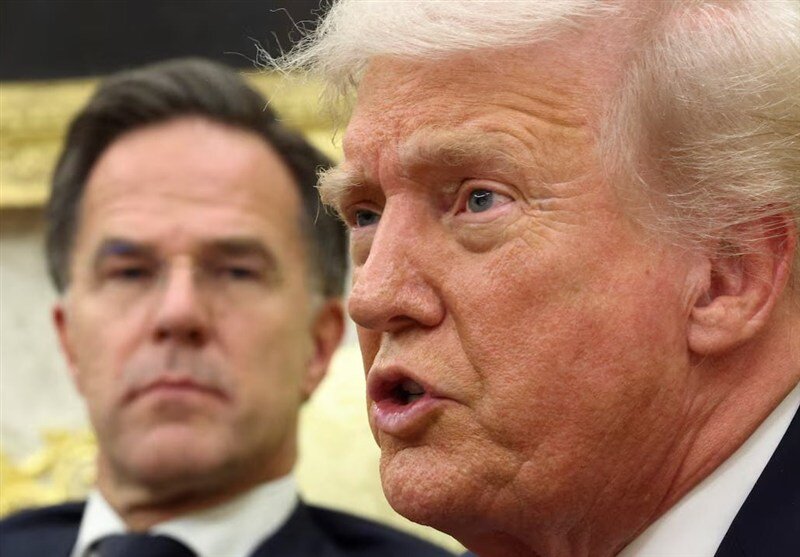
President Donald Trump told Fox News on 19 April 2026 that Iran would face attacks on bridges and power plants unless it signed a proposed deal, warning in stark terms: "The whole country will be blown up if they don't sign." The ultimatum, delivered in a televised interview, represents the sharpest escalation in a weeks-long pressure campaign that has combined military posturing with diplomatic overtures — an approach that has left allies and adversaries alike struggling to determine where rhetoric ends and intent begins.
An Ultimatum With Infrastructure Targets
The White House has spelled out the consequences in concrete terms. Trump identified specific categories of targets — bridges and power-generation facilities — should Tehran refuse to meet Washington's terms. The language marked a departure from the calibrated ambiguity that typically governs such statements; officials have historically preferred to signal capability without naming assets. The administration called the proposal Iran's "last chance," a framing that leaves no room for the extended negotiations that previous deals required. According to the Wall Street Journal, senior officials have briefed that the president's approach has oscillated between aggressive public posturing and behind-the-scenes efforts to restart talks — a duality that has unsettled both European allies and regional partners who depend on predictability in their security calculations.
The terms of the proposed deal, as described by US officials, centre on permanent caps to Iran's enriched-uranium stockpile, intrusive international inspections, and constraints on the country's ballistic-missile programme. Iran has consistently characterised such demands as an attempt to dismantle a sovereign defence capability. The administration has indicated it will not accept partial compliance or phased reductions — the mechanism that preserved the original 2015 Joint Comprehensive Plan of Action for three years before the United States withdrew under the first Trump administration in 2018.
Tehran's Response
Iranian officials rejected the ultimatum categorically within hours of the interview airing. Foreign Minister Abbas Araqchi said his country would not be blackmailed and warned that any US military action would produce consequences "across the region." The phrase pointed to Iran's network of allied militias and proxy forces spanning Iraq, Syria, Lebanon, and Yemen — a retaliatory architecture that the Islamic Revolutionary Guard Corps has developed and refined over two decades of asymmetric engagement with American forces.
Araqchi's statement appeared to predate the full broadcast of Trump's interview, suggesting Tehran had been briefed on the likely content and chose to signal resistance before the threat was formally delivered. That timing reflected a deliberate communications strategy rather than reactive alarm — a pattern Iranian officials have maintained since the maximum-pressure campaign resumed following Washington's withdrawal from the nuclear accord in 2018.
Tehran's stated position remains that its nuclear programme is entirely peaceful and that it will not negotiate under duress. Enriched-uranium production has continued since 2019, with the International Atomic Energy Agency confirming in multiple reports that Iran has amassed stockpiles far exceeding the limits set by the original agreement. The programme's advancement has narrowed the time required for a potential weapons breakout — a fact that the Trump administration cites as evidence that diplomacy must now produce results faster than the 2015 framework allowed.
Escalation Dynamics and Regional Consequences
The specific naming of infrastructure targets is notable for the clarity it provides. Bridges and power plants are not strategic assets in the traditional sense — they do not house nuclear material or command military communications — but striking them would be designed to signal resolve rather than surgically degrade Iranian capabilities. The message would be civic: ordinary Iranians would feel the consequences, not merely the military command structure. Whether that signal produces the desired leverage or hardens domestic opinion against any negotiated settlement is a question that regional analysts are watching closely.
The larger context is the administration's record of following through on analogous threats. After strikes on Iranian-linked targets in Iraq and Syria in early 2023, and a sustained bombing campaign against Houthi infrastructure in Yemen through 2025, regional capitals have learned not to dismiss presidential warnings as negotiating theatre. That credibility cuts both ways: it raises the pressure on Tehran, but it also narrows the space for a face-saving compromise that both sides can present as a victory domestically.
The risks of miscalculation are significant. Iran's supreme leader, Ayatollah Ali Khamenei, has repeatedly said the country will not be cowed by military threats. If the pressure campaign is designed to force Tehran back to the table with reduced leverage, the chasm between what Iran would accept and what the administration demands — on uranium enrichment, missile capability, and regional influence — may prove too wide for a diplomatic bridge. If it is designed to justify military action, the administration will need to calculate whether the retaliatory consequences, spread across a region where American troops, diplomats, and allies are present, are acceptable.
What Comes Next
European mediators have attempted to keep a channel open through the Joint Commission's remaining framework, but their leverage is limited without US willingness to offer sanctions relief as an inducement. The administration's position has been that the economic pressure is itself the inducement — that each month of sanctions tightening brings Iran closer to a decision. Iran's oil exports have been squeezed to historic lows; its banking sector remains largely disconnected from global finance. Whether that pressure produces capitulation or desperation is the central question.
The stakes extend beyond the bilateral relationship. An Iranian nuclear weapon — or an American military strike that triggers a regional war — would reshape calculations across the Middle East and beyond. Israel's government has made clear it views an Iranian bomb as an existential threat and has reserved the right to act unilaterally. Saudi Arabia and the Emirates have quietly welcomed the American pressure while building their own diplomatic and nuclear programmes. The administration's ultimatum may ultimately serve as leverage, but if the gamble fails, the consequences will not be contained to the two countries directly in the exchange.
This publication covered the ultimatum primarily through the prism of signal clarity and escalation risk, where the dominant wire framing led with diplomatic negotiation timelines.