Trump's Kharg Calculus: Casualty Aversion and the Limits of Maximum Pressure
The Trump administration's decision to forego military control of Iran's Kharg Island reveals deeper structural constraints on US coercive power—constraints rooted not in strategic wisdom but in the domestic political calculus of acceptable American losses.
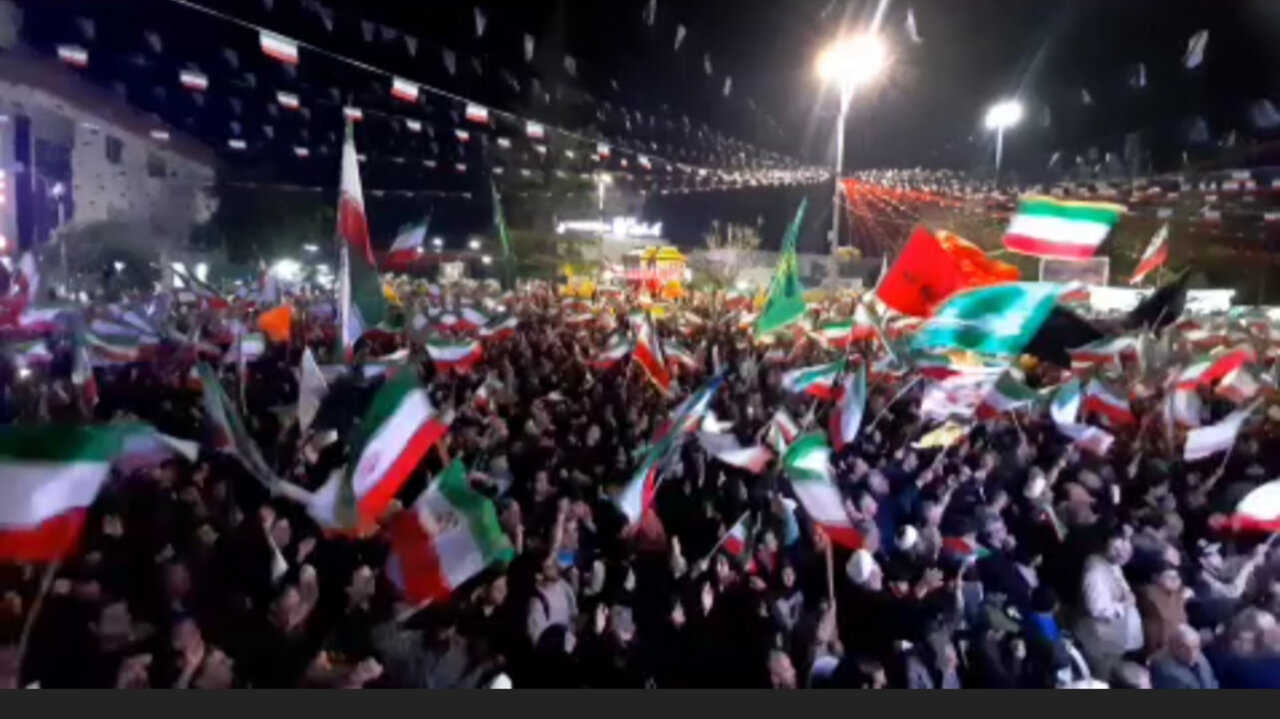
When the Trump administration confronted the option of seizing Kharg Island—Iran's strategic petroleum infrastructure hub in the Persian Gulf—the answer, according to a Wall Street Journal investigation published on April 19, 2026, was unambiguous. American soldiers would be "easy targets," the President reportedly declared, and any military calculus involving elevated American casualties was categorically rejected. The revelation exposes not merely tactical caution but the structural limits of coercive statecraft when domestic political tolerance for American blood has become the binding constraint on imperial ambition.
The decision to release Kharg—and by extension to constrain other potential kinetic options against Iran—illuminates a fundamental tension in contemporary US foreign policy. Maximum pressure rhetoric has collided with minimum casualty preferences, producing a strategic posture that this analytical framework would categorize as representative of elite fear aggregation: the apparatus of state communication systematically amplifying threats to American life while domestic political structures punish any leader who expends American lives without commensurate visible return. The administration's framing of Iranian military capability as sufficient to impose meaningful costs on US forces reveals the propaganda filter of "fear" operating in reverse—rather than manufacturing consent for conflict, it has manufactured dissent from conflict.
The Kharg Decision: Strategic Context and Operational Reality
Kharg Island represents Iran's principal crude oil export infrastructure, processing roughly 90 percent of the country's seaborne oil shipments before sanctions and production declines reduced its throughput. Control of Kharg would theoretically give any occupying power leverage over Tehran's primary hard currency revenue mechanism—making it an attractive target for coercive diplomacy. Yet the Wall Street Journal report, corroborated by Iranian state media citing the American analysis, indicates that Trump administration officials found the operational risks unacceptable.
The strategic logic appears straightforward on its surface: Iranian coastal defense systems, naval mines, and asymmetric maritime capabilities including Revolutionary Guard Corps fast-attack craft present genuine challenges to US naval forces operating in the northern Persian Gulf. The Hormuz Strait's narrow geography creates concentration risks for carrier battle groups, while Iranian shore-based anti-ship missiles theoretically pose threats to surface vessels that would be absent in more permissive operational environments. These are not trivial considerations—the US Navy has invested substantially in mine countermeasures and theater ballistic missile defense precisely because the Persian Gulf presents a more challenging operational environment than the open ocean.
What distinguishes the Kharg episode is not the novelty of these threats—US military planners have understood Iranian anti-access/area-denial capabilities for two decades—but the political weight attached to them. Under previous administrations, including Barack Obama's, US forces operated in the Persian Gulf under substantially similar threat conditions without retreating from forward presence. The difference lies not in the threat environment but in the domestic political calculus governing acceptable risk.
The Propaganda of American Invulnerability
structural filters of media propaganda—ownership, advertising, sourcing, flak, and ideology—illuminate how casualty sensitivity becomes institutionalized in US foreign policy discourse. The editorial framing bias, particularly the national/security ideology that frames American military intervention as inherently defensive and moral, creates cognitive dissonance when US forces suffer losses in conflicts lacking clear justification. The institutional pressure on coverage—negative consequences for those who deviate from acceptable discourse—ensures that advocates for restrained military action face accusations of weakness, while advocates for aggressive action rarely face equivalent scrutiny for failing to account for operational realities.
The Kharg episode reveals these filters operating in reverse: rather than manufacturing consent for military intervention, the domestic media and political environment manufactured dissent from it. The Wall Street Journal's framing of the administration's casualty concerns as "hidden fears" suggests journalistic norms that treat American military vulnerability as inherently newsworthy precisely because invulnerability is the ideological default. When the gap between rhetorical maximum pressure and operational restraint becomes too large to ignore, the media covers the revelation rather than interrogating the underlying ideology that produced both the rhetoric and the gap.
The editorial filtering framework would predict, and the Kharg case confirms, that US military action will be authorized only when domestic political conditions permit acceptance of projected casualties. This is not a strategic calculation in any meaningful sense—it is a reflection of the propaganda apparatus's capacity to shape elite perception of acceptable risk. Iranian strategists, observing American casualty aversion, can calibrate their own deterrent posture accordingly, understanding that asymmetric capabilities need not defeat US forces to deter them.
Structural Determinants of US Iran Policy
Offensive realist theory offers an alternative analytical framework for understanding the Kharg decision. Mearsheimerian logic suggests that great powers seek to maximize relative power, operating under structural incentives that reward aggression and punish restraint. Yet the United States' behavior in the Persian Gulf contradicts this framework—or rather, it suggests that the structural pressures identifies operate at the domestic political level rather than the international system level. The US is not failing to maximize power against Iran because of international constraints; it is failing to act because domestic political structures make aggressive action costly for individual leaders.
This observation points toward a more fundamental transformation in American foreign policy than either this analytical framework or structural realism fully captures. The United States can project military power globally but lacks the political infrastructure to sustain casualties in pursuit of strategic objectives that do not yield immediate, visible returns. This is not weakness in any simple sense—it reflects the political economy of all-volunteer armed forces and the media environment that attaches political costs to American deaths.
The implications for Iranian strategic calculation are significant. Tehran understands that US military superiority, while substantial, is conditioned on domestic political tolerances that its own capabilities can exploit. Revolutionary Guard naval strategy—emphasizing small craft, mines, and coastal missiles—represents not an attempt to defeat US forces but to impose costs sufficient to trigger domestic political constraints on US action. Kharg Island did not need to be successfully defended to deter its seizure; it merely needed to be expensive enough that American leaders would calculate the political cost of casualties as exceeding the strategic benefit of control.
Stakes and the Future of Coercive Diplomacy
The Kharg episode reveals the limits of coercive diplomacy when the coercing power lacks political tolerance for the costs that coercion might incur. Trump's "maximum pressure" campaign against Iran has relied on economic sanctions and diplomatic isolation rather than military threat precisely because military threat would require planning for contingencies in which American forces take casualties. The decision to forego Kharg control options signals not weakness but clarity about the boundaries of American power.
For Iran, the revelation confirms strategic assessments that US pressure is constrained by domestic political tolerances. Iranian negotiators, understanding that American leverage depends on willingness to absorb costs, can calculate their own risk exposure accordingly. The Islamic Republic has survived maximum economic pressure; it now understands that maximum military pressure faces even tighter political constraints.
For regional stability, the Kharg decision carries ambiguous implications. On one hand, restraint reduces the probability of direct military confrontation that could escalate catastrophically. On the other hand, the perception of American casualty aversion may encourage Iranian adventurism in other theaters—support for proxy forces, nuclear program advancement, and regional intimidation—under the calculation that US response options remain limited by political constraints.
The deeper issue concerns the transformation of American power in a multipolar world. As structural analysts' structural power analysis suggests, hegemonic powers face diminishing capacity to project costs as peripheral actors develop capabilities to impose meaningful expenses on central actors. The Kharg episode demonstrates that the United States remains powerful enough to threaten Iran but politically unable to follow through on threats that would impose American casualties. This gap between capability and willingness defines the new parameters of US regional strategy—and Iranian strategists are taking careful notes.
This article was framed against the wire as a structural analysis of US military restraint rather than a simple story about administration caution. The Wall Street Journal reporting was treated as evidence of editorial filtering framework dynamics rather than simply as factual recounting.
Wire provenance
This editorial synthesis draws on the following public wire/social posts:
- https://t.me/BellumActaNews
- https://t.me/farsna
- https://t.me/FarsNewsInt