UN Special Rapporteur's Gaza Remarks Put International Accountability Mechanisms Under Strain
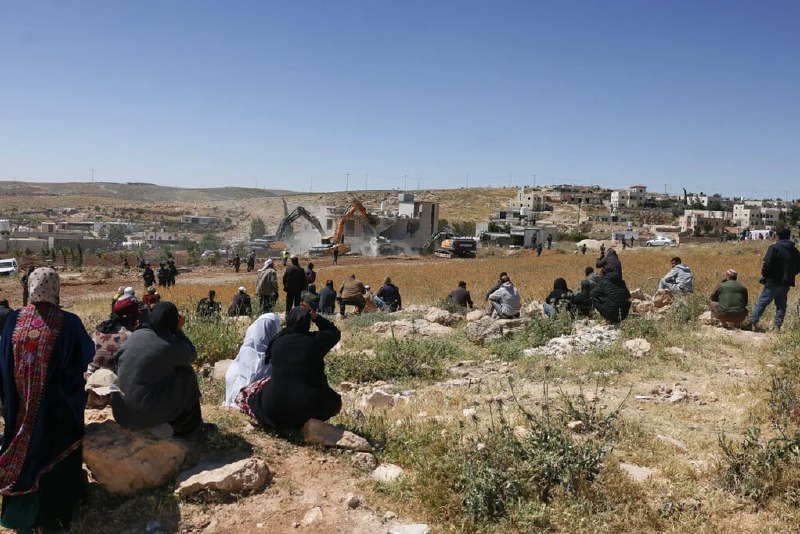
Francesca Albanese, the UN special rapporteur on the Palestinian territories, described the Israeli military as the "lowest army" in a social media post responding to footage from Gaza on 19 April 2026. The remark has reignited a long-running dispute over the mandate's conduct and its relationship to mainstream international institutions.
The statement, posted across Albanese's official accounts, drew immediate condemnation from the Israeli government and its allies. It also placed renewed pressure on the Human Rights Council's monitoring mechanism, which has operated under persistent diplomatic strain since Russia and China withdrew their participation in 2021. The episode underscores a structural tension at the heart of UN rights bodies: the gap between the formal authority of special rapporteur mandates and the political will required to act on their findings.
The Mandate and Its Discontents
Albanese assumed the role of UN Special Rapporteur on the situation of human rights in the Palestinian territories in 2022, a position established by the Human Rights Council the same year. The mandate charges its holder with monitoring, reporting, and advising on the human rights situation across occupied East Jerusalem, the West Bank, and Gaza. It is one of the few UN mechanisms with a country-specific human rights focus still in active operation.
The mandate has never operated without controversy. Israel formally rejects the rapporteur's authority, denying the holder entry to Israeli-controlled territory. The United States, which returned to the Human Rights Council under the Biden administration, has maintained a consistently critical posture toward the body's country-specific mechanisms, arguing they reflect institutional bias rather than impartial assessment. The position has cycled through five holders in under a decade — a turnover rate that reflects both the political sensitivity of the brief and the difficulty of sustaining engagement with it.
What distinguishes Albanese's tenure is the scale of what she is documenting. Gaza has sustained more than 51,000 reported deaths since October 2023, according to the Hamas-run health ministry — figures that UN agencies have continued to reference despite ongoing methodological disputes over how casualties are counted in active conflict zones. The United Nations itself has described conditions in Gaza as a man-made famine, a finding that carries significant legal and political weight under international humanitarian law. These are the conditions the rapporteur is mandated to assess; the political difficulty of doing so is a feature of the office, not an anomaly.
The Diplomatic Architecture Under Pressure
The Human Rights Council's credibility problem is not new. Its country-specific agenda items — targeting Israel, Syria, Iran, and Myanmar — have long been accused by Western delegations of selective application. The council's membership rules, which permit states with poor human rights records to serve as rotating members, have been a recurring point of contention in Washington and European capitals. The United States rejoined the body in 2022 after a three-year absence under the Trump administration; the current administration's posture remains a live question.
What the Albanese statement illustrates is how the internal politics of UN rights bodies interact with the material conditions they are meant to address. When a rapporteur uses language that critics characterise as inflammatory, it provides ammunition to those already predisposed to question the body's legitimacy. That is a genuine tension — one that responsible international institutions must manage — but it does not resolve the underlying question of what happens when the documented facts are themselves disputed at the political level.
Israeli officials have described Albanese's characterisation as antisemitic. The Israeli military, operating under the constraints of an active conflict in a densely populated urban environment, maintains that it operates within international law and investigates credible allegations of violations through its own internal mechanisms. Those mechanisms have generated relatively few public findings, a pattern that rights groups — and the rapporteur's own reports — have cited as evidence of systemic inadequacy rather than compliance.
The Stakes for Accountability Architecture
The broader question raised by this episode is whether the UN human rights architecture retains functional capacity to address situations of ongoing mass civilian harm. The International Court of Justice has issued provisional measures in the South Africa v. Israel case; the International Criminal Court has issued warrants for Israeli and Hamas officials. These are significant developments — the first time a Western-aligned state has faced ICJ proceedings over alleged genocide, and the first time sitting Israeli leaders have faced ICC jurisdiction. Yet none of these mechanisms has produced a cessation of hostilities or a verified reduction in civilian casualties on the ground.
Special rapporteur mandates are advisory by design. They generate documentation, build evidentiary records, and shape international discourse. Whether they influence outcomes depends on factors largely outside the rapporteur's control — the political composition of the Security Council, the willingness of states to invoke legal findings in their foreign policy, and the degree to which publics in democratic states hold their governments accountable for alignment with international law. In this sense, Albanese's statement is less a rupture than an intensification of a pattern: the language used by a rights official provokes a political reaction, the political reaction limits the official's practical leverage, and the cycle continues as the humanitarian situation deteriorates.
What Remains Unresolved
The footage to which Albanese was responding has not been independently verified by this publication, and the specific incident she cited is not described in detail in the available sources. The Israeli military has not issued a formal response to the specific characterisation. Albania's own foreign ministry has not publicly addressed her comments. Whether the statement will have procedural consequences for the mandate — a review of its terms, a change in access arrangements, or a diplomatic campaign to circumscribe its reporting — remains unclear.
What is clear is that the space for measured, evidence-based UN reporting on Gaza is narrowing under the combined weight of political pressure from multiple directions. The rapporteur's mandate exists because member states created it; its utility depends on whether those same states are willing to engage with its findings rather than attack its premises.
This publication covers the UN special rapporteur mandate and its findings in the context of ongoing international legal proceedings and humanitarian reporting. The framing reflects the weight of documented civilian harm and the formal legal positions of the ICJ and ICC, while noting the limits of institutional leverage in a conflict where neither party to the fighting has accepted the other's legal framing.
Wire provenance
This editorial synthesis draws on the following public wire/social posts:
- https://t.me/FarsNewsInt/134521
- https://t.me/farsna/96152