US-Iranian Forces Clash in Gulf Waters as Tensions Escalate
Iranian state media reported on 19 April 2026 that Iranian forces attacked American military vessels with drones after US forces struck an Iranian ship travelling from China to Iran, marking a significant escalation in already strained bilateral relations.
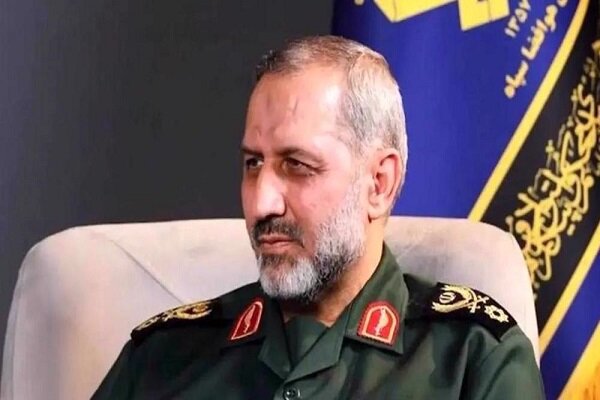
Iranian state media reported on 19 April 2026 that Iranian forces attacked American military vessels with drones after US forces struck an Iranian ship travelling from China toward Iran, according to multiple Telegram posts citing Iran's state-run Tasnim News Agency. The exchange, if confirmed, represents a qualitative shift in the tenor of exchanges between the two countries and comes amid an already tense period in US-Iranian relations.
The incident marks the first direct naval engagement between American and Iranian forces in several years, and signals that whatever deterrent logic had kept the two sides from direct confrontation is fraying. What began as economic pressure and proxy posturing appears to be moving toward a phase where miscalculation carries operational consequences.
The Immediate Exchange
According to Iranian state-affiliated Tasnim News Agency, US forces struck an Iranian vessel that was en route from China to Iran on 19 April 2026. Iranian forces subsequently carried out attacks toward American naval vessels, the agency reported, describing the American strike as the initiating act. The same Telegram posts, citing Faytuks NewsBreaking, specified that Iranian forces used drones in their response against American military ships.
The exact location of the engagement remains unclear from available sources. Neither the specific naval assets involved nor the commanding authorities on either side were identified in the initial reporting. US Central Command had not issued a formal statement at the time of publication, though this article will be updated if confirmed details emerge.
The route of the targeted Iranian vessel — from China to Iran — is significant. It suggests the ship was likely carrying goods subject to secondary sanctions under the US maximum pressure campaign, and that the strike may have been intended as a signal to Beijing as much as to Tehran.
Conflicting Accounts and What Remains Unverified
Western wire services had not independently confirmed the incident at time of publication, and the Telegram posts citing Iranian state media represent the most immediate available account. Tasnim News Agency, as Iran's state-run outlet, has a clear institutional interest in framing the sequence of events in terms that cast the United States as the aggressor.
The sources do not specify the extent of damage to either the Iranian vessel or the American ships targeted in the response. Casualty figures, if any, are not reported. The specific drone platforms used by Iranian forces are not identified in the available Telegram threads. Whether US forces sustained any damage or injuries remains unverified.
Equally absent from the initial reporting is any indication of what prompted the US strike. US naval operations in the Gulf are routine, but a strike on a flagged vessel requires authorisation at a level that suggests deliberate intent. The sources available do not clarify whether the American action was a response to intelligence about the cargo, a pre-planned demonstration of enforcement, or a reaction to some other stimulus.
Independent confirmation from US defence officials or Western wire reporting is still pending. Readers should treat the Iranian-state-media framing as one account among several, not as a verified ledger of events.
A Pattern of Pressure and Response
The incident, if confirmed, fits within a longer arc of US-Iranian confrontation that has moved steadily from economic strangulation toward kinetic engagement. The US maximum pressure campaign, rebuilt after the 2018 withdrawal from the Iran nuclear deal, has relied on sanctions, interdictions, and what American officials call "strategic patience" — a waiting game designed to force concessions by denying Tehran revenue.
Iran, for its part, has pursued what analysts describe as a hybrid deterrence strategy: advancing its nuclear programme to threshold status while developing drones, missiles, and proxy networks that make any direct US military move costly. The Islamic Revolutionary Guard Corps Navy has long operated in the Gulf with a doctrine that treats American naval presence as inherently provocative.
The choice of route — a vessel coming from China — adds a layer that goes beyond bilateral US-Iranian dynamics. Beijing has been Tehran's most significant economic lifeline, purchasing Iranian oil despite American secondary sanctions. A US strike on a Chinese-destined vessel, even one ultimately heading to Iran, is an act that lands in Beijing as well as Tehran.
What this incident suggests is that the threshold for direct US-Iranian contact is lowering. Whether by design or miscalculation, the instruments of economic warfare are being supplemented by naval strikes — and Iran is responding in kind rather than absorbing the cost silently.
Escalation Geometry and Forward Risks
The stakes here are not abstract. A single exchange of fire between two powers that control critical maritime chokepoints is not a contained event — it is a point on a curve. Each retaliation justifies the next provocation in the eyes of both sides' domestic political logics.
For Washington, the calculus may be that demonstrating willingness to strike Iranian vessels sends a message to partners in the Gulf — Saudi Arabia, the UAE, Israel — that the US is not retreating from its security guarantees. For Tehran, absorbing a strike without response signals weakness at a moment when the Islamic Republic is navigating economic strain and internal succession questions.
The drone dimension is worth noting. Iranian drone capabilities have matured significantly over the past decade, and their deployment against American naval assets in the Gulf would represent a qualitative change from the asymmetric warfare seen in prior cycles. The sources do not specify the scale or effect of the drone attack, but the fact that it was the chosen instrument matters.
The risk is not a single exchange. The risk is that both sides now have operational precedent for striking the other's vessels — and that precedent will shape every future interaction in these waters. The question is not whether this was a single incident but whether it establishes a pattern that others will model.
This desk will monitor US Central Command statements and wire updates for independent confirmation. The framing above reflects Iranian-state-media accounts as a primary source; Western reporting had not confirmed details at time of publication.
Wire provenance
This editorial synthesis draws on the following public wire/social posts:
- https://t.me/MyLordBebo/18482
- https://t.me/alalamarabic/12456
- https://t.me/osintlive/9871