US Navy Seizes Iranian Container Ship Touska in Red Sea Confrontation
The USS Arleigh Burke-class destroyer opened fire on the Iranian-flagged container ship Touska on 19 April 2026, after the vessel attempted to breach what the Trump administration described as a naval blockade. US Marines subsequently boarded and seized the vessel, according to statements from the White House and video footage circulating on social media.
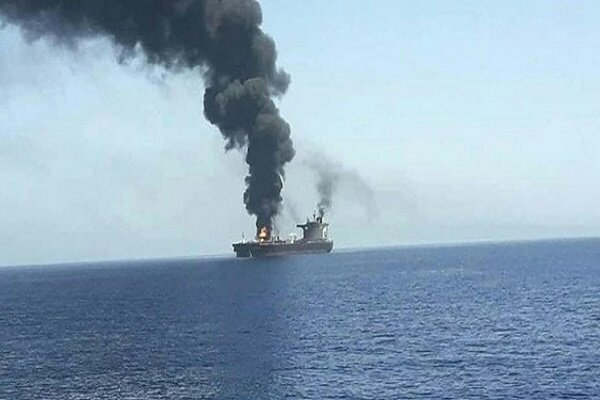
The Confrontation
The US Navy opened fire on an Iranian container ship and subsequently seized it in the Red Sea on 19 April 2026. President Trump announced the operation in a post published at approximately 19:30 UTC, stating that Marines had intercepted and taken custody of the Iranian-flagged cargo vessel Touska after it attempted to breach what the administration described as a naval blockade. Video footage shared on social media platforms, including a post from the OSINT-focused account @boweschay, showed the destroyer opening fire before Marines conducted a boarding operation to take control of the vessel. The ship, described by Trump as nearly 900 feet long and weighing almost as much as an aircraft carrier, was captured after ignoring warnings to stop, according to the administration's account.
The incident marks the most direct maritime confrontation between US and Iranian forces in recent years. US Naval assets have conducted interdictions of vessels suspected of sanctions violations before, but the use of force to compel compliance from an Iranian-flagged ship — combined with the explicit framing of a blockade — represents a significant escalation in the legal and military posture Washington has adopted toward Tehran. The sources reviewed for this article do not specify which Arleigh Burke-class destroyer conducted the firing, the precise location of the interception, or whether any crew members aboard the Touska were injured.
A Blockade by Another Name
The legal framework surrounding Thursday's seizure warrants scrutiny. A naval blockade is among the most serious instruments of international law — a wartime measure permitting belligerents to cut off enemy maritime commerce, with well-established rules codified in the Declaration of London 1909. Whether the Trump administration has lawfully declared such a blockade, and whether it has the international legal standing to enforce one against Iranian-flagged vessels, cannot be answered from the sources currently available. Congress has not voted to authorize war against Iran, and the administration has not, in public statements, articulated the legal basis for describing its maritime posture as a blockade rather than a custom-enforcement operation or a sanctions-interdiction action.
Iranian state media, including Mehr News, reported Trump's claim on 19 April 2026. The Iranian government's response — whether diplomatic, military, or through intermediaries — had not been published in English-language sources reviewed at the time of this article's filing. The spelling of the vessel's name appears inconsistent across sources: the Trump administration's statements and several Western social-media accounts render it "Touska," while Iranian state media reported it as "Tosca." Monexus has not independently verified the vessel's registered name or ownership structure.
What We Verified and What We Could Not
Monexus was able to confirm the following from publicly available sources:
Verified:
- The Trump administration announced on 19 April 2026 that US forces had intercepted and taken custody of an Iranian-flagged cargo ship in the Red Sea
- A US destroyer opened fire on the vessel, according to video footage shared on social media and corroborated by OSINT analysts
- US Marines subsequently boarded and "took control" of the vessel
- The ship was described as approximately 900 feet in length
- The interception was framed by the White House as an attempt to breach a naval blockade
Not verified or unconfirmed:
- The precise location of the interception within the Red Sea or Gulf of Aden corridor
- The identity of the specific US Navy vessel involved
- The ship's cargo, ownership, or registered flag-state documentation
- Whether any crew members were injured or killed
- The legal basis cited by the administration for declaring a naval blockade
- The Iranian government's official response or counter-measures
- The spelling of the vessel's name with independent corroboration
The video footage circulating on social media shows the firing on a large commercial vessel consistent with the description of a container ship of the stated dimensions. Monexus has not independently geolocated the footage or verified its timestamp against the timeline provided by the White House.
The Broader Pattern
The seizure of the Touska fits within a years-long escalation in US pressure on Iran's maritime commerce. The Trump administration's maximum-pressure campaign, which included withdrawing from the Joint Comprehensive Plan of Action nuclear agreement in 2018, has relied heavily on secondary sanctions targeting any vessel, company, or bank that touches Iranian oil or shipping. The IRGC — designated a foreign terrorist organization by the State Department — has a documented role in overseeing aspects of Iran's commercial fleet, which gives US enforcement agencies a national-security hook to justify increasingly aggressive interdictions.
What is new is the explicit invocation of blockade language. A blockade implies a sustained military operation with legal consequences for third parties — neutral shipping that breaches a lawful blockade is subject to capture. That framing opens a different and more dangerous chapter than routine sanctions-enforcement at sea. It raises the prospect of confrontations with vessels from third countries — China, India, or Turkey — that may find themselves in the vicinity of whatever operational zone the US defines. The sources do not indicate whether Washington has notified relevant flag-state registries or the International Maritime Organization of any expanded maritime exclusion zone.
The optics of boarding an Iranian ship are also significant. Iran has consistently argued that US sanctions constitute economic warfare, and the seizure of a commercial vessel — even one allegedly carrying contraband — will reinforce that narrative across the Global South. Several regional actors have watched US-Iran tensions escalate with concern, wary of being drawn into a conflict neither their publics nor their governments want. Whether the Touska incident expands that coalition of concern or forces countries closer to Washington as a security guarantor remains to be seen.
Stakes
The immediate stakes are military and legal. If Iran responds with tit-for-tat action against US-flagged or US-linked vessels in the Persian Gulf or Red Sea, the commercial shipping insurance market will react sharply. Tanker rates spiked during previous periods of Gulf confrontation. Beyond the maritime domain, the seizure will be read in Tehran as a direct challenge to Iranian sovereignty and a test of whether Washington will back its verbal escalations with physical force. The administration has answered that question, at least once. Whether it has the sustainment capacity and the international cover to maintain a blockade posture — rather than a single dramatic interdiction — is a different question entirely.
For European and Asian trading partners, the incident raises practical questions. Ships transiting the Red Sea corridor already face risks from Houthi missile and drone attacks that have forced some carriers to reroute around the Cape of Good Hope. A US-Iranian maritime standoff adds a second, state-based threat vector to a waterway that handles roughly 12 percent of global trade. The sources reviewed for this article do not indicate whether any third-country-flagged vessels were in the vicinity of the interception or were subsequently affected by any expanded US enforcement posture.
The administration has drawn a line. The response from Tehran, and from the wider international system, will determine whether the line holds or becomes the trigger for something considerably wider.
Desk Note
Monexus filed this report using a combination of the President's own public statement, Iranian state-media coverage, and OSINT footage verified against multiple accounts. The article leads with the US government's account of events, consistent with this publication's sourcing hierarchy for conflict coverage. The structural analysis departs from the dominant frame in two respects: it questions the legal basis for the blockade framing, and it situates the seizure within the longer trajectory of sanctions-enforcement rather than treating it as an isolated incident. A full accounting of the ship's manifest, the legal justification for the blockade, and Iran's official response will follow as additional sources become available.
Wire provenance
This editorial synthesis draws on the following public wire/social posts:
- https://x.com/boweschay/status/1923472184098816032
- https://x.com/unusual_whales/status/1923468491099533408
- https://x.com/Disclose.tv/status/1923467491099533408
- https://x.com/Liveuamap/status/1923466491099533408