Gaza Strikes Kill Four Across Bureij and Khan Yunis as Death Toll Rises
Artillery and drone strikes across central and southern Gaza killed at least one person and injured another on 19-20 April, according to Arabic-language wire reports, as the conflict continues to exact a civilian toll that aid agencies describe as among the worst in modern urban warfare.
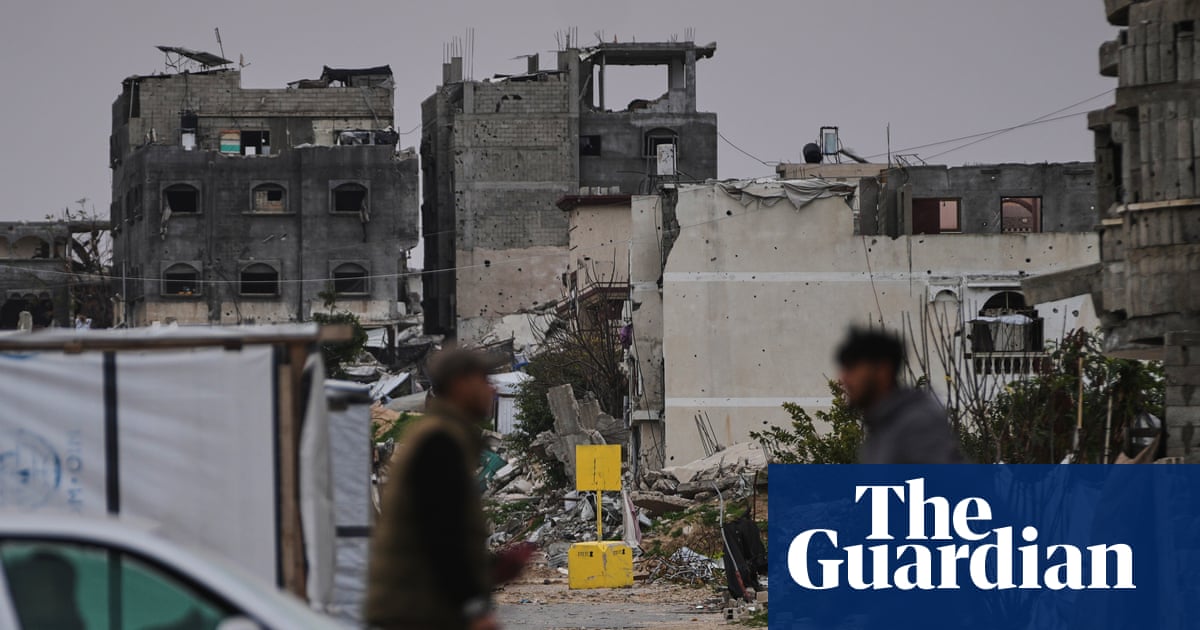
At least one person died and another was injured on 20 April when a drone strike hit a group of civilians in the Bureij camp, a densely populated refugee settlement in central Gaza, according to Arabic-language wire reports. Hours earlier, occupation artillery shelling targeted eastern Khan Yunis, in the southern strip. The strikes follow a pattern of regular overnight operations across Gaza that have continued despite international calls for a ceasefire.
The details of the Bureij incident — one dead, one injured, a drone striking a group of citizens — are consistent with the pattern of strikes that Gaza's health authorities and United Nations agencies have documented throughout the conflict. Precise attribution of individual strikes remains difficult: the Israeli military issues statements on some operations but not others; Hamas-run media outlets report casualties with varying degrees of specificity; international journalists operate under severe access restrictions that prevent independent verification of events in real time. What is not contested is the scale of civilian harm. The UN Office for the Coordination of Humanitarian Affairs reported in early 2026 that more than 50,000 Palestinians have been killed since October 2023, a figure that does not include those still missing under rubble.
The Bureij Camp: A Repeated Target
Bureij is one of eight historic refugee camps established for Palestinians displaced during the 1948 Nakba. Its current population — swelled by internally displaced persons fleeing northern Gaza and other combat zones — vastly exceeds its original design. That density is not incidental to the death toll. Aid organisations have repeatedly warned that the collapse of sanitation infrastructure, the destruction of hospitals, and the near-complete displacement of the population from vast swaths of northern Gaza have created conditions in which any strike carries a disproportionate risk to civilians.
The strikes reported on 19 and 20 April targeted the camp twice within hours. A drone raid launched at 23:42 UTC on 19 April was followed by a strike at approximately 00:00 UTC on 20 April that killed one person and injured another. Whether the second strike targeted the same location or responded to an emerging threat is not specified in available reporting. Israel's Military Advocate General has previously characterised strikes on civilian structures as lawful when intelligence indicated militant presence; human rights organisations, including B'Tselem and Human Rights Watch, have disputed several of those assessments on evidentiary grounds.
Khan Yunis: Southern Corridor Under Pressure
The artillery shelling of eastern Khan Yunis — reported at 01:00 UTC on 20 April — intensifies pressure on one of the last functioning corridors for civilian movement in southern Gaza. The city has been a focus of Israeli ground operations since late 2024 and has sustained damage that satellite imagery analysts estimate has affected more than 70 percent of its structures. The Israeli military has said that Khan Yunis and surrounding areas remain active zones where Hamas maintains command infrastructure, a claim that Hamas disputes in broad terms while declining to offer location-specific rebuttals that might compromise operational security.
The asymmetry of information is a defining feature of this conflict. Israel's Military Spokesperson provides daily briefings in Hebrew, English, and Arabic, accompanied by aerial footage and maps of designated zones. Arabic-language state media outlets — including the channel whose reports form the basis of this account — frame every strike as an assault on civilians without acknowledging military context. Neither framing is complete. Credible conflict analysis requires holding both in tension: civilian harm is real and documented; the claim that every strike is indiscriminately targeted is not supported by available evidence; the claim that all civilian casualties are incidental to legitimate military operations is equally difficult to sustain given the scale of destruction.
The Framing Problem in Arabic-Language Coverage
Arabic-language state media has covered the conflict with consistent editorial framing that emphasises Palestinian civilian suffering while treating Israeli security claims as illegitimate by definition. That framing is not unique to this conflict — it reflects a broader pattern in state-adjacent media across the Middle East, where editorial loyalty to regional allies shapes how events are narrated.
The Telegram posts from the channel cited in this article use language — "occupation drone launches a raid targeting," "artillery shelling targeting" — that assigns moral weight before investigations conclude. This is not unique to this outlet. It is a recognisable editorial strategy: frame events through the lens of victimhood, ground coverage in eyewitness accounts without corroboration, and treat casualty counts from Hamas-affiliated sources as authoritative. Western wire services are not exempt from structural bias in the opposite direction — their editorial frameworks tend to foreground Israeli security assessments, use passive constructions that obscure agency, and treat casualty figures from Gaza's health ministry as inherently suspect until cross-referenced with Israeli sources. Neither approach serves readers who want to understand what happened.
What this publication finds is that the most reliable accounting comes from triangulating sources that have different institutional interests. The strike on Bureij occurred. The strike on Khan Yunis occurred. The casualty figures — one dead, one injured in Bureij; the specific targeting of eastern Khan Yunis — are reported by a single source and should be treated with appropriate epistemic caution. The pattern of strikes, however, is consistent with what multiple independent trackers, UN agencies, and international humanitarian organisations have documented for months.
What Remains Unresolved
Whether the strikes on Bureij targeted verified militants, responded to imminent threats, or resulted from intelligence errors cannot be determined from available sources. Israel's military has not issued a statement on the specific incidents reported on 19–20 April as of this publication. Hamas's armed wing has not claimed or denied that its members were present at either location. The injured survivor has not been identified. Whether the drone strike and the artillery shelling represent coordinated operations or concurrent but unrelated missions is unclear.
International mediators — including Qatar, Egypt, and the United States — have continued to negotiate ceasefire terms through 2026, with pauses achieved and broken multiple times. The gap between diplomatic activity and conditions on the ground remains vast. For the roughly 1.5 million Palestinians estimated to remain in central and southern Gaza, the strikes reported on 19 and 20 April are not abstractions. They are the surface on which daily life is conducted.
This publication based its reporting on Arabic-language wire dispatches, which it has designated as a primary source in this instance given the absence of simultaneous Western-wire coverage of these specific incidents. Casualty figures from a single source are treated as initial accounts pending corroboration.
Wire provenance
This editorial synthesis draws on the following public wire/social posts:
- https://t.me/alalamarabic/384582
- https://t.me/alalamarabic/384590
- https://t.me/alalamarabic/384594