Hormuz Closure Exposes the Fragility of a System That Thought It Was Hedged
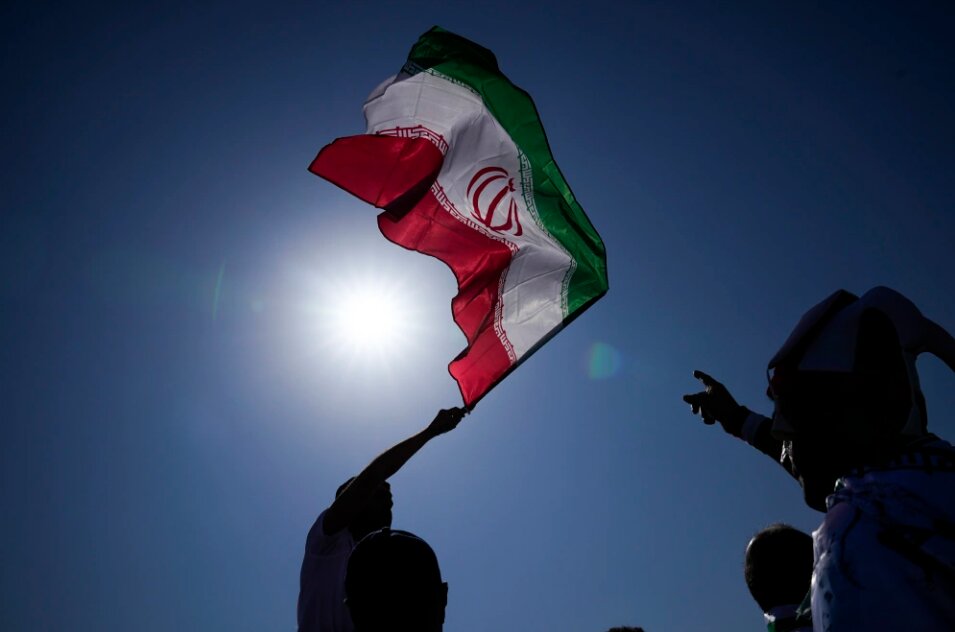
On 19 April 2026, Iran reimposed controls on the Strait of Hormuz. By the following trading session, Brent crude had jumped 5.7%. Bitcoin, which proponents have spent years positioning as a crisis hedge, had fallen 1.6% to $74,335. European equities dropped 1.2%. The spread told a blunt story: when a genuine supply-side shock arrives, the assets that were supposed to hold their value alongside it did not.
The Strait of Hormuz handles roughly 20% of global oil trade and 20% of liquefied natural gas flows, according to multiple energy analysis sources. It is the narrowest point in a corridor that moves cargo from the Persian Gulf to the open ocean — and therefore to every refinery, every port, every market downstream. A closure or even the credible threat of one does not merely inconvenience traders. It reprices energy inputs for manufacturers across Asia, Europe, and the Americas in a matter of hours. That cascading logic, not the headline number, is what moved markets on 19 April.
This publication has been tracking the convergence between geopolitical friction and financial market assumptions for some time. What the Hormuz episode exposes now is the gap between how those assumptions performed in theory versus in practice.
The War That Was Already Supposed to Be Priced In
Iran and the United States have been in direct or proxy conflict for decades. Sanctions regimes have been tightened and loosened. Revolutionary Guard commanders have been targeted. The Hormuz shipping lane has been a recurring point of diplomatic pressure since at least the 1980s Iran-Iraq war. Nobody operating in energy markets in 2026 should be able to claim surprise at renewed hostilities — yet the jump in Brent suggests that a substantial portion of speculative positioning had not accounted for the scenario materialising this quickly.
Nikkei Asia reported on 20 April that the war in Iran has exposed the global economy's vulnerability to disruptions in maritime chokepoints. The phrasing is careful but accurate. The exposure is not new. What has changed is that a chokepoint that analysts have flagged abstractly for years has now produced a concrete, measurable repricing event. Markets that believed they had structurally hedged the risk — through diversification into North American and West African supply, through long positions in alternative energy carriers, through financial instruments designed to isolate spot price moves — discovered that physical volume disruption does not stay abstract for long.
The question this raises is not whether the conflict is serious. It plainly is. The question is why so much of the financial architecture constructed around the assumption of continuity did not anticipate a disruption that its own stress-test models were designed to address.
Bitcoin Was Supposed to Be Different
The 1.6% Bitcoin decline stands out precisely because it was modest. In a week where oil moved 5.7%, where equities fell, where commodity adjacencies repriced sharply, Bitcoin held relatively stable. That is not nothing. It suggests that at least some participants either had already rotated out of risk assets ahead of the weekend's escalation, or that the cryptocurrency market is developing a genuine uncorrelated response function in the current environment.
But it is worth being precise about what that stability means. Bitcoin did not rise. It fell. The argument that it serves as a store of value during kinetic geopolitical events has not yet been borne out in the data. What the current moment shows is that it is less sensitive to energy shocks than equities — which tells you something about energy price mechanics, not necessarily something flattering about Bitcoin's inflation-hedge credentials.
CoinDesk reported on 20 April that Bitcoin traded at $74,335 after Iran reimposed controls on the Strait of Hormuz, with the modest 1.6% pullback standing out against a 5.7% jump in Brent. That framing is fair. The spread is the story. And the spread suggests that a narrative built on cryptocurrency's isolation from physical commodity dynamics is beginning to be tested against actual supply disruptions — not regulatory announcements, not exchange liquidity events, but physical logistics.
Taiwan Was Always the Destination of This Analogy
Nikkei Asia's 20 April analysis drew the connection directly: a Hormuz crisis functions as a Taiwan Strait wake-up call. The analogy is not arbitrary. Taiwan Strait scenarios are discussed in defense and financial planning circles precisely because the island's semiconductor foundries process chips used in products manufactured on every continent. A disruption in the Taiwan Strait — whether through military blockade, kinetic conflict, or political escalation — would propagate through global supply chains with a velocity and depth that Hormuz-related oil disruption would approach but not match.
The common feature in both cases is chokepoint geography. The Strait of Hormuz is 33 nautical miles wide at its narrowest. The Taiwan Strait varies from 80 to 180 miles but contains several shipping lanes that concentrate traffic. In both scenarios, a relatively narrow band of ocean becomes the pressure point for the entire global logistics network. The difference is that Hormuz's energy flows are well-understood and relatively commoditised; Taiwan's chip flows are more complex, more concentrated, and harder to reroute quickly.
The Hormuz episode this week serves as a live rehearsal for what a Taiwan scenario would look like financially — not perfectly, but usefully. It demonstrates that supply-side disruption registers in commodity markets within hours, that equities reprice sharply, and that alternative assets like Bitcoin do not generate the safe-haven premium their advocates claim under the specific condition of physical logistics disruption.
What the Structure Actually Reveals
The global financial architecture was rebuilt over decades around assumptions of maritime openness, energy availability, and dollar-denominated settlement infrastructure. Those assumptions were not naïve — they were the product of a specific historical period in which the United States maintained both conventional military superiority in key maritime zones and the reserve currency position that allowed most global trade to be denominated in a currency Washington could print.
That architecture is under simultaneous pressure from multiple directions. Energy geography is shifting. The Hormuz closure does not just represent a supply disruption — it represents a data point in a longer pattern in which physical control over critical infrastructure is being used as leverage by actors outside the dollar system. Bitcoin was supposed to be outside that system. The data so far suggests it is partially inside it, or at minimum correlated with it in ways that complicate the diversification thesis.
If the Hormuz situation stabilises without further escalation, Brent will likely retrace. Markets will absorb the event, file it as a near-miss, and move on. But the mechanics of what moved on 19 April will remain in the market infrastructure, encoded in the positioning choices that traders make in the weeks ahead. The closure was a test. The test results are in. The system was more fragile than its architects advertised.
This publication's coverage of the Hormuz situation emphasised physical supply mechanics and market spread analysis rather than the political-drama framing that dominated initial wire reporting. The distinction matters because political-drama coverage tends to treat disruptions as events with a beginning and an end; the financial architecture treats them as inputs with price outputs that persist regardless of the narrative assigned to them.