Hungary's PM-Elect Demands Ukraine Restore Druzhba Pipeline Flows, Calls Kyiv's Stance 'Blackmail'
Hungary's incoming prime minister Peter Magyar has publicly demanded that Ukrainian President Volodymyr Zelensky resume oil shipments through the Soviet-era Druzhba pipeline, describing Kyiv's halt of transit as blackmail and warning of consequences for bilateral relations.
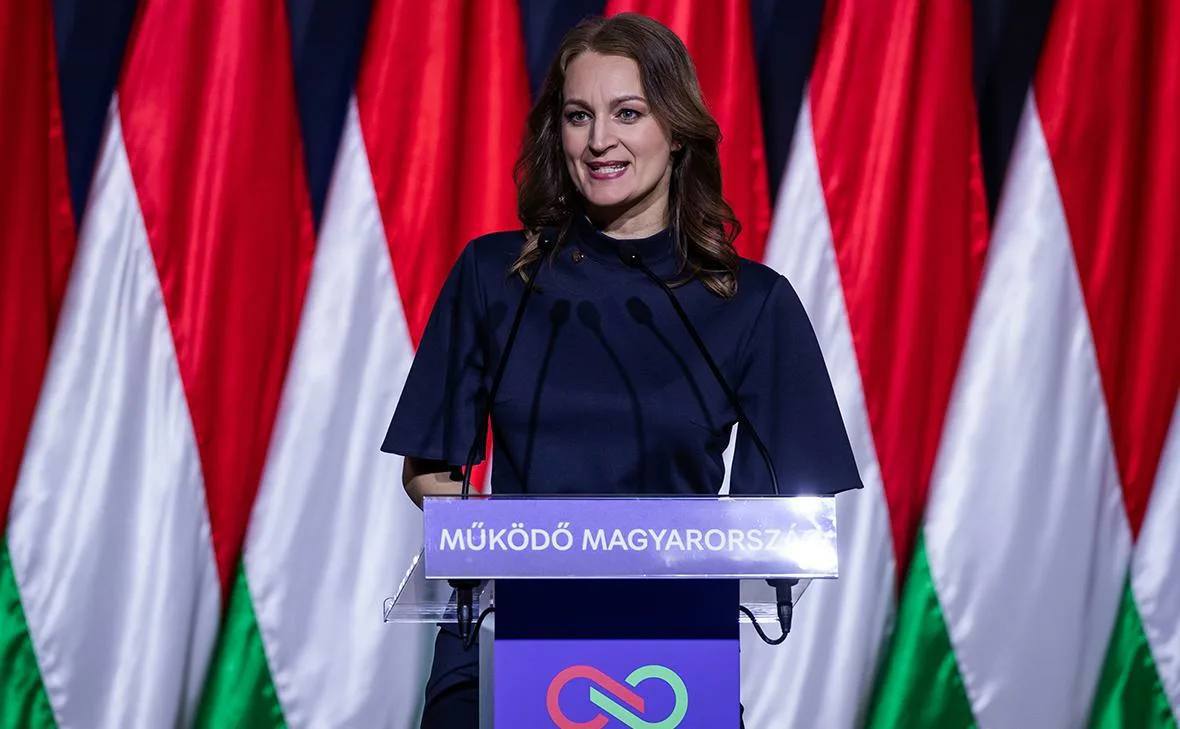
Hungary's incoming prime minister has given Kyiv forty-eight hours to reverse a transit cutoff or face the consequences. Peter Magyar, who is set to assume office in Budapest, said on 20 April 2026 that President Volodymyr Zelensky must resume oil flows through the Soviet-era Druzhba pipeline immediately, describing the Ukrainian halt as a deliberate act of political coercion rather than a sanctions measure. "The blackmail must stop," Magyar said in a statement carried by Hungarian state-aligned media. "Hungary will not be held hostage to Kyiv's geopolitical calculations." The ultimatum marks a sharp escalation in a dispute that has quietly strained EU-Ukraine energy relations for nearly two years, and places fresh pressure on the bloc's fragile consensus around supporting Kyiv.
The Druzhba pipeline has carried Russian crude westward since the Soviet era. When Ukraine moved to halt transit in mid-2024 — citing EU sanctions imposed on Russia's oil sector following the full-scale invasion — Hungary and Slovakia were forced to seek alternative supply arrangements at significant cost. Budapest has since relied on a workaround involving shipments to Croatia's Omisalj terminal and overland transport back to Hungarian refineries, a process Hungarian officials describe as economically punitive and strategically untenable. Magyar's intervention on 20 April signals that the incoming government intends to make energy transit a first-order bilateral issue from day one of taking office.
The sanctions question
The core legal question is whether Ukraine's transit halt falls within the scope of existing EU sanctions or represents an unilateral Ukrainian action. According to diplomatic sources cited by Reuters in 2024, EU sanctions on Russian oil do not explicitly prohibit third-party transit — meaning the Ukrainian halt arguably went beyond what the bloc required. Hungary and Slovakia both filed formal complaints with the European Commission arguing the cutoff violated their bilateral energy agreements with Kyiv and breached EU internal-market principles. The Commission has so far declined to formally arbitrate the dispute, treating it as a bilateral matter between member states and Ukraine. Magyar's ultimatum on 20 April appears designed to force exactly that formal intervention — presenting Brussels with a fait accompli that it can no longer defer.
The political dimension
Peter Magyar is a relatively new figure in Hungarian politics. He won the prime ministerial nomination of the Fidesz party after Viktor Orbán, Hungary's long-serving premier, stepped back from day-to-day governance following internal party tensions in early 2026. Whether Magyar represents a genuine policy departure or a continuity figure in Fidesz clothing remains an open question. EU officials who have met with him describe a pragmatist more willing than Orbán to engage with Commission procedures, but also more direct in articulating Hungary's material grievances. His language on Ukraine — framing the pipeline dispute as blackmail — is, if anything, more aggressive in tone than anything Budapest had previously put on record. That may reflect a calculated move to establish himself as a defender of Hungarian economic interests against a Western-backed Kyiv, or it may indicate a genuine ideological shift in how Hungary's incoming leadership frames its relationship with Ukraine.
What this means for EU-Ukraine relations
The European Union has spent considerable diplomatic capital keeping Hungary inside the tent on Ukraine support. Orbán's repeated vetoes of EU aid packages were the single largest institutional obstacle to Kyiv's war effort over 2023 and 2024. A Magyar government that resolves those blockages — even partially — would represent a genuine strategic gain for the EU's Ukraine strategy. But if the Druzhba dispute escalates into a formal energy crisis, with Hungary unilaterally threatening to block EU foreign-policy decisions until Kyiv restores flows, the net effect on EU unity could be negative. Several eastern European member states are deeply sensitive to any sign that support for Ukraine is conditional on economic favours. A pipeline ultimatum from Budapest carries precisely the appearance of conditionality that EU foreign policy chief Kaja Kallas has repeatedly warned against.
Kyiv has not publicly responded to Magyar's forty-eight-hour demand as of the time of publication. Ukrainian energy officials have previously defended the transit halt as a lawful sanctions compliance measure and have shown no appetite to reverse it absent clear EU-level guidance. The Commission, caught between its commitment to Ukraine and its obligations to member states' energy security, faces a decision it has deferred for nearly two years. The sources consulted for this article do not indicate what outcome Brussels is actively pursuing. What is clear is that the issue will not remain in the diplomatic in-tray for much longer.
Wire provenance
This editorial synthesis draws on the following public wire/social posts:
- https://t.me/DDGeopolitics
- https://t.me/myLordBebo