Iran rebuffs ceasefire talks as US blockade tightens and arrest highlights regional arms network
Tehran formally declined to attend ceasefire negotiations on 20 April, citing what it called a failure by Washington to demonstrate seriousness; separately, a US arrest of an Iranian national on arms-trafficking charges to Sudan underscores the high stakes of the blockade policy.
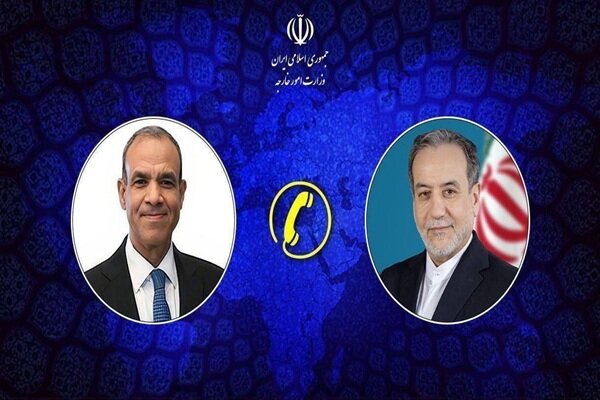
Iran will not attend ceasefire talks, a foreign ministry spokesperson told reporters in Tehran on 20 April 2026, citing what the government described as a failure by Washington to demonstrate sufficient seriousness as a negotiating partner. The statement, carried by Iranian state-aligned outlets including The Cradle Media, came amid mounting pressure from a sustained US naval blockade on Iranian ports that regional capitals view as an escalating provocation.
Pakistan has privately warned the Trump administration that the blockade poses a direct threat to diplomatic channels, according to sources familiar with the exchange cited by The Cradle Media. Islamabad's intervention reflects a broader concern among states with commercial or security interests in the Persian Gulf that the pressure campaign could foreclose avenues for de-escalation rather than produce the concessions Washington is seeking. The warning, if confirmed, suggests the blockade is creating friction not only between Washington and Tehran but within the broader network of states that typically mediate or facilitate such disputes.
The diplomatic standoff coincides with a US law enforcement action that the administration is likely to cite as evidence of Iran's regional reach. Shamim Mafi, an Iranian national, was arrested in the United States and charged with brokering arms sales to Sudan's defence ministry on behalf of Iran, according to a BBC report published on 20 April 2026. The charges remain subject to adjudication, and the full evidentiary record has not been made public. The case, however, underscores the extent to which the blockade is being evaluated against a backdrop of ongoing, if unconfirmed, Iranian security activity in Northeast Africa.
The blockade as negotiating tactic
The US naval posture around Iranian ports is not new, but its current intensity reflects the administration's stated aim of applying maximum pressure until Tehran changes its calculus. The strategy has a lineage: previous rounds of aggressive sanctions produced significant economic strain in Iran but did not produce the political rupture the architects of the policy anticipated. The current approach appears to bet that tightening the physical constraint on Iranian trade — not merely the financial architecture — will create conditions that force concession.
Iran's refusal to attend talks suggests Tehran is not persuaded. The government appears to be calculating that the political cost to Washington of sustaining a blockade indefinitely, and the diplomatic isolation it risks generating among third-party states like Pakistan, will eventually produce a more favourable posture from the American side. Whether that calculation is sound is a separate question; what is clear is that Iran is not treating the blockade as a preliminary to negotiation but as a condition that makes negotiation impossible.
What the arrest signals — and what it does not
The Mafi case is being framed in Washington as illustrative of Iran's network of influence across the Middle East and Africa. The specific allegation — brokering arms sales to a Sudanese government body — would, if proven, place Iran at the centre of a documented supply relationship with a state in a region where American influence has been contested. Sudan has been the subject of competing external engagement for years, and the presence of Iranian military-related commerce would represent a significant expansion of Tehran's footprint.
Independent analysts urge caution against reading too much from a single arrest. Law enforcement actions of this kind are often the product of investigations that build slowly, and the evidentiary threshold for charges is not the same as the evidentiary threshold for establishing strategic intent. The US Department of Justice has not published the full indictment; the charges are live, not adjudicated. That the case is being reported prominently at a moment when the blockade is under scrutiny is a framing choice worth noting, but it does not make the underlying allegation false — it makes it premature to treat as established fact.
What is less ambiguous is the structural dynamic the arrest illuminates. A blockade that limits official trade routes does not eliminate demand for the goods being blocked. It redirects commerce, including arms commerce, toward informal channels and non-state or semi-state partners who are willing to operate outside the formal financial system. That pattern is well-documented across decades of sanctions regimes. Whether the Mafi case represents a symptom of that structural dynamic, or proof of an Iranian strategic design, cannot be resolved from the public record at this time.
What remains uncertain
The sources do not specify the full content of Pakistan's warning to Washington, the specific naval assets involved in the current blockade, or the evidentiary basis for the Shamim Mafi charges beyond the fact of the arrest. The foreign ministry statement in Tehran left unclear whether Iran has set conditions for resuming engagement or whether the refusal is unconditional. The US administration has signalled openness to talks in principle while maintaining the blockade in practice — a combination that Tehran appears to regard as incoherent.
The sources do not indicate whether any third-party mediation is actively underway, though Pakistan's reported intervention suggests that channel remains live. What is evident is that the window for a diplomatic off-ramp is narrowing as both sides entrench: Washington treating the blockade as leverage, Tehran treating it as disqualifying.
The stakes ahead
If the blockade holds and Iran maintains its refusal to engage, the pressure on Tehran's economy will intensify — but so will the incentives for it to deepen relationships with non-Western partners and non-state actors willing to operate outside the dollar financial system. The Mafi case suggests such networks already exist; sustained pressure is more likely to expand them than to dismantle them.
For Washington, the central risk is that the blockade achieves economic distress without producing political capitulation — a outcome that has defined previous rounds of maximum-pressure strategy. For regional states caught between the two powers, the calculus is more immediate: a sustained US-Iran confrontation at sea creates direct hazards for commercial shipping and complicates the diplomatic architecture on which smaller states depend for managing their own security relationships.
Whether the Pakistan warning constitutes a genuine breaking point or a pressure-management tactic by a state with its own interests to protect remains to be seen. The next 72 hours of diplomatic traffic will tell whether Tehran's refusal to attend is a negotiating position or a genuine endpoint.
This article was reported from wire reports, state-aligned Iranian outlets, and US court records. Monexus has not independently confirmed the content of the Pakistani diplomatic communication. The Shamim Mafi case remains at the pre-trial stage.