Iran's 'Final Punishment' Rhetoric Tests the Limits of Diplomatic Signal
Iranian state-linked channels are broadcasting escalatory language about 'final discipline' and responses that may 'change the world's equations' — a pressure tactic timed to stalled nuclear talks, or a genuine signal that calculations have shifted.
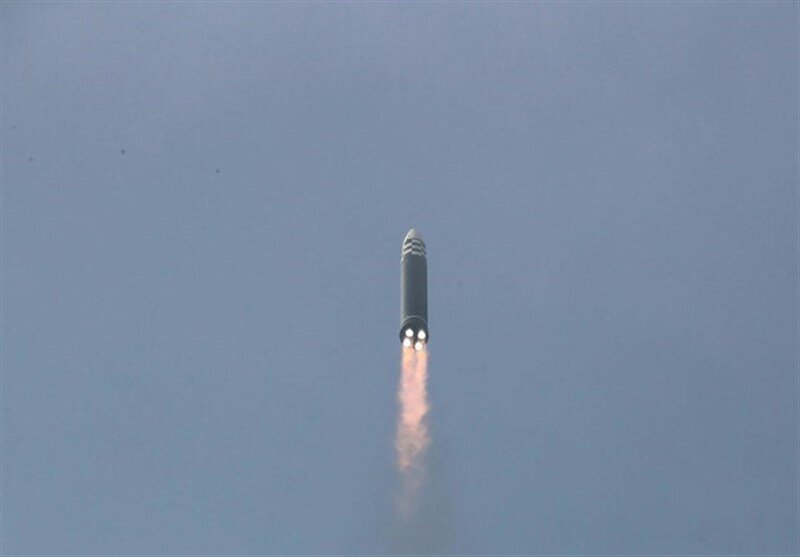
On 20 April 2026, a cluster of Iranian state-linked Telegram channels distributed messaging that, stripped of its rhetorical casing, amounts to a public warning: any miscalculation by an adversary will trigger a response that the authors claim may extend beyond the region and reorder global calculations. The channels — Al Alam Arabic, Tasnim Plus, and Mehr News — used near-identical formulations from an "informant," a framing that permits the Iranian security apparatus to communicate at volume without formal attribution. The language on offer is "final discipline," "final punishment," and vigilance against negotiations being used as cover for a "strategy of attrition." Whether this constitutes genuine escalatory intent or calibrated pressure ahead of a renewed round of nuclear talks is the central question the next seventy-two hours will begin to answer.
The framing matters. Iranian state media's use of the "informant" device — appearing simultaneously across multiple platforms at coordinated intervals on the same afternoon — is not accidental. It is a method of signal amplification that creates the impression of grassroots or intelligence-sourced urgency while preserving deniability. The content is not attributed to a named official, a ministry spokesperson, or a Revolutionary Guard commander. It arrives as raw intelligence intelligence dressed as reporting. That format is not new to audiences familiar with how Tehran communicates when it wants to be heard without being seen speaking. The substance — threats of consequences that may "change the world's equations" — is extraordinary by any diplomatic measure. But the packaging signals that this is a public performance as much as a private signal.
The Nuclear Talks Context
The timing of this messaging is not random. Negotiations over Iran's nuclear programme have been stalled since the latest round of indirect talks between Tehran and Washington produced no binding agreement. The gaps remain fundamental: Iran's demand for sanctions relief scaled to its enrichment activities, and the US position that no significant relief arrives before verified dismantlement of portions of the programme. Between those poles, several European mediators have spent months attempting to construct a partial agreement that would freeze enrichment at 60 percent — below weapons-grade but far above civilian needs — in exchange for limited sanctions easing. That architecture is fragile. It is also the only active diplomatic thread connecting the two governments. If that thread snaps, the messaging emerging from Tehran on 20 April looks less like pressure tactics and more like preparation for a different kind of conversation.
The reference to negotiations being used as a cover for "strategy of attrition" tracks with a longstanding Iranian complaint: that Western powers use the negotiation process itself to manage and delay Iranian strategic progress while maintaining economic pressure. If Tehran has concluded that the current round of talks is not producing results and is instead providing political cover for continued sanctions tightening, the incentive to issue a public warning — framed as intelligence about adversary intentions — increases substantially. The "attrition" framing positions Iran as the party that has decoded Western strategy and is now calling it out before the trap closes further.
Reading the Escalatory Language
Three formulations require particular attention. The first is "final discipline" and "final punishment," language that implies a qualitative shift in response rather than a proportionate or calibrated one. This is not the vocabulary of managed escalation; it is the vocabulary of deterrence failure. The second is the claim that the response may extend beyond the region. That is an explicit expansion of the threat envelope beyond Iran's immediate theatre — a significant rhetorical step that, if taken seriously, implies the involvement of assets or interests that have no obvious connection to the nuclear file. The third is the framing of diplomacy itself: "Diplomacy is only in the direction of the field and authority, which is desirable for the nation." That formulation subordinates the negotiating channel entirely to military and political leverage, suggesting that talks are only worth conducting from a position of demonstrated strength.
Taken together, these formulations paint a picture of a government that has moved, or is moving, from a conditional engagement posture to something closer to a defensive crouch with offensive capabilities held in reserve. Whether that shift is real or performed is the critical ambiguity. Iranian state media often uses escalatory language as a bargaining tool — the threat of a worse outcome to improve the terms of a deal. But there is a floor below which that tactic becomes counterproductive, and there are moments when the domestic political cost of appearing weak exceeds the diplomatic cost of escalation. The messaging on 20 April sits close to that floor.
The Risk of Miscommunication
The difficulty with this mode of communication is that it degrades the quality of the signal. When every negotiation cycle produces identically framed threats of "final" responses, adversaries learn to discount the language as ritual. But the risk is that the day a genuine signal arrives, it is absorbed into the category of noise. This is a known hazard of deterrent messaging: the more it is used, the less credible it becomes, until the moment it is no longer used — at which point the absence itself becomes the signal. Tehran appears to be operating in that degraded-signal environment. The repetition of near-identical formulations across multiple channels within the same hour may be an attempt to restore weight to language that has been hollowed out by overuse.
The counterargument is that the language has never been more specific about consequences that extend beyond the region. "May change the world's equations" is not the formulation of a government that expects the status quo to survive unchanged. That is language designed for an audience that includes not just Washington and its partners, but also Russia, China, and the Gulf states — a broader set of recipients who are being told that the current equilibrium is temporary and that the time to account for Iranian responses is not years away but possibly imminent.
What Follows Next
The immediate test is whether the messaging is followed by any material action: changes in enrichment levels, moves at the Arak heavy water facility, shifts in International Atomic Energy Agency access arrangements, or statements from Iranian officials at the UN or in third-country capitals that either reinforce or soften the Telegram framing. Silence from official channels while the Telegram messaging circulates would itself be a signal — the distinction between a state media operation and a government position would be deliberately blurred. That ambiguity is the point. A clear official statement would constrain the flexibility that the "informant" framing preserves.
The stakes are asymmetric. For Tehran, the nuclear programme represents decades of investment and a deterrent rationale that no amount of sanctions has yet overcome. For Washington and its partners, the alternative to a negotiated freeze is a set of much harder choices: accelerated sanctions, covert operations, or the kind of military contingency planning that Tel Aviv has made no secret of pursuing. The messaging on 20 April suggests that Tehran understands those choices are on the table and is preparing to respond to whichever path the other side selects. Whether that response is calibrated or catastrophic depends on variables that no public statement from an Iranian Telegram channel can resolve.
This publication covered the Telegram messaging in the context of stalled nuclear talks. Western wire services had not published confirmation of the specific formulations as of the time of this report. The language tracks with prior cycles of Iranian pressure messaging but contains escalation markers — particularly the explicit reference to consequences extending beyond the region — that warrant close monitoring in the coming days.
Wire provenance
This editorial synthesis draws on the following public wire/social posts:
- https://t.me/alalamarabic/89432
- https://t.me/tasnimplus/112847
- https://t.me/alalamarabic/89431
- https://t.me/mehrnews/445128