Iran's Hormuz Gambit: Diplomatic Deadlock and the Stakes of a 10-Point Counterproposal
Iran has submitted a 10-point counterproposal to the US 15-point plan, accusing Washington of sabotaging diplomacy while its forces man the Strait of Hormuz — a chokepoint that handles roughly a fifth of global oil trade.
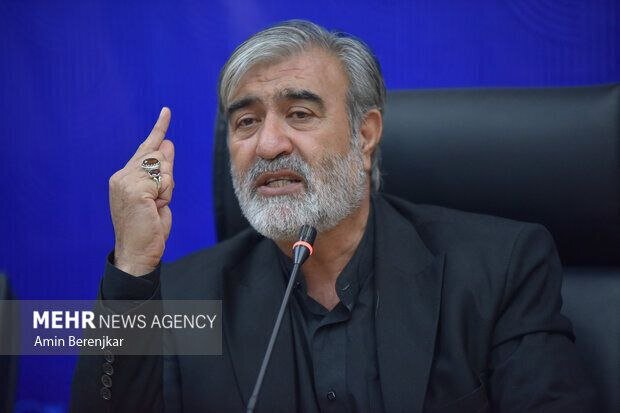
Iran's Foreign Ministry unveiled a 10-point counterproposal on 20 April 2026, a direct response to the United States' 15-point framework for nuclear talks, according to statements reported by Jahan Tasnim and Mehr News. The move sets up a diplomatic confrontation at a moment when both sides are posturing from positions of leverage — Tehran over the Strait of Hormuz, Washington over a naval presence that Iran characterizes as economic strangulation.
Foreign Ministry spokesman Esmaeil Baghaei told reporters in Tehran that Iran's armed forces were working to ensure safe traffic through the waterway, while simultaneously accusing the US of weaponizing diplomacy. "America is not serious in the diplomatic process," Baghaei said, a formulation echoed across Iranian state media outlets on the same morning. The statement came hours after Baghaei described an attack on an Iranian commercial vessel as an "act of aggression" attributable to Washington — a claim that places the two sides in the early stages of a public rhetorical escalation that analysts have long warned could become a flashpoint.
What Tehran Is Actually Saying
The 10-point proposal is Iran's opening bid in what has become a parallel set of negotiations — one formal, one largely conducted through the press. Baghaei's statements make clear that Tehran does not view the US naval presence in the Persian Gulf as a neutral pressure lever but as a hostile act in itself. Iranian state media, including Alalam Arabic, reported Baghaei arguing that Washington's announcement of a continued naval blockade on Iran constitutes evidence of bad faith. "The repeated betrayals by the United States of the diplomatic process have undermined peaceful solutions in accordance with international laws," he said, according to one report.
The framing matters because it reframes the entire negotiating dynamic. Where Washington has presented its maximum-pressure posture as a negotiating tool, Tehran is arguing that the tool is itself the provocation — and therefore that any Iranian countermeasures, including activity in the Strait of Hormuz, are legally defensible acts of deterrence rather than escalation. Baghaei stated explicitly that Iran's measures in the waterway are "consistent with international laws because we were subjected to aggression from Washington and Tel Aviv."
The attack on the commercial ship — which Iranian officials have not fully documented in the public record — is being used to anchor this legal argument. If the premise is accepted that Iran was the first victim of aggression, then the Hormuz activity becomes corrective rather than provocative. This is a narrative operation as much as a diplomatic one.
The American Position and Its Contours
American officials have not published a point-by-point rebuttal as of this filing, which is itself a data point. The administration has maintained a posture of strategic ambiguity toward Iran since 2025, oscillating between direct talks and maximum pressure without a clear doctrinal center. The 15-point plan, which Iranian state media have referenced but not published in full, appears to demand significant concessions on enrichment levels and verification timelines in exchange for sanctions relief.
The naval posture is Washington's clearest signal: a sustained blockade is not a negotiating posture waiting for an agreement, it is an instrument of statecraft operating in parallel. Iran has made the logical connection explicit. Baghaei said the US announcement of the continued blockade "is evidence of its lack of seriousness in the negotiations."
Western wire coverage has largely framed the Hormuz situation as a risk management problem — a chokepoint handling approximately 20 percent of global oil trade where the costs of miscalculation are catastrophically asymmetric. That framing treats Iran and the US as co-responsible for maintaining stability. Tehran's counter-framing rejects the equivalence on its face.
The Structural Logic of Chokepoint Politics
The Strait of Hormuz is not merely a shipping lane. It is a pressure valve that only one party — Iran — can physically operate. The waterway narrows to 33 nautical miles at its most constrained point; its functional width for tanker traffic is narrower still. This asymmetry has been present since the 1979 revolution, and every US administration since has calibrated its Gulf posture around it.
What has changed is the political context. The US-Saudi normalization framework, the collapse of the original JCPOA, and the expanded regional role of Israeli intelligence and military assets have collectively narrowed Iran's diplomatic runway. Tehran's response — a formal counterproposal — is an insistence on process at a moment when Washington may prefer silence to a negotiation it believes it can win by attrition.
The irony is that Hormuz deterrence and diplomatic seriousness are not mutually exclusive in Tehran's framing — they are sequential. Demonstrate good faith by lifting the blockade, then negotiate. This is not a maximalist posture; it is an attempt to establish sequencing as a precondition. Whether Washington reads it that way or as obstruction will determine whether the talks proceed at all.
What Remains Unresolved and Why It Matters
The sources do not specify the content of the Iranian 10-point proposal in detail. What is known is that it responds to a 15-point US framework, and that it was presented as a formal counterproposal rather than an informal discussion paper. Neither side has published the full text of either document.
The attack on the Iranian commercial ship is cited by Baghaei as an act of aggression, but the sources do not include independent confirmation of the incident, the vessel's identity, or the responsible party. Iranian state media have not provided corroborating documentation. Western outlets have not carried the incident as of this filing. Whether this represents a genuine undisclosed escalation or a rhetorical embellishment remains genuinely unclear.
The ceasefire in Lebanon — referenced by Baghaei as a separate American violation alongside the Hormuz blockade — also lacks independent corroboration in the material reviewed. The claim appears designed to broaden the indictment against Washington beyond the nuclear file and into a general pattern of broken commitments.
Stakes and Forward View
If Iran proceeds with Hormuz operations that affect commercial traffic — rather than merely positioning forces — the economic consequences are immediate and global. Brent crude reacts to Hormuz disruptions within hours; Asian refiners, particularly in Japan and South Korea, are the most exposed. Insurance premiums for Gulf tankers would spike. This is not a theoretical risk; it is the mechanism that has deterred every Iranian government from crossing the threshold since 2019.
If the US responds to the 10-point proposal with pressure rather than engagement, the diplomatic track closes — or more precisely, moves entirely into the public-relations domain where both sides are currently operating. Baghaei's press conference was not aimed at American diplomats; it was aimed at the international audience that will eventually adjudicate the legitimacy of both countries' postures.
The next data point is whether Washington responds formally or lets the moment pass. A response — even a dismissive one — keeps the channel technically open. Silence from the administration signals that the Hormuz posture is the policy and the negotiations are the cover.
The desk notes that Monexus carried this story through Iranian state media as the primary sourcing lane — a necessary approach given the absence of direct US official on-the-record statements in the material reviewed. Western wire outlets have covered the Hormuz situation with appropriate attention to the chokepoint's economic significance but have been more guarded on the counterproposal itself, which has not been independently verified against US government documentation.