Iran Moves to Monetize Decades-Old War Damage as Oil Revenues Climb
Tehran's finance ministry has issued a circular permitting the sale and liquidation of government buildings damaged in the 1980s Iran-Iraq war, a move that reflects acute fiscal pressure even as crude prices rally toward triple digits.
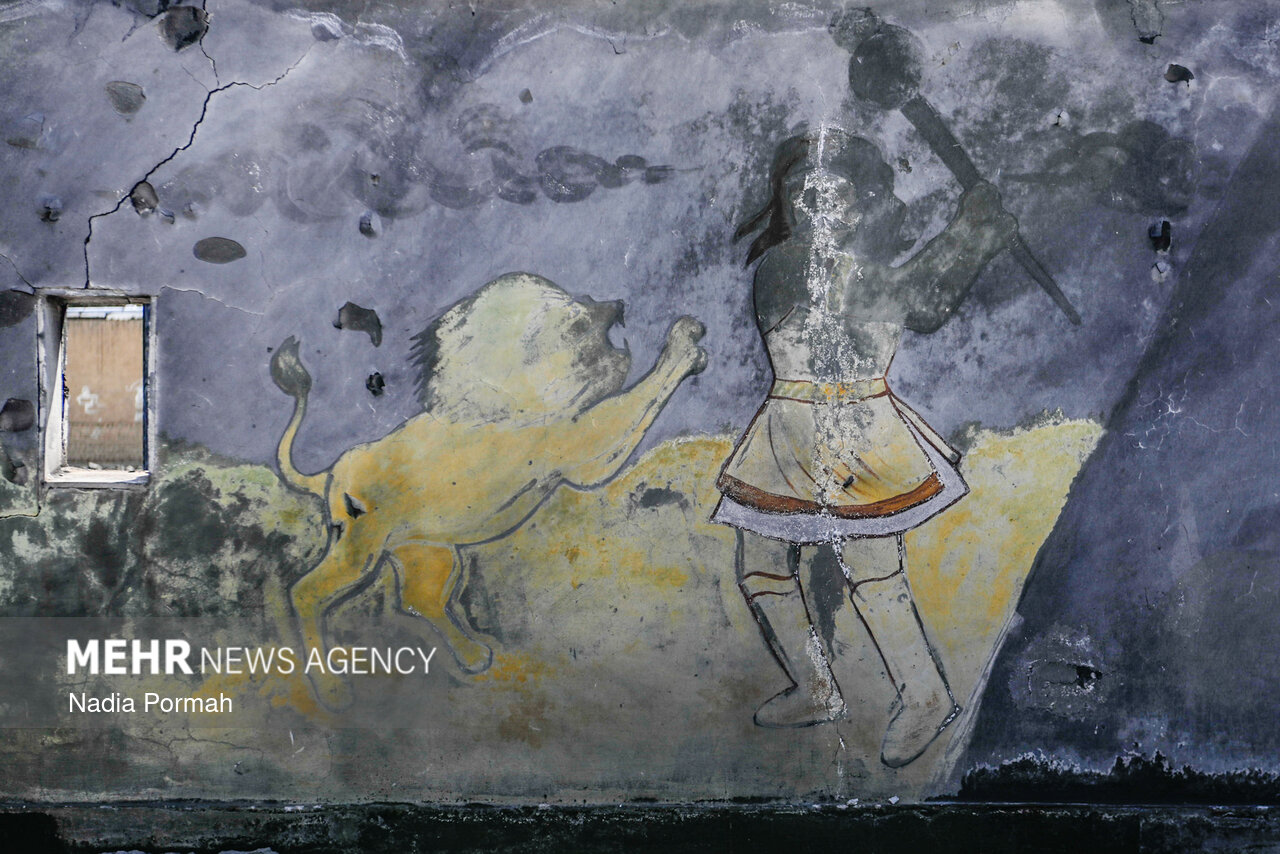
Tehran's treasury department issued a directive on 20 April 2026 authorizing ministries, government institutions, and state-owned enterprises to sell or liquidate properties that sustained damage during the Iran-Iraq war of the 1980s. The circular, reported simultaneously by Tasnim News, Mehr News, and Fars News that morning, directed state entities to «use the capital» recovered from these disposals toward operational or reconstruction purposes. The move arrives at an awkward moment: Brent crude opened the trading week at $97 per barrel, some $4 higher than Friday's close, driven by heightened tensions across the broader Middle East.
The directive is notable not for its novelty — governments periodically audit their real-estate portfolios — but for what its existence reveals about the Islamic Republic's balance sheet. Selling off damaged infrastructure rather than repairing and retaining it signals a government making choices between holding degraded assets and generating immediate liquidity. That calculus becomes sharper when set against a currency under sustained pressure, a banking sector weighed down by sanctioned-related fragilities, and nuclear negotiations that have repeatedly stalled without delivering the sanctions relief Tehran has sought.
The Circular's Immediate Scope
The treasury's notice did not specify a total number of affected buildings or an estimated aggregate value of properties eligible for disposal. Iranian state media described the directive in broad terms: ministries and institutions were to assess their holdings, identify structures bearing war-related damage, and initiate sale or liquidation procedures. The circular arrived with a degree of urgency implied by the explicit instruction to «use the capital» rather than merely the authorization to begin cataloguing.
The timing matters. The Iran-Iraq war ended in 1988, meaning the damaged structures in question are approaching four decades old. Many will have been partially repaired, others abandoned, a handful perhaps repurposed for functions far removed from their original intent. The question of clear title — whether state entities hold unambiguous ownership over properties that may have been contested, partially occupied, or subject to informal settlement in the intervening decades — is one the circular did not address. Iranian state media reporting did not include commentary from the treasury on implementation timelines, dispute resolution mechanisms, or the role of the private sector in acquiring these assets.
Oil at the Doorstep of Triple Digits
The parallel oil price surge adds texture to the picture. Brent crude at $97 per barrel means Tehran is collecting significantly more per exported barrel than the budget assumptions embedded in the current Iranian fiscal framework likely projected. Yet that revenue does not flow cleanly into state coffers. Iran exports oil under significant constraints — through a shadow fleet, through barter arrangements, through intermediary jurisdictions willing to accept Iranian crude in exchange for goods. The effective realized price Iran captures, net of logistics, insurance, and intermediary fees, consistently lags the headline Brent figure.
The price move itself reflects regional risk pricing. Traders are responding to the accumulation of tensions — cross-border incidents involving Iranian proxies, ongoing negotiations over Iran's nuclear file that show no imminent breakthrough, and the broader uncertainty surrounding the incoming administration's posture toward the Joint Comprehensive Plan of Action. A $4 single-week move is not a routine fluctuation; it signals that futures markets are factoring in a meaningful probability of supply disruption or escalation.
Put differently: Iran benefits from higher oil prices, but the same environment that drives prices upward also increases the likelihood of new sanctions designations, shipping insurance complications, or direct pressure on intermediary states to reduce their uptake of Iranian crude. The treasury's circular to sell war-damaged buildings reads differently in this light — not as opportunistic asset optimization but as contingency planning against a future where the current export architecture faces fresh disruption.
The Structural Logic of State Asset Liquidation
Iran has been here before. The Islamic Republic has periodically turned to state asset monetization when fiscal pressure has mounted. The mechanics vary — privatizations of state enterprises, land sales, commodity releases from strategic reserves — but the underlying logic is consistent: a government whose primary revenue tool (oil exports) operates under adversarial conditions cannot rely on stable, predictable inflows and must therefore convert illiquid assets into discretionary spending power.
The sanctions architecture compounds this dynamic in ways that go beyond the direct financial restrictions themselves. International banks, unwilling to exposure themselves to secondary sanctions risk, maintain extensive due-diligence regimes that make even legitimate Iranian commercial activity cumbersome. Iranian state enterprises seeking to repair damaged buildings face higher input costs because of restricted access to imported materials. Suppliers build in a risk premium because payment mechanisms are constrained. The result is a cost structure for reconstruction that makes retention of damaged property — rather than disposal — the more expensive option.
Selling the buildings also sidesteps a second structural problem: the difficulty Tehran faces in deploying capital for domestic reconstruction projects when that deployment requires coordination across multiple state entities, each with separate budgets, reporting lines, and incentive structures that do not necessarily align. A ministry holding a damaged building lacks both the funding to repair it and the institutional architecture to efficiently coordinate a repair program with other ministries. Liquidation transfers the problem — and the capital — to the market.
Western policymakers have watched this dynamic cycle repeat across multiple Iranian administrations. The standard response — tightening sanctions to reduce oil revenue — has produced the anticipated reduction in outflows. It has not produced the anticipated behavioral change. Instead, Iran has adapted by developing alternative export channels, deepening economic relationships with states willing to operate outside the Western financial architecture, and periodically extracting liquidity from state assets when the alternative — doing nothing — proves costlier.
What Remains Uncertain
The sources do not disclose the aggregate scope of properties eligible for liquidation, the legal framework governing disputes over title, or the timeline the treasury expects ministries to follow. Whether this circular represents a coordinated, centralized disposal program or a permissive authorization that state entities may or may not act upon is not clear from the reporting as of press time.
The oil price surge, meanwhile, introduces a counter-argument to the reading that Tehran is under acute fiscal stress. Higher crude prices may, if sustained, generate enough realized revenue to reduce the urgency of asset liquidation. The question is whether the price environment is durable — a function of structural underinvestment in upstream capacity across OPEC+ — or episodic, driven by short-term geopolitical risk premiums that will dissipate once regional tensions stabilize. That determination will shape whether the treasury's circular represents a genuine structural shift in Iranian fiscal management or a more modest, transactional response to a passing liquidity need.
What the directive does make clear is that the Islamic Republic's fiscal architecture remains brittle, dependent on a commodity price and an export channel that both sit outside Tehran's direct control. The buildings damaged forty years ago have sat in that condition for reasons that go beyond simple neglect; they reflect a government that has repeatedly prioritized the preservation of political and military capabilities over domestic reconstruction. The decision to finally let them go is less a sign of health than of a balance sheet reaching its limit.
—
This publication's coverage of Iranian state asset policy proceeds from open-source Iranian government announcements and cross-referenced regional oil market reporting. Western wire coverage of sanctions developments is tracked separately via the Monexus intelligence desk.