Iran Sets Nuclear Red Lines as Islamabad Talks Stall Over Missile Demands
Tehran has refused to send a delegation to renewed nuclear talks in Pakistan, insisting that any participation hinges on preconditions Washington has shown no appetite to meet — raising questions about whether the ceasefire-era diplomatic window is already closing.
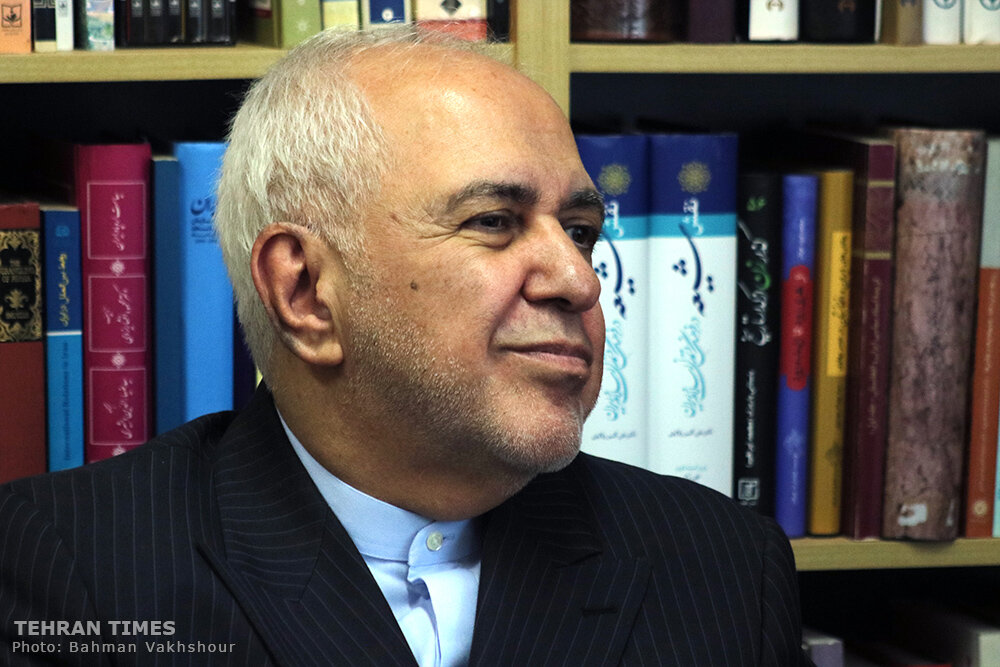
Iran will not negotiate over its ballistic missile programme under any circumstances, and it will not send a delegation to Islamabad until Washington meets two preconditions it has so far refused to concede: lifting the economic blockade, and explicit recognition of Iran's nuclear rights. Those positions, delivered on 20 April 2026 by Shams Al-Waeisen, president of the Iranian Journalists Union and a commentator with direct access to Tehran's negotiating posture, mark the clearest articulation yet of the terms under which Iran would re-engage with the current diplomatic round.
The statement arrived against a backdrop of suspended talks, a fragile ceasefire, and signals — reportedly conveyed through Pakistani intermediaries — that the Trump administration may be preparing to moderate its opening demands. Whether that amounts to a genuine shift in position or a tactical pause designed to stretch the ceasefire window without committing to a deal is the central question animating the current standoff.
What Tehran Is Actually Demanding
Al-Waeisen's statements, transmitted via the Arabic-language service of Iranian state media on 20 April 2026, make clear that Iran's red lines are not rhetorical. The missile programme, she said, is "a red line for Iran and will not be put on the negotiating agenda." The phrasing is deliberate: it places the issue outside the perimeter of what Tehran considers negotiable under any conditions. A parallel condition requires that the economic pressure campaign — sanctions, banking restrictions, and the blockade on oil revenues — be lifted before Iranian negotiators board a plane to Islamabad.
The third demand, recognition of nuclear rights, addresses a long-standing Iranian grievance: that any agreement premised on permanent constraints on enrichment would amount to a capitulation of a sovereign capability Iran regards as non-negotiable. Tehran has consistently framed its nuclear programme in civilian terms, and while international inspectors have repeatedly raised concerns about the scope and transparency of the programme, Iran insists the right to enrich is encoded in the Non-Proliferation Treaty. Washington has never publicly accepted that framing.
The American Position: Deal or Delay?
Al-Waeisen offered a pointed assessment of Washington's posture. "I think that Washington does not want an agreement in this round, but rather an understanding to extend the ceasefire," she said on 20 April 2026. The framing — that the current diplomatic activity is primarily designed to buy time rather than reach a substantive accord — tracks with scepticism voiced by analysts watching the talks cycle. Ceasefire extensions without structural progress on the underlying sanctions architecture tend to benefit the side with the stronger leverage position, which in this case is arguably Washington.
Yet there is a counter-reading, and Al-Waeisen herself noted it. The "atmosphere from Pakistan," she said, indicates that Trump may retreat from his positions in order to resume negotiations. If accurate, this would represent a concession from an administration that entered the current round demanding a complete halt to enrichment before any sanctions relief. The Pakistani channel carries weight here: Islamabad has served as an intermittent back-channel between the two sides, and its diplomats have cultivated relationships with both administrations. Whether the signals out of Pakistan reflect genuine American flexibility or diplomatic optimism projected by intermediaries keen to keep the process alive is not possible to determine from the available record.
The Structural Context: Sanctions Architecture and Dollar Hegemony
The negotiating impasse sits inside a larger pattern that has defined Iran-Western relations since the last round of the Joint Comprehensive Plan of Action unravelled under separate American administration in 2018. The economic pressure campaign has not produced regime change. It has, however, significantly constrained Iran's oil export capacity, strained its banking sector, and reduced the government's fiscal room to manoeuvre. That constraint is real, and it creates pressure on Tehran to negotiate.
But the same pressure has strengthened Iran's incentive to negotiate from a defined red-line position rather than a flexible one. Concessions on the missile programme — which forms the backbone of Iran's regional deterrence posture, particularly vis-à-vis Israel and US bases in the Gulf — would erode a capability Tehran has spent decades building. Nuclear concessions beyond what Iran already considers its right would compound that erosion. The asymmetry in what each side is being asked to give up is stark: Washington wants structural limits on weapons delivery systems and the nuclear programme's maximum scope. Tehran wants sanctions lifted and its rights acknowledged. Those are not equivalent concessions.
What Happens If the Window Closes
The ceasefire that enabled this round of talks remains in place, but it is not self-sustaining. Al-Waeisen was explicit: "Iran will respond strongly and decisively in the event of renewed aggression." That is not a bluff. Iran's regional network — including proxies and allies across Iraq, Syria, Lebanon, and Yemen — constitutes a significant escalation option that Washington and its allies have had to factor into every calculation of military pressure. The 2019-2020 cycle, in which targeted US operations against Iranian-backed forces produced a proportionate but damaging exchange, is recent enough to inform both sides' risk calculus.
The more probable near-term trajectory is continued suspension. Iran waits for Washington to move first on the blockade and nuclear recognition. Washington waits to see whether economic pressure or a regional event shifts Tehran's calculus. The Pakistani channel keeps open a line that neither side wants to formally acknowledge. In the meantime, the enrichment programme continues, the sanctions remain in place, and the ceasefire holds — just barely.
This article was structured around Arabic-language wire reporting from Iranian state-affiliated media, supplemented by signals-intelligence-adjacent commentary via the Pakistani diplomatic channel. Western-wire coverage of the current negotiating round has been thinner than in prior cycles, reflecting both the sensitivity of back-channel formats and the absence of formal joint communiqués. This publication's approach has been to foreground the explicit Iranian framing while noting — as Al-Waeisen herself did — the competing interpretation of American intent.
Wire provenance
This editorial synthesis draws on the following public wire/social posts:
- https://t.me/alalamarabic/189847
- https://t.me/alalamarabic/189843
- https://t.me/alalamarabic/189838
- https://t.me/alalamarabic/189836
- https://t.me/alalamarabic/189834
- https://t.me/alalamarabic/189832