Iran's Nuclear Ultimatum Enters Critical Phase as Blockade Bites and Markets Move
A naval blockade is costing Iran an estimated $500 million per day in oil revenues, according to the U.S. president, while diplomatic channels through Pakistan suggest a delegation may return to talks as early as Tuesday.
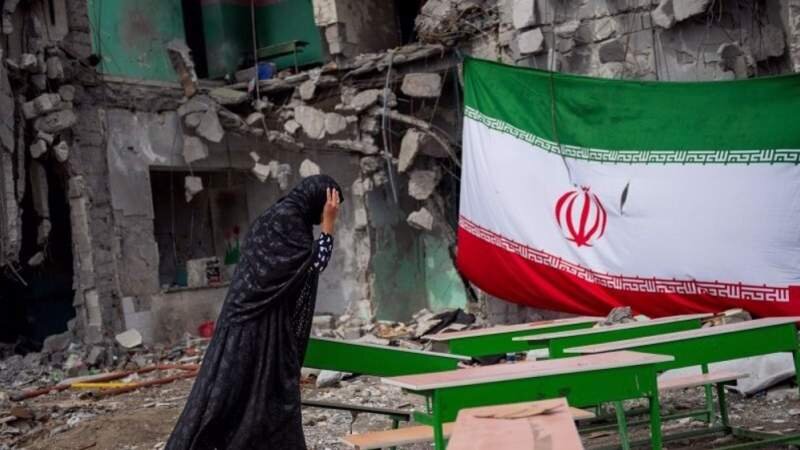
The Trump administration imposed a naval blockade on Iranian oil exports on 18 April 2026. Forty-eight hours later, the pressure campaign is producing measurable strain on Tehran — and contradictory signals from multiple directions simultaneously.
According to figures cited by the U.S. president on 20 April, Iran's oil revenue has dropped by approximately $500 million per day since the blockade began. U.S. military officials confirmed that naval forces have directed 27 vessels to turn away from Iranian ports during the same period. Separately, Polymarket's trading market assigned a 65 percent probability to Iran surrendering its enriched uranium stockpile within the calendar year — a market signal that suggests traders see a meaningful pathway to a negotiated settlement.
Pakistan's foreign ministry told Reuters on 20 April that it had received a "positive signal" from Iran and was working to facilitate the return of an Iranian delegation to the negotiating table, potentially as soon as Tuesday or Wednesday.
This publication finds that the situation presents a coherent U.S. strategy in early form — apply maximum economic pressure, keep the military corridor open, and wait. But the picture is complicated by questions about market integrity, domestic political pressures inside Iran, and the durability of allied consensus on the blockade itself.
The Blockade Holds — For Now
The naval enforcement operation represents the most aggressive application of secondary sanctions since the maximum pressure campaign of the first Trump administration. Rather than targeting Iranian banks or refining capacity — instruments that proved partially circumventable through intermediaries — the current approach physically prevents tankers from loading at source.
The 27 vessel redirections confirmed by U.S. military sources represent hard evidence of enforcement. Each turned-away tanker translates to a specific cargo of oil that does not reach a buyer, and a revenue line that does not appear in Iranian state accounts. The $500 million daily figure cited by the administration is an estimate — this publication has not independently verified the methodology — but the directional case is strong. Oil exports are Iran's primary hard currency earner, and preventing export vessels from loading is more effective than targeting the financial infrastructure that processes payment after the fact.
The enforcement posture is also calibrated to avoid escalation. U.S. naval forces have redirected vessels rather than boarding or impounding them. The language from the administration has consistently emphasized the nuclear goal rather than regime change. The blockade functions as a lever, not a casus belli.
When Markets Move Before Announcements
The BBC reported on 20 April that its investigation had identified significant spikes in market activity shortly before the U.S. president made announcements related to the Iran situation. The findings raise questions about whether information about administration decisions reached financial actors ahead of public disclosure.
This is not a new pattern in U.S. geopolitical signaling — the equities market's responsiveness to unannounced presidential tweets on trade policy has been documented since the early 2010s — but the Iran context carries additional weight because of the energy linkage. If traders with advance knowledge of a blockade announcement positioned in oil futures before the public statement, they would profit from the price spike that followed. The investigation did not identify specific individuals or firms.
The implications are structural. Geopolitical risk premiums in oil markets depend on the assumption that all participants are working from the same public information set. If that assumption is compromised — if specific actors routinely trade on information that has not yet reached the market — then the risk premium itself is partially a transfer from uninformed participants to informed ones. This matters for how sanctions regimes function: the credibility of a threat depends on its enforceability, and enforceability depends in part on whether markets can correctly price the probability of military escalation.
The Diplomatic Window
The Pakistani channel represents the most concrete sign of movement on the negotiation side. Islamabad has historically played a back-channel role in U.S.-Iranian communications, particularly during periods when direct diplomatic contact was politically impossible for both parties. The foreign ministry's statement to Reuters on 20 April — describing a "positive signal" from Tehran and active efforts to bring an Iranian delegation to talks — is the clearest statement of diplomatic intent to emerge from the Iranian side since the blockade began.
This matters because it suggests the pressure campaign is working through the intended mechanism: not by provoking a military response from Tehran, but by creating enough economic duress to bring Iranian officials back to a table they had previously shown little interest in approaching. The timeline, if Pakistan's account is accurate, places a potential Iranian delegation in discussions within days.
The counterargument is worth stating plainly: Tehran has used diplomatic signaling before as a way to buy time and fracture Western consensus without making substantive concessions on the nuclear program. The enriched uranium stockpile — reported by CBS's 60 Minutes programme to amount to nearly 1,000 pounds of highly enriched material, sufficient for 10 to 11 nuclear devices if further processed — represents a capability that Iran has not previously been willing to surrender in exchange for sanctions relief alone. Any agreement that does not address the existing stockpile is, in the framing of the U.S. administration, an incomplete solution.
Energy Markets and the Price Signal
The U.S. president stated on 20 April that gas prices in the United States would "plummet sharply" if the nuclear matter were resolved and Iran complied with its obligations. The statement is not a prediction of a specific timeline — it is a political framing device that connects the domestic cost-of-living concern to the foreign policy objective.
The underlying dynamic is real. Iranian oil that is not exported creates a supply gap in global markets that other producers can partially fill, but not completely. Brent crude has been pricing in a geopolitical risk premium since the blockade began, and a successful resolution — with sanctions lifted and Iranian exports returning — would compress that premium. The magnitude of the price movement would depend on how quickly exports could resume and whether the United States would permit third-party re-purchasing of Iranian crude.
This publication notes that the energy price linkage also creates a vulnerability for the pressure strategy. If oil prices spike too sharply — causing visible pain at American gas pumps before the political benefit of a deal can materialize — the political durability of the blockade policy becomes uncertain. The 65 percent probability figure on Polymarket reflects a market estimate; it is not a certainty, and it incorporates significant uncertainty about the timeline and the terms of any agreement.
The structural picture is this: the United States has assembled an enforcement mechanism — naval, financial, diplomatic — that is applying genuine pressure to a government whose primary revenue stream depends on commodity exports. Tehran has shown, through the Pakistani channel, that the pressure is sufficient to produce diplomatic movement. Whether the movement leads to a verified, durable dismantling of the nuclear program — or to another cycle of partial concessions and sanctions relief that leaves the underlying capability intact — is the question that will determine whether the blockade becomes a success story or a case study in the limits of economic coercion.
The enriched uranium remains in Iranian facilities. The blockade is holding. And the delegations are, for now, talking.
This article was updated at 2026-04-20T20:00 UTC to include reporting from the BBC investigation into market timing.
Wire provenance
This editorial synthesis draws on the following public wire/social posts:
- https://x.com/unusual_whales/status/1912970341120635162
- https://x.com/polymarket/status/1912928505829871746
- https://x.com/polymarket/status/1912903143783055624
- https://t.me/gazaalanpa/18482
- https://t.me/gazaalanpa/18480
- https://t.me/alalamarabic/29451