Iran Declares Pakistan Sole Diplomatic Mediator as US Talks Stalls
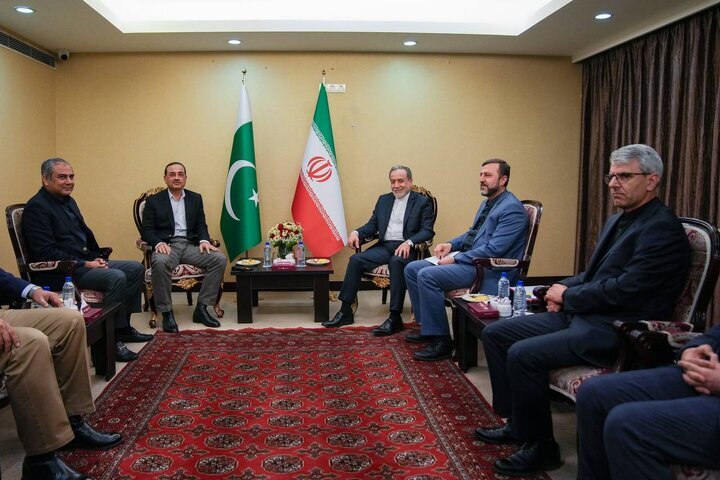
Iran said on 20 April 2026 that Pakistan is now the only official mediator in its diplomatic engagement with the United States, effectively closing the chapter on a back-channel negotiating process that Western and regional officials had monitored since Oman and Switzerland served as earlier intermediaries.
The declaration came from Foreign Ministry Spokesperson Esmaeil Baqaei at a Tehran press conference, during which he accused Washington of betraying the diplomatic process over the preceding year and of presenting proposals that Iran characterized as frivolous. The statements, carried simultaneously by Iranian state outlets including Al-Alam and Mehr News on 20 April, constitute Tehran's most explicit public rejection of the current US negotiating posture since indirect talks began.
A Mediation Architecture Collapses
The designation of Pakistan as the sole remaining official channel follows months of indirect communication mediated through Muscat and, to a lesser extent, through European intermediaries in Geneva. That architecture, never publicly acknowledged by Washington, appears now to have broken down. Baqaei's statement on 20 April that "America betrayed the diplomatic process in the past year" signals not merely a negotiating impasse but a political rupture — Tehran is characterizing the US posture as fundamentally unserious rather than merely disagreeable.
According to Baqaei's remarks, Washington presented a 15-point plan that Iran reviewed and rejected. The Iranian characterization of the proposals as non-serious was repeated across multiple Iranian state media channels on 20 April, suggesting coordinated messaging rather than off-the-cuff remarks. What the US side proposed in that plan, and whether Washington regarded it as a starting position or a final offer, remains unclear from the available sources. The sources do not specify the contents of the 15-point framework.
Pakistan's elevation carries logistical weight. Islamabad maintains open channels with both Washington and Tehran, and has facilitated prisoner-swap discussions and quiet trade exemptions in previous cycles of US-Iranian friction. Whether Pakistan's intelligence and diplomatic apparatus is equipped to bridge the current gap between the two governments — rather than simply relaying positions — is an open question.
The Ship Incident and Military Posturing
Baqaei's press conference included a separate, pointed remark that Iran is "ready to confront America after the aggression against one of our ships." The phrasing suggests a specific maritime incident, likely involving a vessel tied to Iran's commercial or paramilitary maritime operations, that Tehran is framing as US aggression rather than interdiction. The sources do not provide the name of the vessel, its location, or the date of the incident.
That framing matters. By linking the diplomatic breakdown to a potential military flashpoint, Tehran is signaling that the collapse of talks is not an academic exercise — it carries kinetic risk. Iranian officials have consistently used maritime incidents as pressure points, and the reference to readiness for confrontation suggests the hardline posture inside Tehran's foreign policy establishment is dominant at this moment.
What Washington Has Not Said
The US government has not issued a public response to Baqaei's 20 April statements as of the filing of this article. American officials have historically declined to characterize the substance of indirect talks, a reticence that reflects both legal sensitivities and the domestic political weight that any appearance of accommodating Tehran carries in Washington.
The Trump administration, which returned to office in January 2025, had signaled openness to a revised nuclear accord but insisted on permanent constraints rather than time-limited ones. Iran has consistently rejected any deal that does not preserve what it calls its "right" to enrichment. The gap between those positions was wide before the current stall; the sources suggest it may now be unbridgeable through the existing diplomatic infrastructure.
Structural Dimensions of a Rupture
The breakdown matters beyond bilateral relations. The nuclear non-proliferation architecture in the Gulf rests, in part, on the assumption that Iran can be managed through a combination of sanctions and diplomacy. If that combination stops working — if Tehran no longer sees value in the negotiating table — the calculus for Saudi Arabia, the UAE, and Israel shifts accordingly. Regional actors who have publicly supported diplomatic engagement with Iran will be watching Islamabad's effectiveness as a channel, or the lack of it.
The dollar-based sanctions regime also faces a test. The more Iran integrates with alternative financial networks, and the more it coordinates with Russia and China on bilateral trade settlements outside SWIFT, the less leverage Washington can credibly threaten. That erosion of economic pressure has been gradual; a diplomatic rupture accelerates the political argument inside Tehran that engagement with Washington yields nothing.
The sources do not indicate what Pakistan's leadership has said publicly about its new designation as sole mediator, nor whether Islamabad has signaled willingness or capacity to deliver a different outcome than the intermediaries that preceded it.
Pakistan's official mediator designation on 20 April 2026 is the headline. The subtext — that every previous channel has now been exhausted from Iran's perspective — is the more consequential signal. Whether that position holds, or whether the next maritime incident or sanctions escalation produces a different set of back-channel communications, is the open question this publication will continue to track.
This publication's reporting on the Gulf diplomatic track has consistently emphasized Iranian official statements alongside Western wire coverage; on this story the balance tilts toward Tehran's framing, reflecting the absence of a US government statement on the record at time of publication.