Iran Rejects Ultimatums as Hormuz Tensions Escalate
Tehran's foreign ministry on 20 April dismissed Western deadlines and warned of military retaliation, as maritime traffic through the Strait of Hormuz remained disrupted for a seventh consecutive week.
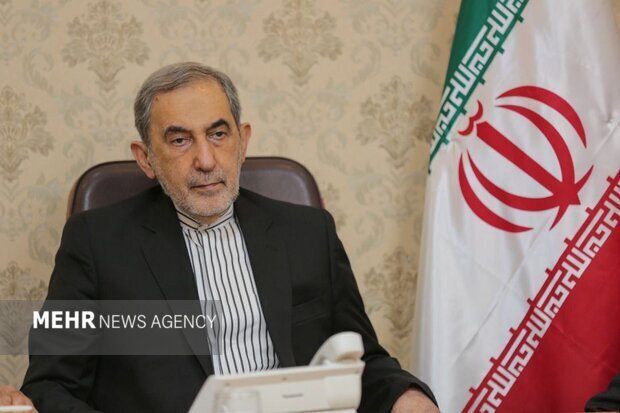
Iran's foreign ministry on 20 April dismissed what it termed deadlines and ultimatums from Washington and its allies, warning that the Islamic Republic would respond militarily to any "new adventure" by the United States or Israel. The statements, delivered at a Tehran press conference and amplified across Iranian state media channels, came as commercial shipping through the Strait of Hormuz — through which roughly a fifth of the world's oil flows — remained disrupted for a seventh consecutive week.
The diplomatic posture amounts to a full rejection of the negotiating framework reportedly favoured by Washington, which has sought to tie sanctions relief to verifiable caps on Iran's nuclear programme and regional military activity. That framework now appears to have stalled, with both sides treating the other's core demands as non-starters.
Tehran's Position: Defensive by Design
The foreign ministry spokesperson insisted that Iran's actions over the preceding forty days constituted defence of its existence — language calibrated to frame the Islamic Republic as a responding party rather than an initiating one. "What happened in the last 40 days was Iran's defence of its existence," the spokesperson stated, according to coverage by Tasnim News and Al Alam. The framing deliberately echoes language used by Tehran to characterise previous confrontations: self-defence as a legal and moral shield against charges of aggression.
Iran also reasserted that it harbours no enmity toward regional states, a message clearly aimed at Gulf monarchies whose co-operation Washington has cultivated as part of its maximum-pressure strategy. "Cooperation with the aggressors is a fatal analytical error," the spokesperson warned, according to Jahan Tasnim. The warning amounts to a threat: any Arab state that aligns with US-led economic or military measures against Iran risks being treated as a hostile actor in its own right.
Washington's Framework Under Pressure
The American position — as reported across wire services — has centred on demanding verifiable concessions before sanctions relief can be considered. That approach requires Iran to accept constraints on its enrichment programme and its network of regional proxies, neither of which Tehran has shown willingness to cede.
Pakistan, meanwhile, has positioned itself as the sole official intermediary. The foreign ministry stated on 20 April that Islamabad is the only recognised diplomatic channel between Iran and the United States. That claim, if accurate, sidelines the European trio (France, Germany, Britain) and the Omani back-channel that have historically facilitated indirect talks. It also elevates Pakistan's strategic utility to Tehran as a diplomatic buffer — a role Islamabad may find commercially attractive given its ongoing IMF negotiations and energy import dependency.
A Shipping Crisis With No Diplomatic Off-Ramp
The Strait of Hormuz situation presents the sharpest immediate stakes. Iranian state media reported that normalisation of traffic through the waterway is not currently possible, attributing the disruption to military aggression — language that shifts blame squarely onto the US and its regional partners. Iranian naval activity in the Gulf has increased visibly since mid-February, according to commercial shipping intelligence reports cited by industry outlets, and several insurers have reclassified the corridor as a high-risk zone.
The economic consequences are already material. Liquefied natural gas shipments from Qatar — the world's largest LNG exporter — face extended routing around the Cape of Good Hope, adding roughly two weeks to transit times and elevating freight costs significantly. Asian buyers, particularly in South Korea and Japan, have accelerated inquiries into alternative supply arrangements, though no viable short-term substitute exists for Gulf energy flows.
What remains unclear is whether the disruption reflects deliberate Iranian policy — a coercive tool — or an unintended consequence of heightened military posture that Tehran now struggles to de-escalate without appearing weak. The foreign ministry statement did not specify what conditions would permit normalisation, leaving the door rhetorically open while practical obstacles accumulate.
The Structural Logic of Escalation
The Hormuz impasse sits within a longer arc of US-Iranian competition that predates the current government's tenure in Washington. Sanctions have failed to compel capitulation; military deterrence has not produced negotiated containment; and diplomatic engagement has repeatedly collapsed over verification disputes that both sides treat as existential. The result is a pattern of managed confrontation — tit-for-tat escalation with no established off-ramp and no trusted intermediary capable of bridging the stated positions.
Tehran's insistence that it will not accept deadlines reads, in this context, less like defiance and more like a statement of irreducible interest: the Islamic Republic will not negotiate under duress. Whether that posture reflects strategic calculation or domestic political necessity is impossible to disentangle from the outside, but the practical effect is identical — the negotiating window, such as it is, appears closed for now.
The longer shipping remains disrupted, the more acute the pressure on both sides. Asian energy consumers, European industrial buyers, and global freight markets are absorbing costs that none of the principals are inclined to absorb indefinitely. Whether that economic friction eventually creates political space for a diplomatic reopening — or whether it hardens resolve on both sides — is the central question the coming weeks will answer.
—
Desk note: Monexus led with Iranian state-media framing of the Hormuz disruption as externally caused — a framing the wire services treated with appropriate scepticism while also reporting the shipping disruption as fact. The Iranian framing does not appear in Western-government sourced reporting; readers should note the attribution asymmetry when consuming coverage from outlets that rely primarily on Western official sources for the US position and Iranian state media for Tehran's.