Iran Rejects US Ultimatums as Hormuz Crisis Deepens
Tehran's foreign ministry spokesperson said Iran does not recognize American ultimatums and will not normalize traffic through the Strait of Hormuz, a key shipping chokepoint for global oil markets, while offering Pakistan as the sole diplomatic channel.
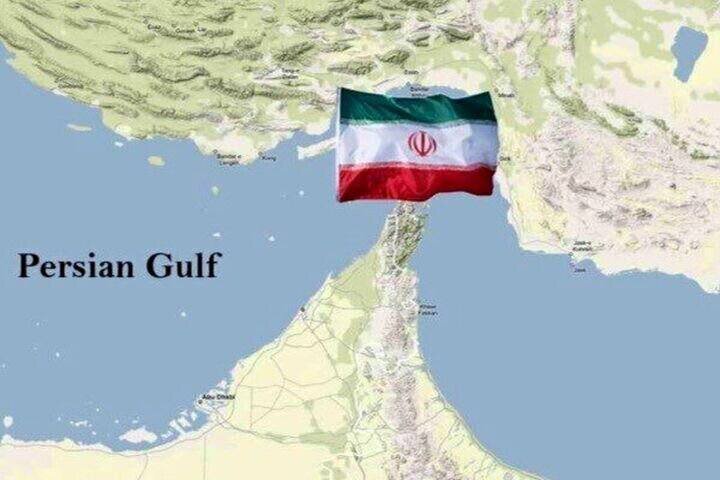
Iran's foreign ministry spokesman said on 20 April 2026 that his country does not recognize or abide by American ultimatums, as the Islamic Republic hardened its diplomatic position over the Strait of Hormuz — a waterway through which roughly a fifth of the world's oil passes.
Spokesman Esmail Baghaei told a press conference in Tehran that traffic through the Strait of Hormuz cannot be normalized so long as what he described as military aggression continues. His remarks came amid heightened tensions between Iran and the United States, which has demanded Tehran scale back military activities in the Gulf.
The spokesman also identified Pakistan as the only official mediator in whatever diplomatic process exists between Iran and Washington, a characterization that limits the role available to other intermediaries that regional and European officials had previously sought to occupy.
Immediate Context: The Hormuz Standoff Hardens
Baghaei's statements on 20 April represent the most direct articulation of Iran's position since the most recent phase of the crisis began. His remarks carried explicit language about what he called the main cause of the disruption to shipping in the Strait of Hormuz — framing it as military aggression by an external party rather than Iranian action.
That framing is deliberate. Tehran is attempting to invert the dominant Western narrative, which has presented Iran as the source of maritime instability. Baghaei's assertion shifts the label of aggressor onto the United States and its regional partners, arguing that Iranian military activity in the Gulf is a defensive response to provocation rather than an unprovoked act of coercion.
The Strait of Hormuz connects the Persian Gulf to the Gulf of Oman and is the primary export route for crude oil from Saudi Arabia, Kuwait, Bahrain, Qatar, the UAE, and Iraq — as well as for Iranian shipments. Any disruption to transit through the strait has direct consequences for global energy markets and for the economies of countries far beyond the Middle East.
US officials have rejected Tehran's framing and have insisted that any resolution requires Iran to demonstrate it will not use its regional military posture to threaten commercial shipping. Washington has set conditions that Iran has called non-starters. Baghaei's declaration that Tehran recognizes no American ultimatum effectively closes off that pathway.
How Iran Is Framing Its Position
Central to Baghaei's presentation was the claim that Iran bears no enmity toward its regional neighbours. "Iran has no enmity with the countries of the region," he said, adding that the actions of the preceding forty days represented Iran's defense of its existence.
That framing serves multiple audiences simultaneously. Domestically, it justifies heightened military activity by recasting it as legitimate self-defence. Regionally, it attempts to reassure Gulf states that Iran does not view them as adversaries — an effort that has had limited success, given that several Gulf monarchies have aligned themselves with the American position and have participated in maritime security coalitions intended to counter Iranian pressure.
Internationally, the language of self-defence is calibrated to complicate any future UN Security Council discussion. A state presenting itself as engaged in authorized defensive action has a different posture before international bodies than one framed as the aggressor in a maritime dispute.
The reference to Pakistan as the sole official mediator is significant. It effectively sidelines other diplomatic channels — including Arab League intermediaries and European officials who had sought to position themselves between the two sides. By naming Pakistan explicitly, Tehran is signalling that it will engage only through a framework it considers manageable, and one where it retains some leverage over the process.
Structural Dynamics: A Contest Over the Narrative
The broader pattern here is not simply a bilateral dispute between Iran and the United States. It is a contest over how the current phase of Middle Eastern instability is defined. The United States has sought to frame Iran as a destabilizing actor that threatens international commerce and regional partners. Tehran has responded by positioning itself as a status-quo power defending its territory and its lawful interests against foreign military pressure.
These framings are not accidental. In a region where legitimacy is itself a strategic resource, the side that successfully establishes itself as the defensive party gains political advantages that military dominance alone cannot provide. Gulf states that depend on stable energy revenues have a structural interest in avoiding a situation where they are seen as complicit in actions that disrupt their own shipping — a tension that sits uncomfortably beneath the surface of their public alignment with Washington.
The Hormuz gambit is also, in part, a negotiating posture. Tehran appears to be demonstrating that it has the capacity to affect global energy flows — a capability it will eventually trade against sanctions relief, regional recognition, and guarantees it considers essential to its security. Whether that trade is achievable depends on whether the current US administration is willing to engage with Iranian conditions rather than simply insisting on compliance with its own.
Stakes and Forward View
If the standoff continues without a negotiated adjustment, the risk of miscalculation rises. A misread signal, an unintended encounter at sea, or an incident in a third-country theatre could rapidly escalate the crisis beyond the reach of diplomats currently positioned to manage it.
The immediate stakes are economic: disruptions to Strait of Hormuz transit drive up insurance premiums for Gulf oil shipments, raise fuel costs for importers in South and Southeast Asia and Europe, and create uncertainty in commodity markets already under pressure from unrelated geopolitical disruptions. These effects are felt most acutely by countries that have no direct involvement in the Iran-US dispute but are structurally dependent on unimpeded Gulf transit.
Baghaei's statement on 20 April does not close the door to diplomacy entirely. Pakistan's mediating role remains active, and the language used — specifically, that the armed forces will respond to any new adventure — suggests Tehran does not believe the escalation has reached a point of no return. But the hardening of positions on both sides makes a negotiated exit more difficult to construct with each passing day.
The counter-narrative is worth holding: it is possible that both Washington and Tehran are performing for domestic audiences rather than genuinely preparing for sustained confrontation. The American ultimatum may be a pressure tactic; the Iranian rejection may be a negotiating opening dressed as defiance. If that reading holds, space for compromise exists. If it does not — if both governments have committed to postures they cannot easily walk back — the Hormuz crisis enters a phase where accident, not intention, drives the outcome.
This publication drew on Iranian state and regional Telegram-sourced accounts to capture Tehran's official framing. Western-wire reports, which emphasized US demands and the disruption to commercial shipping, provided the counterpoint; both framings appear in the article.