Iran Vows Retaliation After US Seizes Cargo Ship, Jeopardising Fragile Ceasefire
Tehran has pledged a response after American forces intercepted an Iranian merchant vessel near Hormuz Strait, hours after Iranian state media declared there was no prospect of fruitful talks with Washington.
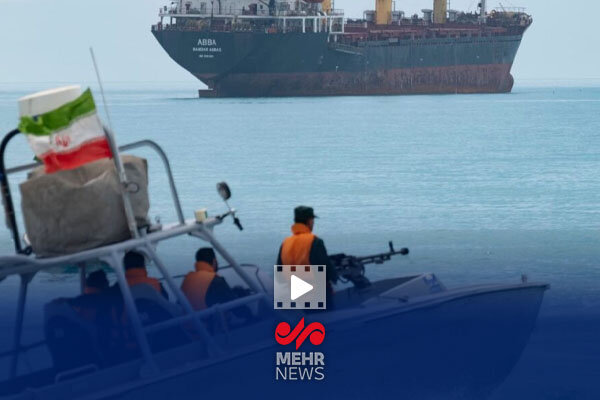
The United States Navy intercepted and seized an Iranian merchant vessel on 19 April 2026 after it attempted to run an American-enforced maritime blockade, according to three officials who spoke to Reuters on condition of anonymity because they were not authorised to discuss the operation publicly. Iran's foreign ministry responded within hours, vowing retaliation and declaring the action a violation of the ceasefire framework that both governments have described as the foundation for renewed nuclear negotiations.
The incident represents the most serious rupture in the informal ceasefire since Oman-brokered talks produced a tentative diplomatic opening earlier this year. American officials described the vessel as transporting goods in violation of existing sanctions施加 on Iran's oil and shipping sectors. Iranian state media called the interception "maritime piracy" and accused Washington of escalating aggression in Gulf waters. The speed and tone of Iran's response — delivered through the foreign ministry, not through military channels — suggested a deliberate choice to frame the act as a political rather than a purely military matter.
The confrontation has put both governments in a difficult position. Washington needs to demonstrate enforcement credibility against a sanctions regime that critics inside the administration have long argued is inconsistently applied. Tehran needs to be seen responding to perceived American aggression in order to sustain domestic support for continued dialogue. Neither incentive lends itself to immediate de-escalation.
The Seizure and Tehran's Response
According to the Reuters account, American naval forces boarded the vessel after it refused multiple orders to submit to inspection near the Hormuz Strait, one of the world's most strategically sensitive maritime chokepoints. The officials did not specify which branch of the US military conducted the boarding, nor did they identify the vessel by name. American customs and maritime enforcement authorities are typically responsible for such interdictions, though the Fifth Fleet operates naval assets in the region.
PressTV, the English-language service of Iranian state media, issued a sharply worded statement on 20 April, calling the operation "a flagrant act of aggression on an Iranian merchant vessel in the waters of the Strait of Hormuz." The channel characterised the seizure as a breach of the ceasefire framework and said Iran would respond "in kind." The statement did not specify what form that response would take or on what timeline.
Iranian state media separately reported on 19 April that talks between Iran and the United States had reached an impasse. Polymarket, a prediction market platform, circulated a translated summary of the Iranian framing: that there was "no clear prospect of fruitful negotiations" with the United States at present. That assessment, issued before the ship seizure, had already signalled strain in the diplomatic relationship before the maritime incident compounded it.
Competing Narratives and the Problem of Verification
The Western wire account and the Iranian state-media account diverge sharply on the legal and political characterisation of the same event. Reuters reported the vessel was boarded as part of sanctions enforcement; PressTV called the same boarding a violation of the ceasefire agreement. Neither side has provided independent corroboration of the other's version of events.
This is not a minor discrepancy. The ceasefire framework, such as it exists, rests on mutual understanding rather than a formal written agreement. Without a signed document, both governments retain wide latitude to define what counts as a violation. The ambiguity is structural — it was always present in the Oman-brokered arrangement — but it becomes far more dangerous when an unambiguous act of force occurs.
Independent maritime monitoring services, including vessels tracked through the Automatic Identification System, did not immediately confirm details of the incident. The anonymity of the American officials who spoke to Reuters limits the ability to cross-examine the specifics of the operation: which vessel, what cargo, which enforcement authority conducted the boarding. The Iranian account adds context about the vessel's commercial status but comes from a state-media outlet with a documented record of politically motivated framing.
Structural Context: Sanctions, Deterrence, and the Hormuz Calculus
The Hormuz Strait carries approximately 20 to 25 percent of global oil trade, a figure that gives any maritime incident in the area an outsized economic dimension. The United States has used naval presence in the Gulf as a tool of sanctions enforcement since the reimposition of sweeping restrictions following the 2018 withdrawal from the Joint Comprehensive Plan of Action. Iran, for its part, has historically threatened to close the strait — or to threaten closure — in response to economic pressure.
The underlying dynamic is not new. What has changed in recent months is the diplomatic context: both sides had signalled a willingness to negotiate, and the ceasefire arrangement was the pre-condition for those talks. American officials have described the sanctions regime as a non-negotiable tool of foreign policy. Iran has described the sanctions as an act of economic warfare. The interception of a commercial vessel speaks directly to that fundamental disagreement.
The Hormuz Strait is also a theatre for signalling. Naval movements in the area carry political meaning beyond their immediate tactical substance. The decision to board and seize rather than turn back an Iranian vessel is a different category of action than routine interdiction — it involves physical control of Iranian property in international waters. Iranian retaliation, if it comes, will likely be calibrated to communicate a similar political point.
Escalation Risks and the Diplomatic Fallout
The immediate risk is miscalculation. Neither side appears to want open conflict, but the absence of a formal communication channel means that messages are sent through actions rather than words. A single misinterpreted signal — a patrol movement, a communications silence, an overflight — could transform a contained naval incident into a broader crisis.
The ceasefire framework, such as it was, is now under severe strain. Before the ship seizure, Iranian state media had already described the prospects for negotiations as bleak. The maritime incident makes diplomatic recovery harder without requiring either government to formally abandon the negotiating process, which both still have domestic and international incentives to maintain.
International interlocutors, particularly Oman and European states that have sought to facilitate dialogue, face a narrower window for intervention than they did a week ago. If the ceasefire collapses entirely, the nuclear file — which has been effectively frozen while both sides tested the diplomatic opening — returns to the UN Security Council agenda with none of the diplomatic infrastructure that might have constrained it.
The sources do not agree on whether a formal diplomatic channel still exists. American officials who spoke to Reuters did not comment on the status of negotiations. Iranian state media's declaration that there was "no clear prospect of fruitful negotiations" was issued before the seizure and remains the operative public Iranian position. The combination points toward a period of managed hostility rather than immediate crisis — but the margin for error has contracted significantly.
What remains genuinely uncertain is whether the ship seizure was an authorised enforcement action or an operational decision made by a field commander acting on standing rules of engagement. American officials speaking to Reuters were not authorised to discuss the operation publicly, which suggests internal deliberation about how to characterise it. The discrepancy between the speed of the Iranian response and the ambiguity of the American official account is itself a data point: it suggests the administration is still calibrating its public position.
Desk note: Reuters led the story with the ceasefire implications; PressTV framed it as a violation of ceasefire terms and an act of aggression. This article treats the competing characterisations as the news rather than resolving them.
Wire provenance
This editorial synthesis draws on the following public wire/social posts:
- https://t.me/presstv/23482