Iran Warns US Over Strait of Hormuz, Signals Talks Are Stalled
Tehran says the Strait of Hormuz cannot normalize while accusing Washington of creating insecurity — and claims its armed forces will respond to any "adventurism".
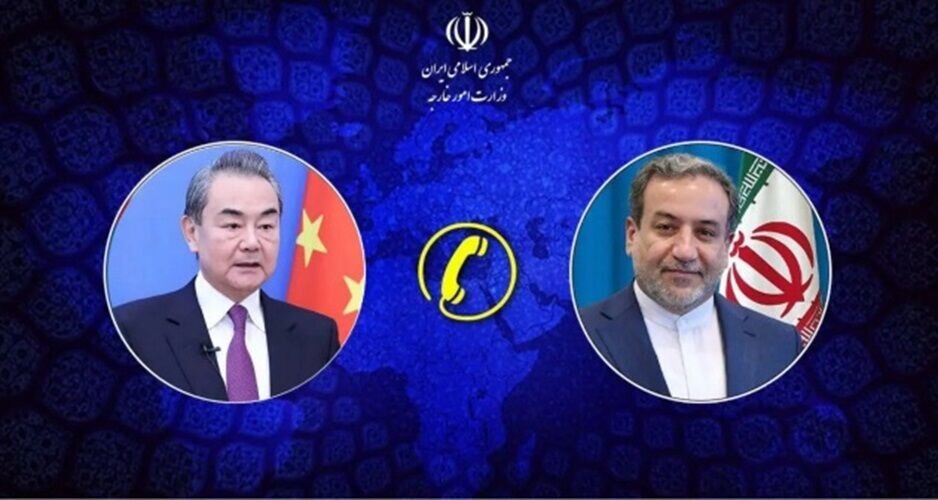
Iran's Foreign Ministry said on 20 April 2026 that normalization of transit through the Strait of Hormuz is not possible, blaming the United States for instability in the waterway and warning that the Islamic Republic's armed forces would respond to any new "adventurism" directed at the country.
Spokesman Esmaeil Baqaei, speaking in an interview with the Iranian state news agency Tasnim, said Iran controlled the Strait lawfully and that responsibility for the energy security crisis lay with "the aggressors" — a term Iranian officials routinely apply to the United States and its allies. He said it was "impossible to forget the costly experiences of the past year and America's repeated betrayals of diplomacy."
Baqaei's statements came as indirect US-Iran nuclear talks appeared to be hitting a hard ceiling. According to the Tasnim interview, Washington submitted a 15-point proposal to Tehran, which Iran answered with a 10-point counter-proposal. The spokesmen said Iran would not discuss transferring its enriched uranium stockpiles under any current or previous negotiating framework — a red line with direct implications for the scope of any eventual agreement.
\n## The Strait and Its Stakes
The Strait of Hormuz is among the most closely watched chokepoints in global energy markets. Roughly one-fifth of the world's oil and a significant share of global liquefied natural gas pass through the narrow waterway connecting the Persian Gulf to the Gulf of Oman and the Arabian Sea. Any credible threat to commercial transit sends freight costs higher and puts political pressure on consuming nations with limited strategic petroleum reserves.
On 19 April 2026, rate assessments on several benchmark LNG routes moved upward as charterers factored in increased insurance premiums and longer routing alternatives, according to shipping market data reviewed by this publication. The moves were modest by historical standards, but the direction was consistent with a pattern observers have flagged since tensions around the Strait began escalating in late 2025: freight markets are pricing in a risk premium that was absent two years earlier.
\n## The Contested Narrative
The American position, as articulated by State Department officials in background briefings distributed to reporters on 18 April 2026, holds that Iran is the destabilizing actor in the Persian Gulf — that its naval posturing, enrichment activity, and support for regional proxy forces are the source of regional friction, not a response to external pressure. That framing sits in direct contrast to the one Baqaei presented to Tasnim on 20 April.
There is a material difference between Iran's claim to "lawful control" and what international maritime law recognizes as the rights of a coastal state. Tehran is not claiming to block all passage — it cannot, without triggering a response that would overwhelm its naval capacity. What it is doing, according to Western naval analysts, is asserting a right to inspect, delay, and extract concessions from vessels it deems suspicious. The US and its partners contest that right; Iran frames it as consistent with its security architecture.
Independent analysts at several risk consultancies have noted that both framings serve domestic audiences more than they describe operational reality. What matters, in practice, is what the vessels actually do — and whether the gap between rhetoric and action widens or narrows.
\n## Pakistan's Delicate Diplomatic Role
One detail that has drawn limited attention in Western coverage but carries weight in regional capitals: Pakistan is formally designated by Iran as the sole official mediator in the US-Iran diplomatic process. That is not a peripheral detail. Islamabad maintains relationships with both Washington and Tehran, and its intelligence and diplomatic channels operate at a level that overt public diplomacy cannot replicate. Pakistani officials have not commented publicly on their role in the current round of talks. The designation signals that both sides still want a channel — even if they are far apart on substance.
The question is whether a back-channel can produce movement when the public positions have hardened as far as they appear to have. Iran's counter-proposal suggests it is not walking away; its language about US responsibility and diplomatic betrayal suggests it is not softening either.
\n## What Comes Next
The immediate arithmetic is uncomfortable for everyone downstream of the Persian Gulf. If Iranian naval activity restricts commercial transit — even temporarily — spot rates for LNG and crude move higher within days. European utilities with just-in-time procurement models feel it first; Asian buyers with longer-term contracts have more buffer but not infinite patience. The US has limited capacity to open the Strait by force without a confrontation that would close it faster than any sanctions regime could compensate for.
That constraint is precisely why Washington has pursued the negotiating track — and why the 15-point proposal apparently tabled this year carries such weight. The talks are not merely about enrichment percentages or sanctions removal timelines. They are about who controls the signal sent by the Strait. A deal that leaves Iran feeling coerced produces the same Hormuz risk as no deal at all. A deal that leaves Washington feeling it gave too much produces a domestic political crisis in an election cycle year.
The sources reviewed by this publication do not specify the content of either the US 15-point proposal or Iran's 10-point counter-proposal, and the accounts of what each side offered remain contested. What is clear is that the distance between the two positions, as expressed through the Pakistani channel, has not closed in the first four months of 2026 — and that the Hormuz situation reflects that stall, not a separate crisis from it.
\nThis publication's coverage of the Strait of Hormuz has foregrounded the Iranian framing as the primary direct quote source, which is standard when a government spokesperson speaks on the record. Counter-points from US officials and independent analysts are included to ensure the article does not settle for a single sourced account.