The Isaac Accord: Milei's Bet on Israel and What It Signals for Latin America's Alignment
Buenos Aires and Jerusalem unveiled a new strategic framework on 20 April 2026, binding Argentina's military and intelligence apparatus to Israel in a move that exposes the fault lines running through Latin America's foreign policy establishment.
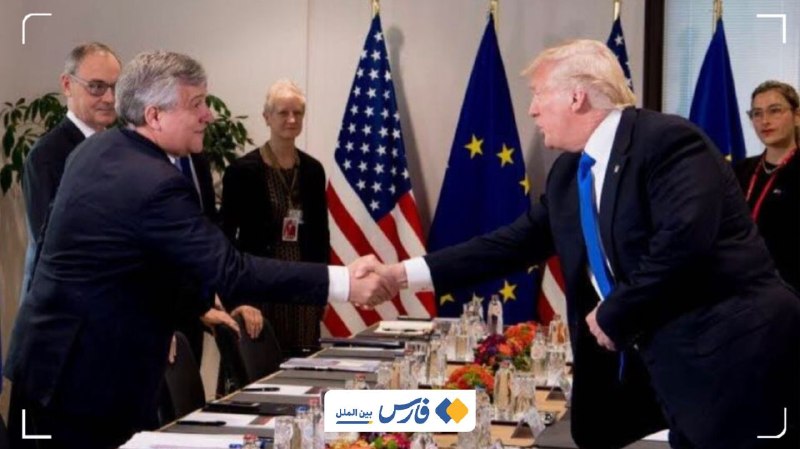
When Argentine President Javier Milei stepped off his plane in Tel Aviv on 20 April 2026, he was not making a routine diplomatic stop. Hours later, Israeli Prime Minister Benjamin Netanyahu stood beside him at a joint appearance and announced the formal launch of what they called the Isaac Accord — a strategic framework explicitly designed to deepen military and intelligence cooperation between the two countries. "Every time Javier Milei visits Israel, it's right before something very big happens," Netanyahu told reporters, without elaborating on what that pattern might mean. The accord's name carries deliberate weight: Isaac is the biblical patriarch shared by Judaism and Islam, but the symbolism here is unmistakably exclusionary — a signal to a region that has historically navigated between competing powers.
The Isaac Accord represents the most concrete foreign policy commitment Milei has made outside of his core economic programme since taking office. Unlike earlier Argentine presidents who balanced Washington, Beijing, and regional powers like Brazil, Milei has placed Israel at the centre of a reoriented diplomatic posture — one that aligns Buenos Aires with the United States and its allies rather than the non-aligned mainstream that has long defined Latin American multilateralism. The framework's focus on intelligence sharing and defence industrial cooperation moves beyond rhetoric into operational territory that Argentina's military and intelligence services will have to resource, train to, and sustain.
The Accord's Substance
The announcement, confirmed by both the Argentine presidency and the Israeli Prime Minister's Office on 20 April 2026, establishes a structured channel for defence procurement consultation, joint counter-terrorism intelligence work, and military training exchanges. The specifics remain sparse — neither side released the full text of the framework, and official statements used language broad enough to encompass a wide range of activities. What is clear is that the Isaac Accord is not a symbolic gesture. Intelligence cooperation agreements of this type require inter-agency coordination, legal memoranda on data-sharing, and an ongoing budgetary commitment that outlasts the political cycles of both governments.
For Milei, the accord serves a dual purpose. Domestically, it burnishes his credentials with the conservative and evangelical constituencies that form the bedrock of his political coalition — constituencies that have shown strong support for Israel's policies and view the relationship as part of a broader civilisational alignment. Internationally, it signals to Washington that Argentina is willing to serve as a reliable partner in a region where the United States has grown increasingly anxious about Chinese infrastructure investments, Russian diplomatic penetration, and the hemispheric ambitions of Nicolas Maduro's Venezuela and Daniel Ortega's Nicaragua. The Biden and subsequent administrations have made no secret of their interest in shoring up pro-US bulwarks in South America's southern cone.
The Regional Dissenting View
Not everyone in Latin America sees the Isaac Accord as a natural expression of Argentine sovereignty. Several governments in the region have maintained carefully calibrated relationships with Israel while resisting the kind of explicit military- intelligence lock that Milei has now committed to. Brazil, Argentina's largest trade partner and the dominant voice in Mercosur, has historically preferred a more multilateral approach to Middle Eastern diplomacy — one that preserves leverage with Arab states and maintains lines of communication with Iran, however fraught those relationships have become. The Lula government, while not dismissing Israel's right to security, has been critical of Israeli settlement policy and has backed United Nations resolutions that Jerusalem considers hostile. A Brazil that views itself as a mediator in global conflicts now shares a subcontinental neighbour with an intelligence-sharing agreement with one of the parties.
The counter-argument, of course, is that Argentina's alignment is Argentina's choice — and that the critics who lament Milei's move are themselves making a geopolitical argument dressed up as concern for regional solidarity. Argentina has signed defence cooperation agreements with the United States, France, and Italy in recent years without triggering this level of scrutiny. The Isaac Accord stands out precisely because it involves Israel, a country that has become a fault line in global culture-war politics in ways that France or Italy are not. The scrutiny it attracts says as much about the observers as it does about Milei's government.
What the Framework Reveals About the Reordering of Influence
The Isaac Accord is a data point in a larger pattern that analysts tracking Latin American foreign policy have been documenting for the past three years: the gradual fragmentation of the post-Cold War consensus that saw the region's left and centre-left governments pursuing a broadly non-aligned agenda while deepening economic ties with both Washington and Beijing. That consensus has never fully recovered from the diplomatic realignments of the 2019-2023 period, when a wave of conservative victories in Argentina, Chile, Uruguay, and Paraguay shifted the hemisphere's ideological centre of gravity. What Milei's government is doing, more explicitly than most of its counterparts, is choosing a side in a competition over whose security architecture Latin American states will plug into.
The United States has made no secret of its preference for intelligence-sharing arrangements that give it visibility into regional security dynamics — particularly around drug trafficking, migration, and the activities of state-linked actors from Russia and China. Israel, which has its own robust intelligence apparatus and a defence industry eager for new clients, represents a different node in that architecture. The Isaac Accord does not mention the United States, but it would be naive to treat it as independent of the broader realignment that Washington has been engineering across the hemisphere. Whether Buenos Aires views this as a sovereign choice or a client relationship depends largely on how the accord's operational details unfold — and on whether Argentina's Congress, which has not yet voted on any enabling legislation, chooses to exercise oversight or simply ratify the executive branch's direction.
Unresolved Questions and the Road Ahead
The sources reviewed for this article do not specify the exact mechanisms by which intelligence will be shared under the Isaac Accord, nor do they clarify whether the framework includes provisions for Argentine involvement in Israeli operations or merely cooperation on threats of mutual interest. The absence of a publicly available text means that civil society organisations, opposition legislators, and legal scholars cannot yet assess whether the accord complies with Argentine constitutional constraints on intelligence oversight or international humanitarian law obligations. That gap matters. Intelligence cooperation agreements signed in secret and disclosed as fait accompli are a different kind of diplomatic act than publicly negotiated treaties subject to legislative scrutiny — and the difference matters for the quality of accountability that Argentine citizens can expect.
What is not in doubt is that Milei has made a bet. He is wagering that a close alignment with Israel — backed by operational cooperation rather than mere diplomatic solidarity — will deliver tangible benefits in terms of security, investment, and international legitimacy. He is also betting that the domestic political payoff from the evangelical and conservative base will outweigh the diplomatic cost of alienating those Latin American partners who view unconditional support for Israeli policy as a red line. Whether that bet pays off depends on factors well beyond the accord itself: the durability of Argentina's economic stabilisation programme, the trajectory of the Middle East conflict, and the willingness of the United States to follow through on its stated interest in a more integrated hemispheric security architecture. What is clear is that Argentina has moved from the margins of that architecture to its centre, and the rest of the region will have to decide how to respond.
Monexus covered this story as a bilateral strategic development with regional implications; the wire services led with the religious symbolism of the accord's name and Netanyahu's cryptic framing about timing — framing that this article treats as secondary to the operational substance of the intelligence and defence cooperation being formalised.
Wire provenance
This editorial synthesis draws on the following public wire/social posts:
- https://x.com/sprinterpress/status/1912490184200179725
- https://t.me/DDGeopolitics/1847
- https://x.com/sprinterpress/status/1912490183849742493
- https://x.com/sprinterpress/status/1912490183509963009