Lebanon's War Dead: A Reckoning from Beirut
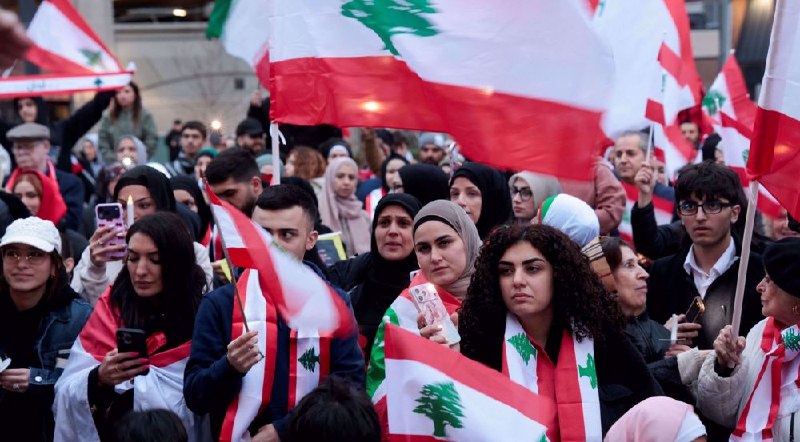
When the Disaster Risk Management Unit issued its latest daily report on 20 April 2026, the headline figure had become almost familiar in its horror: 2,387 dead. That number, the Lebanese Health Ministry confirmed the same day, represents the cumulative toll of Israel's military campaign against Hezbollah since October 2023. Another 7,602 people have been wounded. In the town of Qaqaiyat al-Jisr in southern Lebanon, six more people were injured in an Israeli raid on the afternoon of 20 April, bringing the day's casualty additions to a handful in a conflict that has already consumed thousands.
Counting the dead is itself a form of work. The Lebanese health infrastructure — strained by economic collapse, the Beirut port explosion, and a political system that has functioned in permanent crisis for years — has managed to produce these figures consistently. That consistency is worth noting. Across eighteen months of war, the Ministry's casualty tallies have become the standard reference point for international bodies, aid agencies, and diplomatic delegations trying to calibrate their responses. They are not uncontested. Israeli officials have disputed methodology, questioned the identity of combatants versus civilians in the figures, and offered alternative counts that tend to be lower. But the Lebanese data remains the most granular accounting available from inside the country.
What the numbers cannot tell you
A death toll, however precise, is an abstraction. It does not distinguish between a fighter killed in a cross-border tunnel and a family of four asleep in a building the IDF designated a Hezbollah command site. It does not record whether the dead were buried within hours in unmarked graves or whether their families held funerals under airstrike conditions. It does not note the age distribution, the proportion of women and children, the number of healthcare workers killed in hospitals that were struck despite their coordinates being registered with the United Nations.
Human rights organisations working inside Lebanon have attempted to fill some of these gaps. Their reports — based on witness interviews, satellite imagery, and cross-referencing with hospital admission records — have documented patterns that aggregate casualty figures obscure. Strikes on residential buildings classified as multi-unit, for instance, have produced civilian casualty clusters that suggest targeting decisions made with incomplete intelligence or with acceptance of collateral harm that exceeds what international humanitarian law permits. Israeli military spokespeople have said in background briefings that Hezbollah deliberately positions military assets in civilian structures, a claim that if substantiated would shift legal responsibility but does not, under any reading of the laws of armed conflict, authorise strikes without discriminate targeting.
The Iranian dimension
Hezbollah's role in this conflict is inseparable from its relationship with Tehran. The organisation received the bulk of its military capability — rockets, missiles, drones, precision-guided munitions — from Iranian supply lines that ran through Syria and, before the Assad regime's collapse in early 2025, benefited from a relatively secure transit corridor. The fall of Damascus shifted that logistics architecture significantly. Iranian officials have publicly maintained support for Hezbollah through alternative routes, but the volume and consistency of weapons flowing north have reportedly declined. This matters for the conflict's trajectory. Hezbollah entered this war with a larger and more sophisticated arsenal than any non-state actor in history had assembled, a stockpile that Western military analysts estimated at over 100,000 rockets and missiles capable of reaching deep into Israeli territory. The question of how much of that arsenal remains usable — and how quickly it can be replenished — shapes every Israeli calculation about whether to push for a permanent ceasefire or continue operations.
The domestic political fracture
Lebanon's own government has been a secondary actor in its own war. The caretaker administration under Najib Mikati has coordinated with the health ministry on casualty reporting and requested international humanitarian assistance, but the political vacuum at the top has been a consistent theme. President Joseph Aoun was elected in January 2026 after a two-year vacancy — itself a symptom of the structural deadlock between Hezbollah and its opponents over the shape of the state. The war has not resolved that deadlock. It has, if anything, deepened it. Communities in the south that were depopulated by Israeli evacuation orders are now contested terrain in internal Lebanese politics: who returns, under what authority, with what reconstruction resources, and whether Hezbollah's presence is normalised or demilitarised are questions the central government has not answered and may not be structurally capable of answering.
What comes next
The figures will continue to accumulate. Every diplomatic initiative — the ceasefire proposal that U.S. envoy Steve Witkoff tabled in March, the French-led humanitarian corridor discussions, the occasional indirect signals through intermediary governments — has failed to produce a durable halt to strikes on either side. Hezbollah fires rockets into Israel; Israel strikes deep into Lebanese territory; the health ministry updates its toll. The 2,387 dead from the Lebanese side include combatants and civilians, old and young, people whose names are known to their families and people who died in buildings where no neighbour survived to identify them.
The United Nations has recorded over 3,000 civilian deaths across both sides of this conflict since October 2023, though that figure is itself an estimate — ground truth in an active war zone is inherently partial. The International Committee of the Red Cross has repeatedly called for both parties to adhere to distinction and proportionality standards. Neither has publicly accepted responsibility for violating them. The dead, in the meantime, are counted and tallied and reported, and the report for 20 April 2026 records six more injuries from Qaqaiyat al-Jisr, and a total that is now measured in the thousands — each increment another set of absent faces that Lebanon will be reckoning with long after the strikes stop.
This publication's approach: Wire coverage of the Lebanese casualty toll in recent days has been dominated by the Health Ministry figures, which we report here as the most comprehensive accounting available from inside the country. We note that Israeli military briefings offer alternative characterisations of the figures, and we have flagged that discrepancy without resolving it — because resolution requires access to individual records that neither side has made publicly available.
Wire provenance
This editorial synthesis draws on the following public wire/social posts:
- https://t.me/alalamarabic