Macron Frames Strait of Hormuz Incident as Non-Targeting as Iran-U.S. Tensions Reshape Regional Calculations
French President Emmanuel Macron stated on 20 April 2026 that France was not the specific target of Iranian navy action involving the CMA CGM vessel in the Strait of Hormuz, hours after the incident added a new maritime flashpoint to an already volatile Iran-U.S. standoff.
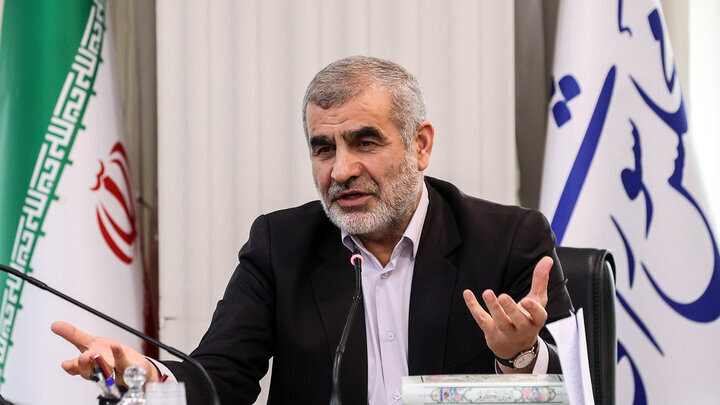
French President Emmanuel Macron said on 20 April 2026 that France was not the specific target of an Iranian navy incident involving the commercial vessel CMA CGM in the Strait of Hormuz, as a diplomatic standoff between Tehran and Washington entered its third consecutive day of elevated risk.
The episode — in which Iranian naval forces reportedly fired warning shots near the French-flagged ship — landed alongside a separate incident attributed to Hezbollah that killed a French national. Macron framed both events as collateral fallout from a broader Iran-U.S. confrontation, not as directed aggression against Paris. "France wasn't specifically targeted," the president told reporters, a position reported by the rnintel Telegram channel on 20 April at 16:00 UTC.
The Strait of Hormuz is the world's most critical chokepoint for liquid natural gas and oil shipments, carrying roughly a fifth of global liquefied natural gas flows. Any incident involving naval警告 shots near commercial vessels in those waters immediately unsettles insurance markets, tanker shipping rates, and the credibility of flag-state naval escort commitments that European governments have historically treated as a routine diplomatic obligation.
Escalation Context: The American Blockade Decision
Macron offered a specific causal chain linking the Hormuz incident to decisions made in Washington. Speaking on 20 April at 15:59 UTC and reported by the ClashReport Telegram channel, the French president said: "It is likely that, following the American decision to maintain a targeted blockade — particularly concerning Iran — the Iranian authorities changed their initial position."
The phrasing matters. A "targeted blockade" is not an embargo lifted; it is a pressure mechanism sustained. If Tehran read the continued blockade as a signal that diplomatic off-ramps were being foreclosed, the calculus inside the Islamic Revolutionary Guard Corps — which controls Iranian naval assets in the Gulf — shifts toward demonstrating that Iran can impose costs on Western commercial shipping without triggering a wider conflict the U.S. is unwilling to widen.
Iran's president, speaking separately on 20 April at 15:40 UTC and reported by the Al Alam Arabic Telegram channel, cited "deep historical mistrust in Iran towards the behavior of the American government." That language, delivered in Persian-language state media coverage, is consistent with the framing Tehran has used since the U.S. reimposed and maintained sanctions architecture targeting Iran's oil revenues and banking channels. The president was not specifying a new grievance; he was restating a foundational posture that any negotiation with Washington proceeds from a deficit of goodwill on both sides.
France's Diplomatic Position: Caught Between Ally and Actor
Paris has long maintained a dual posture in the Gulf: a NATO-aligned security partner of the United States and a commercially invested Gulf state with significant French energy and logistics interests in the region. CMA CGM — one of the world's largest container shipping lines — operates hundreds of vessels through Hormuz, and its ships carry French economic presence across the Arab-Persian Gulf.
Macron's public statement that France was not specifically targeted serves a dual diplomatic function. It reduces domestic political pressure for a harder French response — which would require committing naval assets to escort convoys or publicly aligning with a U.S. pressure campaign that Paris has not endorsed wholesale. It also signals to Tehran that Paris does not consider itself party to the U.S.-Iran dispute, which is a narrower claim than it appears: French vessels transiting the Strait are, in practice, under the same naval exposure as American-flagged ships the moment an IRGC patrol decides to make a point.
The Hezbollah-linked incident — the killing of a French national attributed to the group — complicates Macron's framing. Hezbollah is not an independent actor from Tehran's perspective; it is a proxy whose operations are financed, armed, and in significant measure directed by Iranian decision-making. To say France was not specifically targeted while a French citizen was killed in an Iranian-linked attack requires a reader to accept that Tehran launched two separate pressure actions but somehow did not intend either to be directed at Paris. That reading strains credibility on its face.
Structural Frame: Maritime Signaling in a Sanctions-Revision Environment
What is actually happening in the Strait of Hormuz is a familiar genre of Iranian state signaling — the controlled demonstration of capacity to disrupt commercial shipping, delivered in a context where the cost of disruption falls on insurers, shipowners, and importing states rather than on Tehran directly. This is not new. Iranian Revolutionary Guard naval interdiction campaigns, harassment of oil tankers, and seizure of vessels have occurred periodically since 2019, when the Trump administration withdrew from the Joint Comprehensive Plan of Action and reimposed maximum sanctions.
The current iteration is distinguishable by one structural factor: the American administration has maintained the blockade architecture it inherited, rather than dismantling it as a negotiating lever. Previous U.S. administrations used sanctions relief as a bargaining chip; this one has treated the sanctions architecture itself as a sustained instrument of pressure. Tehran's response — demonstrating that it retains the ability to close or harass the Strait even as its oil exports remain severely constrained — reads as a bid to remind Washington that the blockade is not cost-free.
French vessels and French-flagged commercial ships sit inside this pressure environment as involuntary markers. CMA CGM's ship was not the target; it was the evidence. Macron's public framing is an attempt to separate France from that evidence without committing to the naval escort posture that would genuinely alter the risk calculus.
Stakes: Who Pays if the Hormuz Corridor Tightens
If Iranian naval signaling escalates to sustained interdiction — seizures, forced inspections, or injuries to crew — the immediate beneficiaries are alternative routing projects and states that can redirect LNG through the Gulf of Oman via the East-West corridor bypassing the Strait entirely. Qatar, which sends roughly half its LNG through Hormuz, bears acute exposure; so do South Korean, Japanese, and Indian utilities that import Gulf LNG under long-term contracts. European gas markets, which are net importers and already managing Norwegian pipeline constraints, would face a price shock if tanker freight rates spike in the way they did during the 2019 Hormuz tanker standoff.
Macron's statement buys France a short window of diplomatic flexibility: Paris does not have to announce a naval deployment, does not have to publicly endorse the U.S. blockade decision it privately opposes, and can continue mediating between Tehran and Washington on nuclear matters without appearing to have chosen a side. That window closes the moment another French-linked vessel is caught in an incident the Élysée cannot frame as accidental.
What remains uncertain is whether the IRGC naval command views controlled harassment of commercial shipping as escalatory signaling it can dial up and down, or whether the Hormuz incidents are the leading edge of a coordinated Iranian pressure campaign designed to demonstrate that the cost of sustaining the American blockade falls on everyone — not just Tehran.
Wire provenance
This editorial synthesis draws on the following public wire/social posts:
- https://t.me/rnintel/4721
- https://t.me/ClashReport/38912
- https://t.me/alalamarabic/10234