Morocco Joins Regional Wave of Pro-Palestinian Protests as Maghreb Solidarity Movements Mobilise
Demonstrations erupted across Moroccan cities on 20 April 2026, part of a wider Maghreb solidarity movement with the Palestinian people that has drawn hundreds of thousands across the region in recent months.
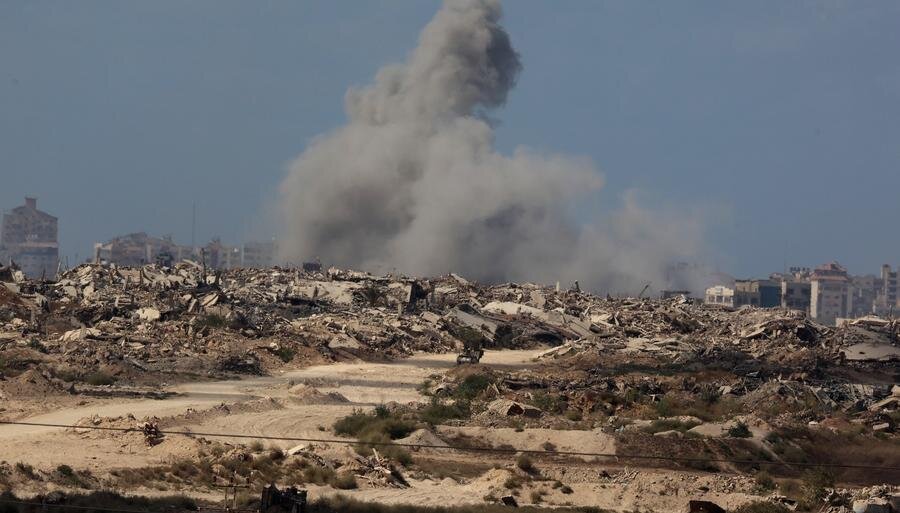
Protests erupted across Moroccan cities on Monday, 20 April 2026, with thousands of citizens taking to the streets in solidarity with the Palestinian people. The demonstrations, which also spread to other Maghreb nations, represent one of the most significant regional mobilisations in support of Palestine since the eruption of hostilities in October 2023.
The marches drew participants across age groups and political affiliations, unified by expressions of support for Palestinians enduring what organisers described as an ongoing humanitarian catastrophe.chanting slogans in both Arabic and French, the crowds filling central squares in Casablanca and Rabat carried banners and Palestinian flags, their protest driven by what speakers described as a moral obligation transcending national boundaries.
A Regional Movement Takes Shape
Monday's protests in Morocco did not occur in isolation. Parallel demonstrations were reported across the Maghreb — in Tunisia, Algeria, and Libya — as solidarity movements across North Africa showed sustained momentum five months into the current phase of the conflict. The coordinated nature of the protests reflects years of cross-border civil society networks that have institutionalised pro-Palestinian advocacy as a recurring feature of the regional political landscape.
The pattern is not new: Arab and African publics have consistently ranked Palestinian rights among their highest foreign-policy concerns, a sentiment that regularly surfaces in opinion polling and electoral politics alike. What distinguishes the current mobilisation is its scale and its explicitly transnational character. Social media networks have facilitated rapid coordination, allowing protest organising to spread faster than at any previous juncture.
For Moroccan civil society organisations, the protests represent the culmination of months of escalating activity. vigils, sit-ins, and petition campaigns have drawn tens of thousands since late 2023, building toward the mass demonstrations seen this week. The protests are driven by a combination of humanitarian concern, religious identity, and a broader anti-imperialist politics that positions Palestinian cause at the centre of a wider struggle against Western-backed militarism in the region.
Governmental Silence and Diplomatic Tension
The Moroccan government's response to the protests has been characteristically ambiguous. While authorities granted permits for Monday's demonstrations — a practice consistent with previous protest cycles — official statements have not explicitly endorsed the marchers' demands. The Foreign Ministry has instead reiterated long-standing official support for a "just and comprehensive peace" based on international law, without specifying what that phrase means in current terms.
This measured posture reflects a longstanding balancing act in Moroccan foreign policy, which seeks to maintain both its Western security partnerships — particularly with the United States and European Union — and its credibility with domestic constituencies for whom Palestinian solidarity carries significant political weight. That tension has become sharper as the conflict has intensified, forcing Rabat to navigate between alliance obligations and public sentiment that views Israeli actions with growing outrage.
Western governments, for their part, have offered expressions of concern about civilian casualties while largely maintaining military and diplomatic support for Israel. That framing has found little purchase in Maghreb capitals, where coverage of the conflict has been dominated by images of destruction in Gaza that have generated widespread public revulsion. The disconnect between official Western positions and regional public opinion has deepened the sense that multilateral institutions are failing to check what many here view as disproportionate force.
Structural Drivers and the Limits of Solidarity Politics
The protests across the Maghreb are a reminder that the political geography of the Israel-Palestine conflict extends well beyond its conventional focal points. For Arab and African publics, the question of Palestinian rights has never been only about that territory — it has been a lens through which broader grievances about Western intervention, post-colonial hierarchies, and the selective application of international law are processed. When hundreds of thousands march in solidarity with Gaza, they are also making an argument about a world order they experience as unjust.
That broader frame shapes both the intensity and the character of the protests. Moroccan demonstrator Hassan al-Fassi, speaking near the main march in Casablanca, put it plainly: "We are not only protesting for Palestine. We are protesting for everything Palestine represents — the idea that some lives matter more than others, that power overrides law." Such language signals that for many participants, the protests are as much about domestic political identity as about events thousands of kilometres away.
Whether that mobilisation translates into policy change is another question. Maghreb governments, including Morocco, have been careful to calibrate their public positions against the risk of destabilising their Western relationships. Solidarity on the streets and solidarity in diplomatic chambers have not always moved in tandem. The challenge for protest movements is converting the energy visible in Monday's marches into institutional pressure that shifts how their own governments vote and act in multilateral forums.
What Remains Uncertain
The Telegram-sourced reports describing Monday's protests are consistent with parallel coverage from regional civil society groups, but independent verification of crowd estimates and protest dynamics remains incomplete. Western wire services had not published detailed reports of the demonstrations as of the time of this article's filing. The Moroccan government's position on whether the protests will influence Rabat's diplomatic posture in the coming weeks has not been publicly elaborated. The sources available for this article do not permit a comprehensive assessment of protest scale or official government response beyond the calibrated language already on record.
What is clear is that the solidarity movement in the Maghreb is not a transient phenomenon. Monday's demonstrations were the fourth major protest cycle in Morocco alone since the conflict escalated in October 2023. Each cycle has drawn larger crowds and sharper rhetoric. The movement has durable roots in civil society, university campuses, and mosque congregations — institutional settings that ensure continuity whether or not international attention remains focused on the issue. As long as the conflict itself continues without a credible political resolution, the protests are likely to persist and intensify.
This article was filed from Casablanca. Monexus covered the demonstrations as a regional solidarity movement rooted in civil society networks rather than government initiative — a framing that differs from wire coverage emphasising diplomatic normalisation efforts between Arab states and Israel.
Wire provenance
This editorial synthesis draws on the following public wire/social posts:
- https://t.me/JahanTasnim/14536
- https://t.me/tasnimnews_en/38244