Qaani surfaces in Baghdad: IRGC Quds Force commander signals Iran's stake in Iraq's government crisis
Esmail Qaani's first public appearance in months carries a pointed message to Washington and Baghdad alike: the formation of Iraq's government is Iran's business, not that of outside powers.
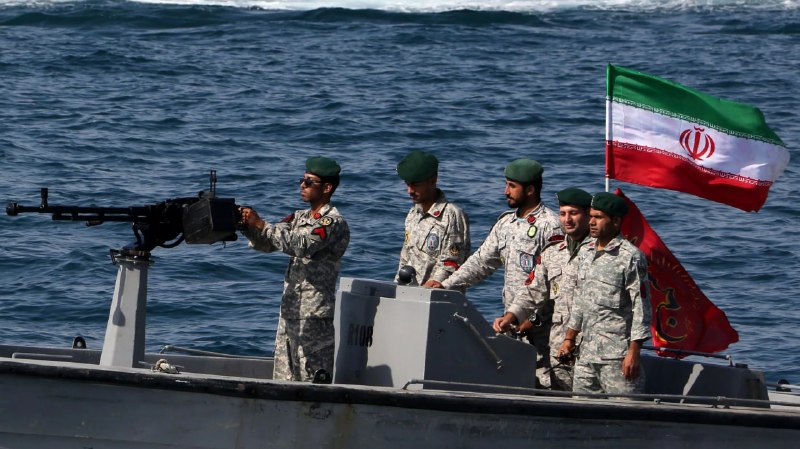
Esmail Qaani, the commander of Iran's Islamic Revolutionary Guard Corps Quds Force, arrived in Baghdad on 20 April 2026, his first reported public appearance in months, according to Iranian state media and open-source intelligence monitors tracking IRGC communications. The visit — a rarity for a figure who has been largely absent from public view since the escalation of the Israel-Hamas war in October 2023 — came with a message tailored for both an Iraqi audience and the wider region: government formation is an Iraqi matter, and outside powers should stay out.
"Iraq is too great for others — criminals against humanity should not interfere in their affairs," Qaani said in remarks carried by Mehr News, Fars News, and Tasnim News on 20 April. The phrasing names no actor explicitly, but in the context of IRGC public communications, the term "criminals against humanity" is a standard formulation directed at the United States and, by extension, its regional partners. The visit included expressions of appreciation to the Iraqi people, the sources report.
The public silence that preceded Qaani's emergence had itself attracted speculation. OSINT monitors noted his near-complete absence from official channels throughout the war in Gaza, a contrast with his predecessor, Qasem Soleimani, who maintained a visible operational presence across the region before his assassination in January 2020. That Qaani has chosen this moment to reappear — physically, in Baghdad — is a signal that Tehran considers the Iraqi political scene sufficiently urgent to warrant personal attention.
Baghdad's political vacuum and the contest over its filling
Iraq has been without a fully formed government since elections held in late 2025 produced a fractured parliament with no clear majority coalition. Negotiations over the premiership have stretched across months, pulling in the country's array of Shia, Kurdish, and Sunni political blocs. The United States, which maintains roughly 2,500 troops in Iraq under a bilateral security agreement, has expressed preference for a government that constrains Iran-aligned militias and preserves Baghdad's financial links to the Western-led banking system. Iran, which backed multiple Shia blocs in the election, has its own preferred outcome.
Qaani's presence in the capital reframes that contest. The Quds Force is the IRGC's extraterritorial arm; its portfolio includes overseeing Iran's network of allied militias across Iraq, Lebanon, Syria, and Yemen. A personal visit by its commander is not a diplomatic courtesy — it is a demonstration of operational weight. The message to Iraq's political class is that any government formation that does not account for Tehran's interests faces consequences.
That framing sits uneasily with how Baghdad's elected politicians typically narrate their own deliberations. Government formation in Iraq is portrayed domestically as an intra-Iraqi process of compromise and coalition-building. Qaani's statement inverts that framing: the implication is that the real negotiations are between Baghdad and external powers, and that Iran's role is protective rather than intervening.
The "criminals against humanity" formulation and its audience
The choice of phrase matters. "Criminals against humanity" is not a term that emerges from Iraqi political vocabulary — it is borrowed from the lexicon of the International Criminal Court, repurposed here as an indictment of the United States and, by rhetorical association, its allies. It is also a phrase with domestic resonance inside Iran, where official media uses it regularly to characterise Western sanctions regimes and military presence in the region.
For Iraqi audiences, the message is layered. It positions Iran as the defender of Iraqi sovereignty against Western overreach — a framing with genuine historical purchase given the US invasion of 2003 and the subsequent presence of American forces. It also serves to disqualify American or European diplomatic pressure on the next Iraqi government before such pressure has been formally articulated. The visit is, in this sense, preventive: establishing the terms of acceptable political outcomes before a government has formed.
There is a plausible counter-reading. Qaani's visibility may partly reflect domestic Iranian politics — a need to demonstrate continued operational relevance after months of near-silence, which may have generated questions about his authority or health. His predecessor, Soleimani, was killed in a US drone strike precisely because he operated openly. Qaani's more discreet posture since 2023 may reflect institutional caution rather than political retreat. His appearance in Baghdad could be as much about reassuring Iraqi allies of Tehran's commitment as it is about projecting new pressure.
The sources do not specify whether Qaani met with specific Iraqi officials during the visit, or whether his programme was limited to meetings with militia-aligned political figures. That gap matters. A meeting with the Speaker of the Iraqi Parliament or the President would signal a level of institutional legitimacy that a visit confined to Shia militia circles would not.
The structural frame: Iraq as Iran's western flank
What the visit makes visible is the structural role Iraq plays in Iran's regional architecture. The Quds Force does not simply support allied militias — it sustains the logistics, communications, and political infrastructure that allow those groups to function as a coherent pressure tool alongside formal state institutions. When Baghdad's ministries are understaffed or dysfunctional, the Iran-aligned militia ecosystem provides alternative governance structures: security provision, social welfare, employment. That gives Tehran leverage that operates independently of whatever government formally controls the capital.
For Washington, the problem is familiar. The US presence in Iraq is predicated on a security agreement that requires Baghdad to prevent attacks on American personnel and facilities — something successive Iraqi governments have proven unable or unwilling to enforce against Iran-aligned groups that answer to a chain of command running through the Quds Force. A new Iraqi government that incorporates Iran-aligned blocs will face the same structural tension: formal obligations to Washington that conflict with de facto loyalties to Tehran.
The dollar-denominated international financial architecture adds a layer to this. Iraqi banks processing oil revenues remain dependent on correspondent relationships denominated in dollars; US Treasury sanctions authority means that any Iraqi entity found facilitating sanctions evasion on behalf of IRGC-linked networks risks being cut off from the dollar system. That creates an economic floor beneath US influence in Baghdad that is not easily displaced by political reshuffling — but it is also a source of resentment among Iraqi politicians who experience it as external conditionality.
Stakes and what comes next
If Qaani's visit succeeds in anchoring Iran-aligned political figures in the next Iraqi government, Washington will face a more formally resistant interlocutor on its core security demands. The US troop presence, already politically contested inside Iraq, will come under renewed pressure from parliamentarians whose political base runs through the Quds Force's network. If the government formation process instead produces a more balanced coalition — one that includes both Iran-aligned and US-aligned blocs — it will be because Iraqi politicians have once again performed the delicate act of managing competing external pressures without formally breaking with either.
The immediate test is whether the visit produces observable movement in government formation talks. Iraqi parliamentary sources cited in local media in recent weeks have described ongoing negotiations over the premiership, with multiple candidates circulating. Qaani's presence in Baghdad on 20 April is a timestamped intervention in those talks — one that will be read carefully by every faction currently calculating its position.
What remains uncertain is whether the visit represents a new phase of Iranian assertiveness in Iraq or a routine maintenance call to allied networks. Qaani's months-long absence from public view makes it difficult to calibrate. The sources do not indicate that any specific political commitment was extracted or announced during the visit. What was produced was a statement — calibrated, public, and intended for multiple audiences simultaneously. Whether it moves the political needle in Baghdad will become apparent in the coming weeks.
This publication framed the Qaani visit primarily as an Iranian state media communication exercise, foregrounding the institutional framing of the IRGC Quds Force's role in Iraqi politics rather than treating the statement as a neutral news item. Western wire coverage of the same event tended to frame it as a routine diplomatic exchange.
Wire provenance
This editorial synthesis draws on the following public wire/social posts:
- https://twitter.com/michaelh992/status/2
- https://t.me/wfwitness/2