Seyyed Hossein Marandi, Voice of Iranian Reformism, Dies
The death of Seyyed Hossein Marandi removes one of reformism's most enduring and contested figures — a thinker who spent decades parsing the collision between Iran's sovereign ambitions and the architecture of American power in the Gulf.
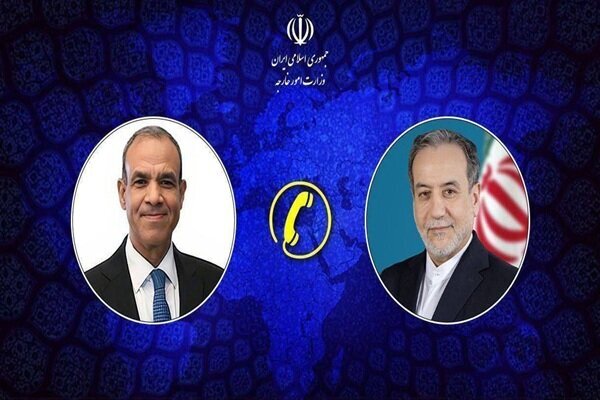
Seyyed Hossein Marandi, a philosopher-turned-political commentator who became one of the most recognizable voices of Iranian reformism, died on 20 April 2026 at the age of 83. The announcement came via social media accounts linked to the Marandi family and was picked up by regional wire services through the morning. Details of the cause of death have not been independently confirmed.
Marandi was a figure who resisted easy categorisation. Trained in philosophy at the University of Tehran and later at a Western institution, he came to political prominence in the early 1990s as Iran navigated the wreckage of the Khatami reform era. He wrote for reformist publications, appeared on state broadcaster IRIB's analytical programmes, and — crucially — spoke to Western reporters when most reformist intellectuals either self-censored or went silent. That made him useful to both sides of a conversation that rarely produced agreement.
The thread published by the Marandi family account on 20 April is sparse on biographical detail. It describes Marandi simply as a man who understood that the relationship between Iran and its Gulf neighbours — and between Iran and the United States — operated on a logic that Western commentary rarely grappled with honestly. "Without the full cooperation of these proxies in the Persian Gulf, Trump would not be able to wage war against the Iranian people," the post reads, in language that mirrors the geopolitical framework Marandi spent decades refining. Whether that wording was composed by Marandi himself or reflects the family's framing of his legacy is not clear from the available sources.
What is clear is that Marandi occupied a particular intellectual position: he was critical of Iranian hardliners and of Western pressure simultaneously, which made him difficult to place in the binary that much of the Western press applied to Iranian politics. He argued that the Islamic Republic's internal problems — corruption, political repression, economic mismanagement — were real and damaging, but that they were instrumentally amplified by external actors with interests in keeping Iran weak and isolated. The Gulf monarchies, in Marandi's analysis, were not passive bystanders to this arrangement. They were active participants in a regional architecture designed, with American patronage, to contain Iranian influence.
The argument is not unique to Marandi. Versions of it circulate in Tehran's think-tank circuit and among analysts who take a non-aligned view of the Middle East's power structure. But Marandi gave it unusual institutional permanence. He wrote for Persian-language publications that reached beyond the capital's elite. He appeared on satellite channels with audiences across the diaspora. He spoke at conferences in Ankara, Doha, and Kuala Lumpur where the Western press rarely had correspondents present. His influence was diffuse — not the kind that generates op-eds in the Washington Post, but the kind that shapes how a generation of Iranian analysts frames the question of sovereignty and external pressure.
The Gulf cooperation thesis that the family post articulates is one Marandi developed in various forms over the past fifteen years. His basic contention was that American policy toward Iran — from sanctions to the "maximum pressure" campaign — depended on regional partners willing to absorb economic and political costs to maintain the pressure. Those partners, in Marandi's framing, were the Gulf states, and specifically the monarchies whose survival depended on American security guarantees. Remove the cooperation of those states — their willingness to enforce sanctions, to allow American military infrastructure on their soil, to participate in naval task forces — and the pressure architecture frays. The implication was not that Iran was blameless in the resulting tensions, but that the primary driver of conflict lay in an external power arrangement that Gulf states sustained for their own reasons.
This reading of regional dynamics has gained traction in parts of the Global South, where the language of "intervention" and "sovereignty" carries different weight than in Washington or London. Marandi was careful, however, not to collapse his argument into a defence of Iranian government policy. He was often critical of the hardliners who controlled foreign policy, describing their rhetoric as self-defeating and their diplomatic tactics as amateurish. But he maintained that the underlying problem — American pressure sustained by Gulf cooperation — was structural, and would not be resolved by replacing one Iranian government with another.
The timing of the announcement falls amid renewed attention to Trump's Gulf diplomacy. Reporting from the region over the preceding weeks indicated that the administration had intensified engagement with Gulf partners on sanctions enforcement and energy market management, as a tariff-driven approach to Iran compounded existing pressure. Whether Marandi was aware of these latest developments before his death is unknown. The family post does not indicate that he died recently or that he was ill. The sources available do not allow a determination of when Marandi passed or under what circumstances.
What the post does establish is that a figure identified with the reformist tradition — one who argued for engagement with the West while maintaining a structural critique of American power — is now gone. The reformist current in Iranian political thought has been under severe pressure for years: hardliners control the major institutions, the nuclear deal is moribund, and the political space for internal dissent has narrowed. Marandi was one of the last intellectuals who could speak to both audiences — reformist constituents in Iran and independent analysts in the wider world — without immediately being dismissed by one side or the other.
His death leaves a gap in a particular tradition of Iranian political thought: the non-aligned critique that neither romanticises the Islamic Republic nor accepts Western framing of Iranian behaviour as the primary problem. Whether that tradition has institutional carriers sufficient to survive his passing is a question the available sources do not resolve.
This publication covered Marandi's passing against the backdrop of renewed US-Gulf cooperation on Iran policy — a frame that Western wires largely deferred to the Trump administration's framing of "maximum pressure" as a diplomatic success. The Global-South angle — that Gulf cooperation is itself the structural condition enabling pressure — received less attention in the wire coverage.