Tehran's Red Line: Why Iran Walked Away From the Oman's Talks Table
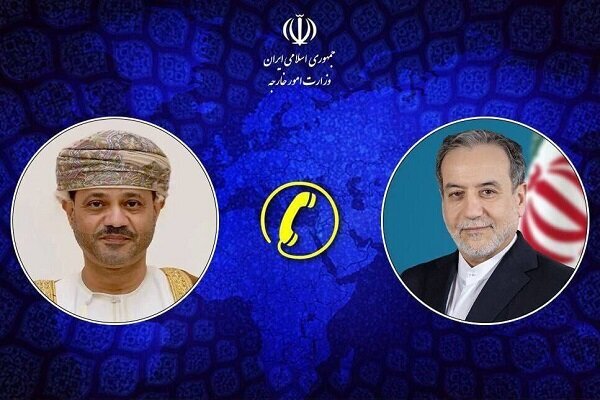
On 20 April 2026, Iran announced it would not attend a second round of talks with United States officials in Oman, delivering a blunt public answer to a question Washington had hoped to answer differently. The refusal, confirmed by Iranian state media and corroborated by regional diplomatic sources, followed weeks of signals from Tehran that the conditions for engagement were not being met. By midday GMT, the headline on Iranian state outlets was not about the prospect of a deal but about a decision to step back.
The immediate trigger, according to Iranian government statements, was the absence of what officials called American "seriousness." The term has become a diplomatic formulation in Tehran's communications — less an accusation than a description of a structural gap between what the United States has offered and what Iran believes it needs to receive before any conversation can produce an agreement worth having. Officials pointed specifically to the continuation of sanctions pressure, the lack of movement on sectors the Iranian economy depends upon, and what Tehran characterizes as a negotiating posture that treats pre-negotiation concessions as a precondition rather than an outcome.
That formulation, however, obscures something more fundamental. Iran's decision to refuse the second round is not simply a negotiating tactic — it reflects a calculation that the current American approach is not designed to produce a negotiated outcome at all, but to consolidate a posture of economic and military pressure while extracting maximum concession through sustained intimidation. Whether that calculation is accurate is itself a matter of genuine diplomatic dispute. But it is the dominant frame inside the Iranian foreign policy apparatus, and it is the frame that produced the decision announced on 20 April.
Pakistan's Foreign Office issued a separate statement on the same day, confirming that Prime Minister Shehbaz Sharif had communicated directly to the White House that the naval blockade on Iranian ports represented a direct threat to the multilateral diplomatic process. The communication — first reported by The Cradle Media and confirmed by Pakistani government communicators — signals that at least one major regional actor views the blockade not as a pressure instrument but as an escalation that is foreclosing the diplomatic track Washington claims to want. The statement did not specify whether Pakistan had communicated similar concerns directly to Tehran, but regional observers noted that Islamabad's decision to go public with the warning was itself a signal of concern about the direction of travel.
The tension between diplomatic language and coercive practice is not new to the Trump administration's approach to Iran. President Pezeshkian, speaking in remarks carried by Reuters on 20 April, stated that Iran remained committed to diplomacy and to finding solutions through dialogue — but added that the erosion of trust was not something his government could simply set aside. "Diplomacy requires two parties who believe the other party is negotiating in good faith," the President said, according to the Reuters report. "We are not there yet, and we will not pretend to be there in order to produce a headline." The formulation was careful and calibrated — it left the door open while making clear that the opening had a specific content that has not yet been met.
The naval dimension of the standoff has not received the coverage its significance warrants. The United States has maintained a visible naval presence in and around the Gulf in a manner that Iranian officials describe as a de facto blockade — preventing or impeding the normal commercial and financial activity that would allow the Iranian economy to function at levels that sanctions alone have not achieved. The distinction matters because a blockade is an act of war under international law, even if the current American posture frames it as an enforcement measure. Pakistan's warning suggests that at least one regional government has made the same legal and strategic calculation — and has decided that it is worth saying so publicly.
The arrest in the United States of Iranian national Shamim Mafi, reported by BBC News on the same day, adds a further layer to the picture. Mafi is accused by US federal authorities of brokering arms sales to Sudan's defence ministry on Iran's behalf — a charge that, if proven, would represent a direct violation of existing sanctions regimes and a material act of weapons proliferation in a region already destabilized by multiple ongoing conflicts. Iranian state media has not commented directly on the arrest as of the time of writing, and the charges have not been tested in court. The case will nevertheless be used in Washington to reinforce the narrative that Iran's regional activities continue regardless of diplomatic engagement — a narrative that serves the pressure-maximization logic that Tehran believes already explains the current American posture.
What the sources do not establish is whether there is a genuine negotiation to be had that would satisfy both sides, or whether the distance between them has become structural in a way that cannot be closed by diplomacy alone. The Trump administration's approach has consistently emphasized that maximum pressure is not a starting position but the policy itself — that the concessions being sought are the point of the pressure, not the occasion for its removal. Tehran has, for its part, consistently argued that it will not negotiate under duress and will not accept an agreement that requires it to surrender capabilities it regards as non-negotiable. Those two positions have not moved in two years of contact and attempted contact. The decision to refuse the Oman's talks suggests that Tehran has concluded that further attempts to find a middle position are no longer productive — and that waiting, or pushing back, is the more rational strategy.
The risk is that waiting is itself a form of escalation in a context where the pressure instruments are being continuously upgraded. The blockade — whatever legal characterization one applies — is not static. The sanctions architecture continues to be tightened. The military presence in the Gulf is not decreasing. Each of those facts changes the arithmetic inside Tehran's decision-making apparatus, and the decision to refuse talks is in part a response to that changing arithmetic. Iran is not simply saying no — it is saying that the conditions that would make a yes possible have not been created, and that waiting for them to be created is preferable to accepting terms that would not represent an actual resolution.
The Oman's channel itself is not dead, according to regional diplomatic sources. Oman has historically played the role of back-channel facilitator between Tehran and Washington, and the willingness of the Sultanate to continue hosting conversations is not in question. What is in question is whether either party has the political will to move far enough from its current position to make the channel productive. The next several weeks will test that. The sources available as of publication do not indicate whether a date for a third round has been proposed, or whether the current refusal is intended to be temporary or permanent. What is clear is that the diplomatic opening that existed three weeks ago has narrowed significantly — and that the narrowing has occurred precisely because the pressure strategy has not been accompanied by the flexibility that would allow it to become something other than a ceiling on negotiation.
The structural pattern here is not unique to Iran. What the current US approach to multiple negotiating tracks shares is a logic in which pressure is treated as the prerequisite for a good deal — as if the other party needs to be sufficiently weakened before they will accept terms they would otherwise reject. That logic produces outcomes in some contexts. In others, it produces the situation visible on 20 April: a party that calculates it has more to lose from accepting a bad deal than from refusing to engage with one it believes was designed to be bad from the start. Whether Iran is right or wrong about that calculation, the fact that the calculation is being made is itself the news — and it is the news that the current diplomatic architecture in the Gulf is not equipped to resolve.
The stakes for the wider region are significant. A sustained breakdown in the US-Iran diplomatic channel has implications for the conflicts in Syria, Iraq, and Yemen — all of which involve Iranian-aligned actors whose behaviour is partly a function of the broader relationship between Tehran and Washington. It also has implications for the European parties who have sought to maintain their own engagement with Iran even as American policy has moved in the opposite direction. The sources do not indicate that those parties have changed their assessment of the Oman's channel, but the breakdown announced on 20 April increases the pressure on them to either finding a way to bridge the gap or to accept that the gap has become structural. Neither option is comfortable.
This publication's coverage of the Oman's diplomatic track has focused on the decision-making calculus inside Tehran and the regional signals emanating from Islamabad — elements that received limited attention in the dominant wire coverage, which focused primarily on the technical question of whether sanctions relief had been offered. We assess that the structural question of whether maximum pressure is a means to negotiation or a substitute for it is the more consequential frame, and that the Pakistani warning on the naval blockade is the most underreported development of the week.
Wire provenance
This editorial synthesis draws on the following public wire/social posts:
- https://t.me/TSN_ua/38472