Trump's Ceasefire Deadline Puts Iran Nuclear Talks on a Knife-Edge
President Trump warned on 20 April 2026 that the US-Iran ceasefire faces expiration the following day, framing renewed hostilities as the likely alternative if Tehran does not engage in negotiations — a pressure tactic that raises as many questions about Washington's strategy as it does about Iran's calculations.
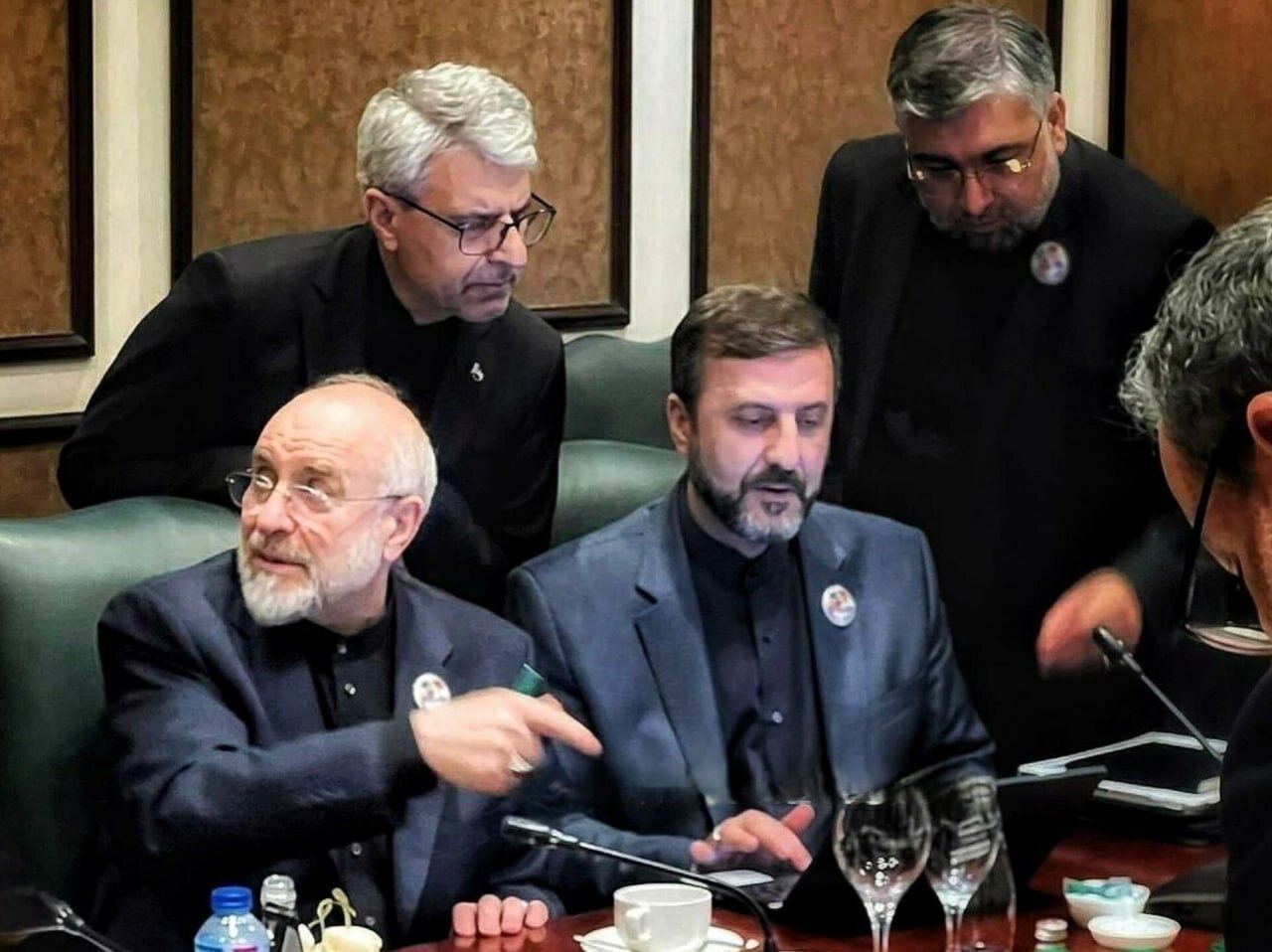
President Trump told PBS NewsHour on 20 April 2026 that the US-Iran ceasefire agreement — brokered after the strikes of April 2025 and extended through successive rounds of mediation — will expire on 21 April, and that if Tehran declines to participate in renewed talks, the consequence will be military. "If the ceasefire expires, a lot of bombs will start going off," the President said in an interview broadcast that afternoon. He added, separately, that he was uncertain whether Iran would show up to any negotiating forum: "I don't know if Iran will come to the talks."
The ultimatum lands at a moment of acute uncertainty over whether Iran will accept direct or indirect engagement with Washington. Since the original ceasefire, Iran has participated in preliminary discussions hosted by Oman, but sources familiar with those talks describe them as exploratory at best — long on procedural exchange, short on the substantive concessions the Trump administration has signalled it expects. That gap between diplomatic formalities and the substantive ask is where the current deadlock lives.
The Terms of the Ultimatum
The ceasefire agreement, first reported in April 2025 following US strikes targeting Iranian nuclear infrastructure, was understood from the outset as a pause — not a resolution. The terms required Iran to freeze enrichment activity above five percent and to open IAEA access to declared sites. Western officials and wire services tracking the agreement have described varying levels of compliance, with the International Atomic Energy Agency issuing periodic statements acknowledging Iranian cooperation on some fronts while noting outstanding questions on others.
What the Trump administration appears to have decided — or is at least performing publicly — is that the exploratory phase is over. Iran is being asked to move from a posture of technical compliance to an actual negotiation about the future of its programme. The President framing the alternative as a renewed bombing campaign rather than continued diplomatic pressure suggests the administration believes it has exhausted the patience of its own coalition, or that domestic political timelines require a resolution before the window closes.
Israeli officials have been consulted throughout the ceasefire period, and Trump told PBS that Israel had not pushed the United States into its Iran campaign — attributing the original strikes to the events of 7 October 2023 and their regional aftermath. That framing, while it positions the President as an independent actor rather than a follower, also draws a direct line between the Palestinian conflict and the Iranian nuclear question, linking two crises that most analysts treat as separate theatres requiring separate diplomatic architecture.
Tehran's Position
Iranian state media has not carried a direct response to the President's PBS interview as of the filing of this article. Iran's delegation at the Omani-hosted talks has maintained a position consistent with Supreme Leader Khamenei's stated preference for sanctions relief as a precondition for any structural commitment on enrichment. That precondition is one Washington has so far refused, creating an irreducible asymmetry in opening positions.
The economic pressure on Iran remains substantial. The cumulative effect of US secondary sanctions has constrained oil revenue, restricted banking access, and driven inflation to levels that Iranian state statistics — which must be read with scepticism but directionally — have acknowledged as politically uncomfortable. Iran's negotiating team in Muscat is therefore operating under genuine resource constraints, which makes a walkout from talks a costly option. Whether those constraints are sufficient to push Iran toward concessions the Trump administration would call meaningful is a different question — and one the sources do not resolve.
What the available accounts suggest is that Iran is playing for time within the existing ceasefire window rather than actively preparing for its termination. If that assessment holds, Trump's ultimatum may be designed to accelerate a decision Tehran is inclined to make anyway, rather than to fundamentally alter the terms on which Tehran would decide.
What the Deadline Reveals About Washington's Strategy
The Trump administration's posture in this negotiation cycle differs meaningfully from its stated approach in the first term. In 2018, the US under then-President Trump withdrew from the Joint Comprehensive Plan of Action and imposed a maximum pressure campaign designed to compel renegotiation on terms more favourable to Washington. That campaign lasted years and, by most independent assessments, accelerated rather than reversed Iranian enrichment. The current approach — military strike followed by ceasefire and then a hard deadline for talks — is a compressed version of the same logic: impose costs, then demand concessions as the price of stopping.
Whether that logic works this time depends on whether Iran now calculates that its alternatives are worse than accepting Washington's terms. The administration has signalled openness to a new nuclear deal, but has not publicly defined what minimum concessions it would accept as a basis for continued ceasefire. Without that definition, the ultimatum functions as a threat of force attached to an undefined ask — a negotiating posture that creates maximum pressure on the other party while also creating maximum ambiguity about what would satisfy the demanding party.
That ambiguity may be deliberate. An undefined ask allows the administration to declare any Iranian response insufficient and to return to military action on its own terms, should it choose to. It also, however, leaves Iran in the position of guessing what a satisfactory offer would look like — which, depending on how risk-averse Tehran's leadership is feeling, could either push them toward a deal or toward concluding that no deal is possible and that preparation for conflict is the rational alternative.
The Stakes If the Deadline Passes
The immediate stakes are a renewed round of strikes on Iranian nuclear infrastructure. The facilities targeted in April 2025 were significant but not comprehensive; a resumed campaign would presumably aim at a more thorough degradation of enrichment capacity. The costs of that campaign — both in material terms and in regional escalation risk — fall on parties with interests that do not perfectly coincide with Washington's.
Israel has a direct security interest in preventing Iran from reaching weapons-capable enrichment levels. Gulf states, while broadly aligned with Washington on the nuclear question, have also signalled concern about the destabilising effects of a prolonged US-Iran military confrontation on broader regional trade and energy flows. Europe, which was a party to the original JCPOA, has limited leverage in the current moment but has consistently preferred diplomatic resolution to military escalation.
Iran itself faces a calculation its leadership has made before: whether economic and military pressure can be endured long enough to preserve core strategic capacity, or whether accepting negotiated constraints is preferable to potential total degradation of the programme. That calculation is not made in a vacuum. Iran watches what Russia is doing in Ukraine, what China is doing in the South China Sea, and what the broader reconfiguration of great-power relations looks like. If Tehran believes the international order is shifting in ways that will eventually erode US willingness to sustain pressure, the rational play is to wait. If it believes the administration is serious and the military option is real, the calculus changes.
Trump has said the ceasefire expires on Wednesday, 21 April 2026. What happens after that will depend on calculations in Tehran — and on whether the ultimatum was intended as a genuine deadline or a negotiating position dressed in more threatening language. The sources do not establish which interpretation is correct. That ambiguity is itself the story.
This publication covered Trump's ultimatum as a hard-deadline negotiation, consistent with the PBS reporting and the Telegram-sourced verbatim quotes. Wire services led with the ceasefire framing as a diplomatic development; this piece foregrounds the coercive logic of the deadline and the structural ambiguity it reveals about Washington's negotiating position. Iranian state media did not publish a direct response prior to this filing.