Trump Claims Israel Didn't Drive His Iran Stance — But the Ceasefire's Fragility Tells a Different Story
When Donald Trump sat for a PBS interview on April 20, 2026, he offered a version of events that neatly separated his Iran policy from Israeli influence. Israel did not push him into a confrontation with Tehran, the president said; rather, the events of October 7 and his long-held conviction that Iran must never acquire nuclear weapons drove the decisions. The framing was deliberate, positioning the United States as the primary actor with its own strategic rationale — not as a junior partner following Jerusalem's lead.
But the same interview contained a second signal that complicates that narrative. Trump warned that if the ceasefire with Iran collapses, "many bombs will explode." The conditional was doing considerable work. It underscored that the ceasefire — which had pulled the region back from direct U.S.-Iranian hostilities following weeks of strikes and counter-strikes — remains structurally fragile. Two months into what both sides have described as an understandings-based pause, the administration's own rhetoric leaves open the question of whether Washington is genuinely operating from a position of从容, or whether it is one miscalculation away from re-escalation.
The Ceasefire's Narrow Operating Window
The U.S.-Iran ceasefire, brokered with Omani and Swiss mediation after direct U.S. strikes on Iranian nuclear facilities in February, operates without a formal written agreement. American officials describe it as a set of reciprocal understandings: Iran freezes enrichment above 3.67 percent, refrains from attacks on U.S. personnel in Iraq and Syria, and limits ballistic missile tests. The United States pauses new strikes and eases secondary sanctions enforcement. The arrangement holds because both sides have incentives to let it hold — but neither side has incentives to fully normalise relations under current conditions.
Senior administration officials have acknowledged in background briefings that the arrangement is tested whenever a U.S. carrier group transits the Persian Gulf or when Israeli operations in Lebanon or Gaza produce cross-border incidents that Tehran protests. The ceasefire, in this reading, is a managed tension — not a resolution. Trump's own PBS phrasing, "if the ceasefire ends," treats it as contingent rather than durable. That framing is consistent with the administration's internal assessment that the pause is a product of mutual exhaustion, not a strategic settlement.
The Israel Variable
Trump's insistence that Israel did not encourage him to start a war with Iran is notable precisely because it has to be said. The administration has faced recurring questions from regional analysts and Democratic lawmakers about whether Israeli Prime Minister Benjamin Netanyahu's stated objective of preventing Iran from reaching weapons-grade enrichment had effectively set the parameters of U.S. policy. If Trump is correct that Israel stayed below the line of direct encouragement, it raises the question of why the administration's own rhetoric on Iran — including the February strikes — so closely mirrored the language Netanyahu had used for two years.
Israeli officials have not publicly disputed Trump's characterisation. The absence of contradiction is not the same as confirmation. Jerusalem's interest in a U.S.-led pressure campaign against Iran is longstanding and well-documented; that interest can be served without formal requests for military action. A strategy of amplifying public concern about Iranian enrichment — in testimony, in media appearances, in direct communications with Washington — may shape policy without appearing on any formal instruction sheet. Whether Trump's statement reflects a genuine account of the decision-making process or a presentational choice designed to insulate his administration from claims of foreign influence is a distinction the available sources do not resolve.
Oil Markets and the Price Signal
Trump added in the PBS interview that gas prices would drop significantly if the ceasefire holds and "Iran does what it should do." The statement served multiple purposes simultaneously: it was a carrots-and-sticks formulation aimed at Tehran, a message to American voters sensitive to pump prices ahead of the midterms, and an implicit acknowledgment that energy markets remain the lever through which Iran policy translates into domestic economic consequences.
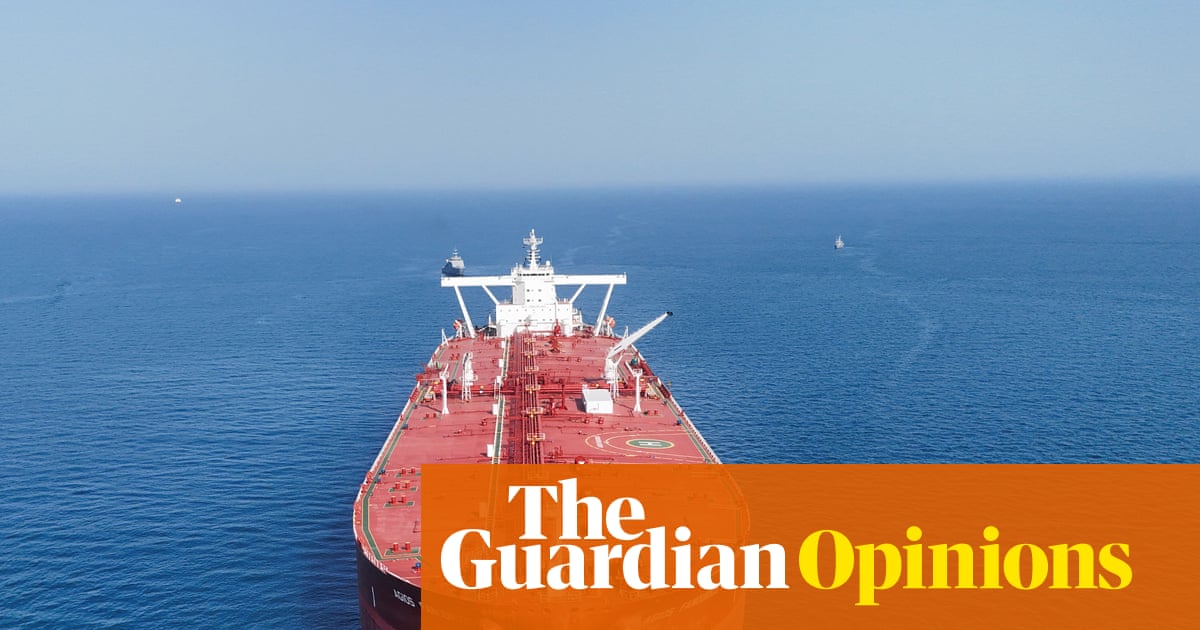
U.S. crude fell more than two percent on April 20 following Trump's ceasefire warning, reversing a three-day gain as traders repriced the probability of Iranian supply remaining constrained. Markets are pricing in a risk premium that reflects the ceasefire's fragility — a supply disruption triggered by renewed strikes would remove between 1.5 and 2 million barrels per day from global markets within weeks, according to estimates from several trading houses. That scenario, while not the base case among analysts, is not a tail risk. It is a plausible outcome if the understandings collapse under the weight of a single triggering event — a claimed Iranian enrichment violation, a strike on a U.S. contractor in Iraq, or a provocative Israeli operation that draws a response Tehran feels obligated to match.
What Remains Uncertain
The sources available for this article do not include the full transcript of the PBS interview. Trump's quoted language has been circulated via Telegram and X accounts aggregating the remarks; Reuters and other wire services have covered the broader ceasefire developments but had not published a direct transcript as of publication. The specific phrases attributed to the president in the Telegram and X posts carry the epistemic caveat appropriate to social-media-sourced quotes: they reflect what was reported as the president's words, not a verified transcript.
What the sources confirm is a pattern: the administration is publicly committed to a ceasefire it simultaneously describes as conditional, attributes its Iran posture to its own strategic conviction rather than Israeli prompting, and uses energy price signals as a framing device for deterrence. Whether those three elements are coherent or in tension depends on questions the available sources do not answer — specifically, what constitutes "Iran doing what it should do" under the understandings, and what mechanism exists to determine whether Tehran is in compliance when the agreement itself is unwritten.
The ceasefire holds for now. Both the president and the markets appear to believe it is more fragile than durable — which means the margin for error is thin, and the consequences of miscommunication are high.
This article was desked on April 20, 2026. Wire coverage of the Trump PBS interview focused on the ceasefire and energy price implications. Monexus prioritised the Israel dimension and the structural fragility of an agreement without a formal text.
Wire provenance
This editorial synthesis draws on the following public wire/social posts:
- https://t.me/osintlive