Two Killed in Israeli Airstrike Near Khan Yunis, Gaza Health Officials Report
An Israeli strike northwest of Khan Yunis struck a police checkpoint on the evening of 20 April, killing two people according to initial reports from the southern Gaza Strip. The attack comes amid sustained Israeli military operations in the area dating back to late 2024.
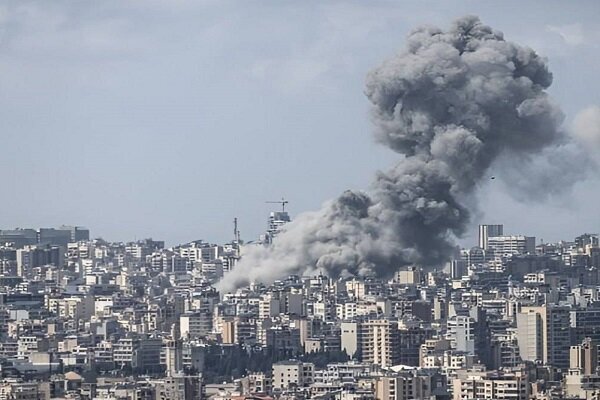
Israeli forces struck a police checkpoint northwest of Khan Yunis on the evening of 20 April 2026, according to initial reports from the southern Gaza Strip. Two people were killed in the strike, Al-Araby reported, making it among the deadliest single incidents in the area in recent weeks.
The attack is the latest in a sustained campaign of Israeli military operations targeting infrastructure and security installations in the Khan Yunis governorate. IDF spokespeople have not yet published a statement on the incident as of 23:00 UTC on 20 April. The Telegram channel wfwitness, which monitors strike activity across the Gaza Strip, flagged the report shortly before 22:09 UTC.
What the Strike Targeted
The checkpoint northwest of Khan Yunis sits along a road frequently used by Palestinian emergency services and civilian traffic moving between the city and outlying areas. Police infrastructure in Gaza has come under repeated Israeli fire throughout the current phase of operations, with the IDF stating on previous occasions that it targets sites allegedly connected to militant activity.
That framing has been consistent with how the Israeli military characterizes its ongoing ground and air operations in the southern Strip — operations that have concentrated in and around Khan Yunis since late 2024 following the breakdown of temporary ceasefire negotiations. The IDF has repeatedly described its targeting logic as distinguishing between civilian and military infrastructure, though independent monitoring groups including UN agencies have documented harm to medical facilities, aid distribution points, and vehicles carrying displaced civilians in the same general areas.
Al-Araby, which first reported the strike, did not identify the individuals killed. The Gaza Health Ministry, which maintains casualty accounting for the Strip, has not yet published a count for 20 April that incorporates the checkpoint deaths as of the time of this report.
Khan Yunis as a Repeated Target
Khan Yunis has been a focal point of Israeli ground operations since late 2024. Before that phase of the campaign, the city had already endured intensive fighting during earlier operations in 2024 that left large sections of the urban area destroyed and displaced a substantial portion of its pre-war population of roughly 400,000. The governorate now hosts significant numbers of displaced Palestinians who moved south seeking safety from operations in northern Gaza and Gaza City.
That concentration of civilians in and around Khan Yunis is precisely what makes strikes on infrastructure there particularly difficult to categorize as precision targeting. Aid organizations operating in the area have repeatedly noted that checkpoints, roads, and emergency service routes serve a civilian population that has nowhere else to go. The International Committee of the Red Cross and UN OCHA have both flagged the collapse of municipal services in the governorate as a consequence of repeated damage to the infrastructure on which those services depend.
The two deaths reported on 20 April occurred at a checkpoint — a structure whose function is to manage civilian and emergency movement, not conduct combat operations. Whether that checkpoint was being used for purposes beyond its nominal function at the time of the strike is a question the IDF has not answered.
What Remains Unclear
The sources available as of publication do not establish the identities of those killed at the checkpoint, nor have any armed groups confirmed or denied a connection to individuals operating at that site. IDF statements on previous strikes in the same governorate have cited intelligence links between targeted locations and specific units operating under Hamas or Palestinian Islamic Jihad command structures. No such citation has been issued for the 20 April strike at the time of this report.
Gaza Health Ministry casualty reporting typically lags several hours behind strike events, particularly when incidents occur in the evening. Figures for 20 April incorporating the Khan Yunis checkpoint deaths had not been released as of 23:30 UTC. The delay complicates independent verification of the precise death toll for the day, though the two-death figure from Al-Araby is consistent with the scale of the strike as described.
It is also unclear whether emergency medical teams were able to reach the checkpoint following the strike. Khan Yunis's main hospitals — Nasser Medical complex and the Kuwait Specialized Hospital — have faced periodic access constraints as roads leading to them have been damaged or rendered impassable by ongoing operations. Whether the casualties from this strike reached hospital care, or were recorded by the Health Ministry through other channels, is not addressed in the available reporting.
The Broader Pattern
What the 20 April strike illustrates, yet again, is the difficulty of reconciling systematic infrastructure targeting with humanitarian exception claims. The IDF has maintained throughout the current phase of operations that it takes measures to mitigate civilian harm. But the pattern of strikes on checkpoints, road crossings, and emergency service points — structures that serve both civilian populations and any armed presence that may operate near them — sits in a grey area where the military utility argument and the humanitarian harm argument are most difficult to adjudicate from the outside.
Israeli military analysts have noted that checkpoint and road infrastructure in southern Gaza has been repeatedly hit as part of an effort to restrict movement that the IDF links to militant logistics. That logic, if accurate, positions the strikes as part of a broader operational framework rather than isolated targeting decisions. The consequence for a civilian population with no functional alternative road network is a progressive degradation of movement capacity — for aid convoys, for medical evacuations, for families seeking shelter.
Two people died at a checkpoint on the evening of 20 April. The IDF has not yet said who they were or why they were targeted. Until that accounting is made — if it is made — the incident sits within a pattern of strikes whose stated logic and whose actual effects remain persistently difficult to reconcile.
This publication's prior coverage of the Khan Yunis governorate has tracked the progressive collapse of municipal services and shelter capacity in the area since late 2024. Readers may consult the Monexus archive for baseline documentation of infrastructure conditions prior to the current phase of operations.
Wire provenance
This editorial synthesis draws on the following public wire/social posts:
- https://t.me/wfwitness/69182052a0
- https://t.me/wfwitness/69182052b5
- https://t.me/wfwitness/69182052c7