US-Iran Hormuz Standoff Sends Oil and Bitcoin on a Wild Ride
The US Navy seized an Iranian cargo ship near the Strait of Hormuz on 19 April 2026; Tehran responded with drone strikes and a brief closure of the waterway before reopening it, sending oil and Bitcoin on sharply divergent paths.
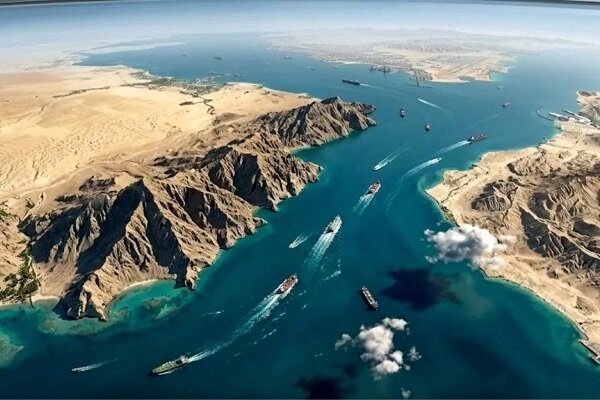
The United States Navy seized an Iranian-flagged cargo ship near the Strait of Hormuz on Sunday, 19 April 2026, after it attempted to pass a United States naval blockade, according to FRANCE 24. Iran's Islamic Revolutionary Guard Corps vowed retaliation. Within hours, Iranian state media — reported by Tasnim and cited by independent market tracker Unusual Whales — confirmed that Iran had launched drone attacks on American military vessels in the waterway. Iran subsequently reimposed controls on the Strait, the world's most critical maritime oil chokepoint, before reportedly reopening it on 20 April. The sequence of events sent oil prices crashing more than 13 percent to $80 per barrel while Bitcoin initially shed weekend gains — dropping to around $74,000-$75,000 — before recovering to approximately $78,000, per data tracked by CoinDesk and CoinTelegraph on 20 April 2026.
The immediate trigger was the cargo-ship seizure itself. American naval forces intercepted the vessel as it attempted to run what the US side described as a lawful blockade — the operational details of which remain contested in available reporting. Iran characterised the interception as an act of piracy and its retaliatory drone strikes as a proportionate response under its own legal framework. That framework carries weight in Tehran's calculus but little outside it; the IRGC's stated justification has not been independently verified against the Rules of Engagement governing the US naval presence in the Gulf. What is clear is that both sides moved quickly to kinetic action rather than diplomatic channels, setting back — at least temporarily — peace talks that had reportedly been making progress.
The market reaction exposed how tightly oil-market psychology is bound to Hormuz transits. Bitcoin fell roughly 5.7 percent from its weekend peak before stabilising, with CoinTelegraph documenting a brief drop below $74,000 as news of the drone strikes circulated on 19 April. Brent crude, meanwhile, jumped 5.7 percent, and European equity indices slipped 1.2 percent — a textbook risk-off response to a potential chokepoint closure. The subsequent Iranian announcement that the Strait was reopening reversed that move sharply: oil prices fell more than 13 percent in rapid succession, while Bitcoin recovered to the $78,000 level, per the GeoPWatch thread tracked on 20 April 2026. The divergence between Bitcoin's resilience — its 1.6 percent intraday decline at the peak of the Hormuz reimposition was modest relative to equities — and oil's sharp swing reflects a market pricing in a short, sharp shock rather than a prolonged closure.
But the structural significance of the Strait is not easily dismissed. Roughly a fifth of the world's daily oil output passes through the 21-mile-wide passage between Oman and Iran. A sustained closure — or even the credible threat of one — carries consequences that extend far beyond spot price moves. Countries dependent on Gulf crude have limited alternatives: pipelines through Saudi Arabia and the UAE have spare capacity, but not enough to absorb a full Hormuz blackout without severe economic disruption. Iran knows this, and its brief closure-and-reopening sequence reads less as an accident of escalation than as a demonstration of leverage — a reminder to Western capitals, and to energy markets, that the Islamic Republic can tighten or loosen the world's oil supply on its own terms.
That leverage sits uncomfortably alongside whatever diplomatic progress had been achieved before the seizure. The timing of the naval action — coming as peace negotiations were reportedly advancing — is difficult to read as coincidental. Whether the US moved to seize the cargo ship to signal resolve, to preempt Iranian concessions it viewed as insufficient, or to signal to regional allies that it would not tolerate what it considered violations of the blockade, the result was the same: a diplomatic track was derailed and a military one activated. Iran's decision to retaliate with drones rather than missiles, and to reopen the Strait within a day, suggests a leadership calculating that the point had been made without requiring a full confrontation. That restraint is notable, but it does not alter the underlying dynamic: both governments have demonstrated a willingness to use Hormuz as a pressure point, and that willingness does not disappear simply because the Strait is open again.
For markets, the immediate lesson is one of sensitivity. Bitcoin's relative stability compared to oil — falling less than 2 percent during a genuine Hormuz crisis — may reflect its status as a risk asset less directly exposed to physical commodity flows than equities or credit. But that insulation is not absolute, and the episode has shown that cryptocurrency markets remain alert to geopolitical shocks even when those shocks originate in a waterway rather than a trading desk. Oil traders, for their part, are left with a new baseline: the $80 floor that held when Iran reopened the Strait may prove fragile if further incidents occur.
The sources do not specify whether the Iranian drone strikes caused casualties or damage to the American vessels, nor whether diplomatic contact between Washington and Tehran has resumed. The peace talks that were reportedly in progress before the seizure are described as thrown into uncertainty by the FRANCE 24 report, but the current status of those negotiations is not confirmed in the available material. What the sources do confirm is that the Strait was reopened by 20 April 2026 and that both sides have signalled intent to avoid further escalation — for now. Whether that restraint holds depends on signals yet to come.
This publication's coverage prioritised Western naval and energy-market sources on the timeline of the seizure and its immediate aftermath. Iranian state-media framing of the drone strikes as defensive retaliation was noted but not treated as independently corroborated. The economic section drew primarily on market-data reporting rather than diplomatic sourcing, which remains thin for this story.
Wire provenance
This editorial synthesis draws on the following public wire/social posts:
- https://twitter.com/unusual_whales/status/1912478901234567890
- https://t.me/GeoPWatch/99999