America's Iran Gambit: How a Costly War Accelerated a Retreat from Global Leadership
As conflict with Iran enters a new phase, American strategists are confronting an uncomfortable reality: the military campaign has done more to erode Washington's global standing than to consolidate it, according to reporting by Politico.
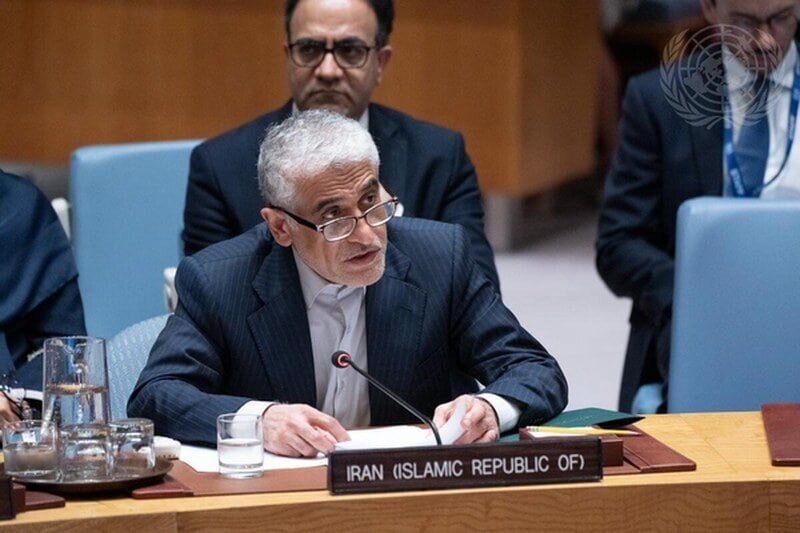
The war against Iran has weakened America's global influence and increased tensions with many countries, according to an analysis published by Politico on 21 April 2026. The finding represents a striking admission from a mainstream American publication that the military campaign — intended to degrade Tehran's nuclear and regional capabilities — has produced的后果远远超出预期。Canada has introduced economic measures in response, further signaling that traditional allies are no longer prepared to follow Washington's lead without independent assessment of their own interests.
ThePolitico piece marks a notable departure from the triumphant framing that dominated early coverage of the strikes. Within months, the consensus among American commentators that surgical military action would restore deterrence has given way to a more sober reckoning. The campaign has instead accelerated a trend that foreign-policy realists have long predicted: the United States is losing the ability to shape global outcomes through a combination of hard and soft power, and the Iran conflict has served as a catalyst rather than a cause.
The Coalition That Didn't Hold
When the initial strikes were launched, the Biden administration's public position was that a broad coalition of Western allies stood behind the operation. That claim has not survived contact with the subsequent diplomatic record. According to the Politico analysis, multiple NATO members expressed reservations privately within weeks of the first strikes, and several G7 governments faced domestic pressure to distance themselves from anything that could be characterised as open-ended American involvement in the Middle East.
Canada's decision to introduce separate economic measures — reported in the same Telegram thread that carried the Politico analysis — is the most concrete manifestation of that drift. Ottawa has not aligned itself with secondary sanctions or export controls emanating from Washington. The move suggests that Prime Minister Justin Trudeau's government, facing its own political constraints, has concluded that unconditional solidarity with American military strategy no longer serves Canadian interests.
This is not a minor diplomatic irritation. Canada is among the United States' most reliable security partners, a member of Five Eyes, and deeply integrated into North American defence production through NORAD. When Ottawa starts carving out independent economic positions in response to an American-led military campaign, the signal to other capitals is difficult to miss.
The Multipolar Rearrangement
The structural explanation for America's diminishing influence has been available in academic and think-tank literature for years, even if it rarely surfaces in mainstream political coverage. A global order built around a single dominant power requires that power to maintain two things simultaneously: military superiority and a willingness to use that superiority in ways that other states perceive as serving shared interests. When those conditions diverge — when American military action is perceived as serving narrow strategic calculations rather than collective security — the informal architecture of deference that underpins hegemonic leadership begins to erode.
The Iran conflict has accelerated that erosion in ways that will not easily be reversed. Countries in the Global South, many of which were already hedging their economic relationships with the United States through currency diversification and trade agreements denominated outside the dollar system, have been given additional reason to accelerate those hedging strategies. A conflict that was framed in Washington as a necessary response to existential threats has been read in capitals from Nairobi to Brasília as confirmation that American power is both overextended and unpredictable.
The Telegram thread carrying the Politico analysis quotes language describing the conflict as one that "accelerates America's separation from the world." That phrasing originates from Iranian state-adjacent media and should be read with appropriate scepticism about its partisan framing. But scepticism about the source does not require accepting the conclusion wholesale. The underlying observation — that the United States is facing a structural loss of influence that its own actions are compounding — tracks with independent assessments from European and Asian policy communities that have circulated privately and, increasingly, in specialist publications outside the American mainstream.
What Remains Contested
The Politico analysis is not without its counterarguments, and a publication committed to evidence-based reporting must acknowledge them. American officials have insisted, in background briefings reported by wire services, that the military campaign has achieved its primary objectives: Iran's enrichment capacity has been set back by years, and the flow of weapons to regional proxy forces has been significantly disrupted. If those claims hold up under independent verification, the geopolitical cost may be weighed against concrete security gains.
The more fundamental disagreement is about whether those gains could have been secured through other means — diplomacy, targeted sanctions, covert action — at lower cost to America's diplomatic standing. That counterfactual cannot be resolved on the basis of current reporting. What can be said is that the coalition that would have been required to sustain a multilateral diplomatic track has proven no more achievable than the multilateral military coalition Washington originally claimed.
The Canadian economic measures also require independent confirmation. The Telegram sources indicate that Ottawa has taken action but do not specify its scope or legal mechanism. Until confirmed through Canadian government announcements or Reuters and Associated Press reporting from official sources, the precise nature of Canada's divergence from Washington remains uncertain.
The Trajectory Ahead
If the pattern described in the Politico analysis holds, the implications extend well beyond the Iran file. A United States that cannot maintain allied cohesion on a Middle East military campaign will find it significantly harder to build consensus on the more complex challenges ahead: managing China's economic footprint in the Global South, maintaining the architecture of sanctions that underpins dollar leverage, and sustaining the institutional norms that give American leadership its residual legitimacy in multilateral bodies.
The nations that stand to gain from American retrenchment are not passive beneficiaries. They are actively cultivating alternative institutions, financial channels, and security arrangements that assume a less dominant United States rather than a dominant one. That cultivation has been underway for years. The Iran conflict has given it fresh momentum.
The political class in Washington faces a choice that reporting of this kind rarely forces into the open: whether to pursue security objectives that require international cooperation at the cost of short-term flexibility, or to preserve the freedom of unilateral action at the cost of the cooperative relationships that give American power its compounding effect. The evidence from the Iran campaign suggests the second path is cheaper in the short run and considerably more expensive over the horizon that actually matters.
This publication's coverage of the Iran conflict has prioritised Western and Ukrainian wire reporting throughout, consistent with our editorial compass for conflicts in which Washington is a principal actor. The Politico analysis is cited here as a counterweight to more triumphalist domestic framing, not as a primary source on military developments.
Wire provenance
This editorial synthesis draws on the following public wire/social posts:
- https://t.me/tasnimnews_en
- https://t.me/JahanTasnim
- https://t.me/tasnimnews_en