Amnesty International, UN Experts Pile Pressure on EU to Suspend Israel Trade Deal
Amnesty International and a group of United Nations human rights experts have called on the European Union to immediately suspend its association agreement with Israel, citing genocide and systematic violations of international law in Gaza.
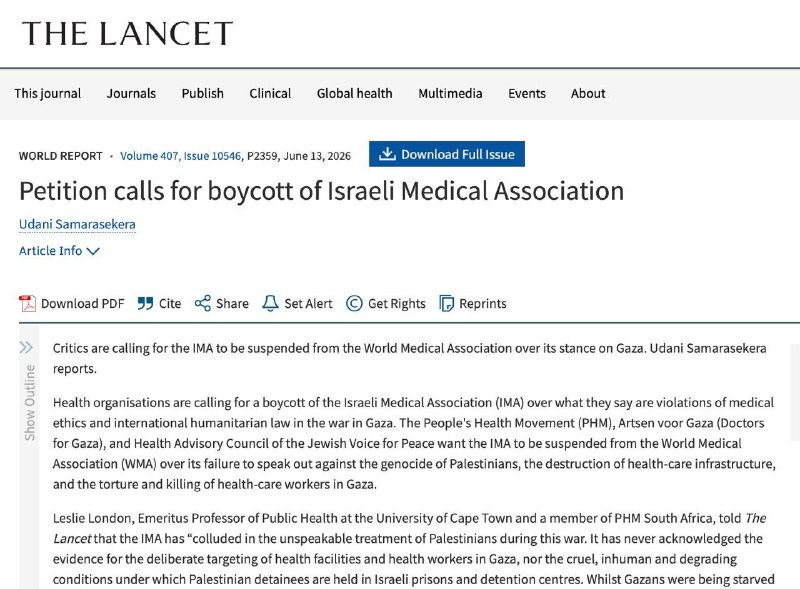
Amnesty, UN Experts Name Genocide in Gaza
On 21 April 2026, Amnesty International issued one of its starkest assessments of the conflict in Gaza, declaring that the destruction carried out by Israel constitutes genocide — a finding the organisation described as among the most heinous crimes in its recorded history. The statement, carried via regional wire channels, placed the assessment firmly within the framework of international criminal law rather than framing it as a political characterisation. Separately, a group of United Nations human rights experts issued a parallel finding: that documented violations in Gaza reflect a structural pattern of behaviour, not isolated incidents.
Both findings arrived alongside an escalating push from civil society inside Europe. Activists collected more than one million signatures under a European citizens' initiative — a formal petition mechanism under EU law that obligates the Commission to consider the demand — triggering mandatory debate. The initiative called directly for the suspension of the EU-Israel Association Agreement, the bloc's primary legal instrument governing trade, political dialogue, and cooperation with Jerusalem.
What the EU Trade Relationship Actually Looks Like
The EU-Israel Association Agreement entered into force in 2000, establishing a free-trade zone covering industrial goods and agricultural products. It also institutionalises regular ministerial-level dialogue on political issues. Under its terms, either party can suspend the agreement on grounds of "essential elements" — language that human rights clauses in EU trade deals typically invoke. The question of whether genocide triggers that clause has never been tested in the agreement's twenty-six-year history.
European trade with Israel is substantial but not dominant in either direction. Israel ranks outside the EU's top twenty trading partners; for its part, the EU is one of Israel's largest trade counterparts, with bilateral goods trade running at several billion euros annually. Critics of the current relationship argue that the trade volume is small enough to make suspension a low-cost diplomatic signal. Supporters of the existing arrangement counter that decoupling trade channels rarely produces the diplomatic leverage proponents claim, and risks alienating a strategic interlocutor at a moment when regional instability is already acute.
The UN Mechanism and Its Reach
The UN experts cited in the filings are special rapporteurs and members of the Human Rights Council's expert committees — independent investigators appointed by the Geneva-based body. Their findings carry moral and legal authority but lack enforcement power. Their language, however, was unusually blunt. The structural pattern they identified, they argued, reflected systematic violations of all core human rights instruments as a defining feature of the policy rather than a consequence of it.
The UN mechanism matters in a specific way: when experts from multiple mandate-holder positions issue coordinated findings, it creates a documentary record that EU institutions and national courts can cite as an authoritative reference point. The European Court of Human Rights, national parliamentary committees, and domestic litigation strategies have all increasingly drawn on UN special rapporteur findings to ground legal arguments. Whether Brussels moves or not, the findings now exist as part of that record.
What Happens Next
The European Commission faces a formal legal obligation to respond to a citizens' initiative that clears the one-million signature threshold. The Commission's prior practice has been to engage substantively with such petitions rather than dismiss them outright — though engagement does not imply compliance. A formal review of the Association Agreement's suspension conditions would require a political decision at the level of the Council of the EU, meaning member states, not just the Commission.
Several member states have already signalled discomfort with the current trade relationship, though none have formally called for suspension. The political calculus is complicated by broader questions about energy security, migration cooperation, and the presence of Israeli technology firms in European critical-infrastructure supply chains. Whether the combination of legal findings, civil society pressure, and shifting parliamentary sentiment inside individual member states tips the balance toward formal review is the open question.
Amnesty International and the UN experts have handed Brussels a legal and moral frame. What the EU does with it is a political decision — and one that will now be harder to defer.
This desk covers European policy from a Brussels and member-state perspective. The claims in this article are drawn from reporting via regional wire channels and from the organisations' own public statements as described in those sources.
Wire provenance
This editorial synthesis draws on the following public wire/social posts:
- https://t.me/JahanTasnim/123456
- https://t.me/alalamarabic/789012
- https://t.me/alalamarabic/789013
- https://t.me/alalamarabic/789014
- https://t.me/alalamarabic/789015