Blue Origin Grounded: FAA Halts New Glenn as Satellite Mishap Clouds Bezos' Space Ambitions
The FAA has ordered Blue Origin to halt New Glenn launches after a miscalculated orbital insertion destroyed the commercial value of an AST SpaceMobile communications satellite — a setback that has already triggered a sharp selloff in the satellite operator's shares.
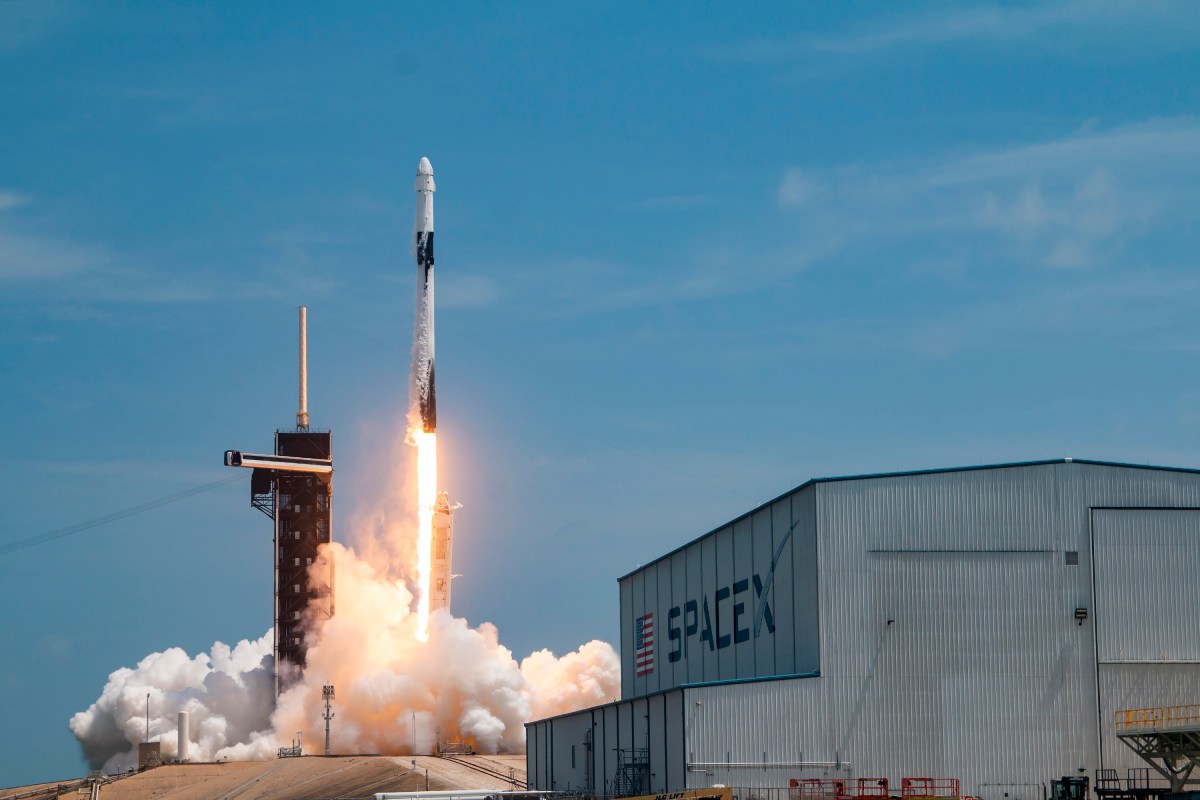
The Federal Aviation Administration on 21 April 2026 ordered Blue Origin to cease all New Glenn launches pending a full investigation, hours after the company confirmed that one of its rockets had placed a commercial communications satellite in the wrong orbit — rendering the spacecraft useless for its intended purpose. The regulatory action marks the most significant setback yet for Jeff Bezos' space company, which has spent years developing the New Glenn vehicle as a cornerstone of its commercial launch portfolio and a direct competitor to SpaceX's Falcon 9.
Blue Origin acknowledged on 20 April that the satellite, built by AST SpaceMobile, had been placed in an incorrect orbit, and has not offered further public comment since initial reports emerged. AST SpaceMobile, a Texas-based company attempting to build a broadband constellation accessible by standard mobile phones, confirmed the loss and saw its shares fall sharply on 20 April as investors absorbed the financial and operational implications of the failed insertion.
The Miscalculation and What Went Wrong
The New Glenn mission, launched from Cape Canaveral on 19 April 2026, experienced a malfunction in the rocket's upper stage — the component responsible for delivering payloads to precise orbital destinations. According to an FAA statement reported by Deutsche Welle, regulators have mandated that Blue Origin complete a formal investigation before the vehicle can return to flight. Aviation authorities said the upper-stage anomaly, if left unexamined, posed an unacceptable risk to public safety and other orbital infrastructure.
Blue Origin has confirmed the satellite is not where it was supposed to be. The company has declined to specify the nature of the discrepancy — whether the satellite was placed in an orbit too low, too high, or on an incorrect trajectory — citing an ongoing internal review. That lack of specificity has unsettled investors. AST SpaceMobile, which was relying on this particular satellite as part of a proof-of-concept for its direct-to-device service, has not said whether the spacecraft can be rescued through onboard propulsion or is effectively lost.
The incident is a blow to a company that has billed New Glenn as a reliable, heavy-lift alternative to an increasingly monopolised commercial launch market. SpaceX currently handles the vast majority of US commercial and government payloads, and regulators — along with members of Congress — have expressed concern about concentration risk in national launch capabilities. A credible second provider was supposed to reduce that dependency.
Investor Reaction and the AST SpaceMobile Fallout
AST SpaceMobile's share price fell on 20 April following the confirmation that the satellite had been mispositioned. Financial reporting indicated that the market reaction was sharp — Finance desk reporting noted a decline significant enough to draw attention from traders monitoring the stock — though precise percentage figures were not available in the sources reviewed at time of publication. The satellite in question was meant to be a key node in AST SpaceMobile's plan to offer cellular broadband from orbit without requiring specialised consumer hardware.
The company has pitched its service as a solution for connectivity in under-served regions — a pitch that has attracted partnerships with mobile network operators across multiple continents. If this satellite is unrecoverable, the setback to that timetable is material. AST SpaceMobile has not disclosed its insurance coverage or the contractual consequences of the loss, leaving investors to assess exposure against incomplete information.
Regulatory Scrutiny and the Commercial Space Flight Regime
The FAA's grounding order is not a provisional measure. It reflects the agency's legal obligation to ensure launch vehicle safety before permitting further missions. The Commercial Space Launch Amendments — which govern US commercial rocketry — require the FAA to confirm that a vehicle poses no unreasonable risk before licensing a return to flight. When a vehicle experiences an upper-stage failure, that confirmation cannot be presumed.
What is notable is the speed of the regulatory response. In previous commercial launch anomalies, the FAA has taken weeks or months before formalising a suspension. The 21 April directive suggests either that the upper-stage anomaly was severe enough to warrant immediate action, or that the agency is applying a more assertive posture toward Blue Origin after a series of earlier New Glenn developmental issues. Blue Origin has not commented publicly on the FAA's timeline.
The grounding comes at a sensitive moment for the company. New Glenn has completed a handful of missions but is still in a proving phase — the kind of period during which regulatory patience is most scrutinised. A second vehicle in Blue Origin's portfolio, New Shepard, flies suborbital missions and has not been affected by the suspension. But the company's credibility as a future competitor to SpaceX depends on New Glenn's reliability record.
What This Means for Bezos' Space Strategy
Jeff Bezos founded Blue Origin in 2000 with a long-term ambition to enable a future of millions of people living and working in space. New Glenn — named after John Glenn, the first American to orbit Earth — is the company's largest and most commercially significant vehicle. It is designed to lift heavy payloads to orbit and is sized to compete for government and commercial contracts that currently flow almost exclusively to SpaceX.
A sustained launch pause would push Blue Origin further behind in the commercial market and could affect the company's ability to demonstrate progress on contracts with the US Space Force and NASA, both of which have indicated interest in maintaining multiple domestic launch providers. The grounding also complicates Blue Origin's internal agenda: the company is competing for satellite deployment contracts from operators building out communications mega-constellations, and a reliability question mark hanging over New Glenn is directly harmful to those pitches.
The incident also lands amid broader questions about the financial sustainability of Bezos' space investments. Amazon, the company from which Bezos stepped down as executive chair, is pursuing its own Project Kuiper broadband constellation — a programme that has no guaranteed launch provider beyond SpaceX. If New Glenn becomes an unreliable asset, the dependency on a rival deepens.
A Pattern or a One-Off?
The sources reviewed do not indicate whether this failure shares characteristics with earlier New Glenn missions or represents a new category of malfunction. Blue Origin has not published a mishap report or a technical assessment. What is clear is that the company now carries the weight of a visible, publicly confirmed failure — one that has drawn regulatory action and market consequence simultaneously.
Whether this becomes a systemic problem or a definable engineering stumble depends entirely on what the investigation surfaces. What is not in doubt is that the commercial spaceflight industry — which has been making the case for competition and redundancy in launch capacity — now watches how Blue Origin handles the regulatory process. Speed, transparency, and a swift return to flight with demonstrated hardware would help. Concealment or prolonged silence would compound the damage.
This publication covered the grounding as a regulatory and commercial story — foregrounding the FAA's mandate, the investor impact on AST SpaceMobile, and the competitive implications for a company still building its reliability record. Primary wire framing, in our assessment, led with the Bezos angle.
Wire provenance
This editorial synthesis draws on the following public wire/social posts:
- https://t.me/bbcworldoffl