BoJ Holds as Iran Signals Energy Disruption Risk
The Bank of Japan's decision to hold rates at 0.75 percent on Wednesday reflects a central bank navigating compounding uncertainties—domestic data and a Middle East that is visibly threatening to destabilise global energy supply.
The Bank of Japan held its benchmark policy rate at 0.75 percent on Wednesday, a decision that surprised no one on the street but carried more weight than the outcome alone would suggest. The accompanying statement was hawkish by the standards of a central bank that has spent the better part of three years signalling normalisation while delivering it incrementally. The signal, broadly read: June is the next live meeting.
The reasoning, as described in the policy statement, is straightforward in structure if not in calibration. BOJ officials want more time to assess the economic fallout from what they describe as disruptions to global supply chains. The phrase is doing significant work. It encompasses the tariff volatility emanating from Washington, the sluggish demand picture in China, and—increasingly—a Middle East that is threatening to introduce a fresh supply shock into an already fragile global energy market.
The rate decision in context
The April hold follows a pattern that has become the BOJ's operating cadence: a quarter-point move roughly every other meeting, with extended pauses whenever the external picture clouds. Governor Kazuo Ueda has been consistent in describing the bank's framework as data-dependent, but the data arriving in recent weeks has offered a muddled read. Wage growth has been firm enough to sustain the consumer spending thesis; export figures have been decent; but business investment surveys and PMI readings have softened enough to give the hawks inside the policy committee pause.
Markets moved quickly to reprice after the statement. Traders reduced the probability they assign to a move at the May meeting and shifted focus to June, where the base case now sits at roughly a 60-percent likelihood of action. The yen moved modestly, reflecting a market that is comfortable with the direction of travel but uncertain about the timing. Energy prices, import costs driven by currency weakness, and household spending data will now be watched with unusual intensity over the next six weeks.
The Iran angle
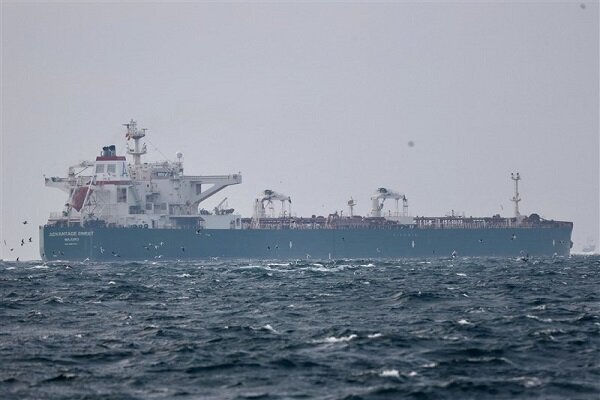
The more acute complication arrived in the form of a statement from Tehran that was, by any measure, harder-edged than what the BOJ's risk models had been pricing. On 21 April 2026, Iran's armed forces announced they had authorised strikes against oil production targets in the Middle East, according to reporting by Mehr News. The language was explicit about infrastructure—production facilities, not merely transit chokepoints—and the framing represented a qualitative shift from the sabre-rattling that has characterised Iranian signalling in recent years.
Whether the announcement is followed by action, and at what scale, remains to be seen. Deterrence calculations, domestic political signalling, and the realities of military capability all intervene between a statement of authorisation and an actual strike. But the announcement itself changes the risk environment that the BOJ and its peers are operating in. Energy markets, already pricing in a meaningful geopolitical risk premium following the tariff escalation between the United States and China, now have an additional variable.
The implications for Japan are direct. Japan is a substantial energy importer; a sustained disruption to production in the Persian Gulf or surrounding regions would transmit into import costs, into manufacturing margins for energy-intensive industries, and ultimately into the inflation figures that the BOJ is using to justify its gradual normalisation. The bank has been trying to bring inflation sustainably to its 2-percent target; an energy price shock in the opposite direction would complicate that effort significantly.
The structural tension
What the BOJ faces is a version of the problem that is quietly occupying the thinking of central banks across Asia and beyond: the possibility that the global order they have been navigating is not merely experiencing a bad patch but is undergoing a more durable shift in its operating parameters. Stable energy flows, open trade corridors, predictable currency dynamics—these were assumptions embedded in the frameworks that guided monetary policy through the post-Cold War era. They are now, at minimum, subject to renegotiation.
For the BOJ specifically, the bind is acute. A rate increase in an environment of rising energy costs risks stagflation—tightening monetary conditions while input prices climb, squeezing corporate margins and household purchasing power simultaneously. Holding rates while energy-driven inflation builds risks repeating the errors of the 1970s, when central banks that moved too slowly allowed inflation expectations to become anchored at levels that required far more painful corrections later. The 0.75-percent rate is not historically high, but it is high enough that any additional tightening has meaningful effects on mortgage costs, corporate borrowing, and the broader cost of capital in the domestic economy.
The yen adds another dimension. A rate increase would, in normal circumstances, support the currency. But the dollar's strength in the current environment—driven by tariff policy and capital-flow dynamics—means the yen could remain under pressure regardless of what the BOJ does domestically. A rate move that fails to move the yen, while simultaneously adding to domestic borrowing costs, would be a poor trade-off.
What comes next
The June meeting will be a test of whether the BOJ's caution has been the right posture, or whether the bank has been waiting for a window that the global environment will not provide. If Iranian action materialises at scale in the coming weeks, energy markets will reprice quickly, and the June decision becomes far more complicated than a straightforward assessment of domestic data would suggest.
The bank enters that meeting having demonstrated discipline and restraint—qualities that served it well during the long years of deflation and that have kept it from the policy errors that have bedevilled some peers. Whether those same qualities are sufficient when the external shock is not financial but physical is a question that will answer itself before the summer is out.
This publication's primary read of the BOJ hold aligned with the consensus in the NikkeiAsia coverage. The Iran story received less prominent placement in the Western wires on 21 April, despite its direct implications for global energy pricing and the policy space of major central banks.
Wire provenance
This editorial synthesis draws on the following public wire/social posts:
- https://t.me/nikkeiasia
- https://t.me/nikkeiasia
- https://t.me/mehrnews