Hezbollah launches rockets at IDF positions in southern Lebanon, citing over 200 ceasefire violations by Israel
Hezbollah confirmed it launched rockets and drones at Israeli army positions on Monday, declaring the operation a direct response to repeated ceasefire violations it says number more than 200 since the November 2024 agreement took effect.
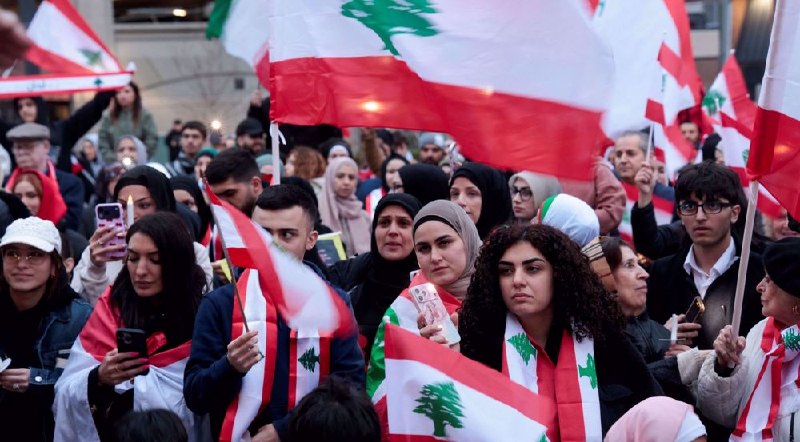
Hezbollah confirmed it launched rockets and drones at Israeli army positions in southern Lebanon on Monday, declaring the operation a direct response to what it described as more than 200 documented violations of the November 2024 ceasefire agreement. The Islamic Resistance announced the strikes in a statement cited by the Jahan Tasnim news channel at 18:42 UTC, saying it acted in defense of Lebanon and its people after what it called systematic Israeli encroachment along the border zone. Israeli outlets later acknowledged attacks on their forces in the south. The exchange marks the most significant breach since the fragile truce took effect and raises urgent questions about whether the arrangement can hold through its first full year.
The ceasefire framework that ended the 2024 hostilities was never designed to resolve the underlying disputes between the two sides. It was a pause — a temporary cessation of major combat operations that left the core questions of territory, surveillance rights, and military positioning unresolved. What we are watching now is that structural ambiguity being tested. Israel argues it is conducting lawful counterterror operations within the terms of the agreement; Hezbollah argues it has the sovereign right to resist what it sees as a slow-motion land seizure disguised as routine enforcement. Neither side has an institution they both trust to adjudicate the dispute. The ceasefire was built on goodwill and mutual exhaustion. Both are now being tested.
The immediate trigger
The escalation follows what Hezbollah describes as a systematic pattern of Israeli military activity that it says has crossed the threshold of what the November agreement permits. According to statements carried by the Al Alam Arabic Telegram channel at 18:48 UTC on 21 April 2026, the group cited more than 200 documented violations, including the construction of surveillance infrastructure in areas the agreement designates as restricted, and what Hezbollah characterizes as deliberate probing of defensive positions. The group says its strikes are calibrated to respond to these activities rather than to initiate broader hostilities.
The Middle East Spectator Telegram channel reported at 18:46 UTC that Hezbollah has formally decided to respond to all Israeli ceasefire violations and to not allow what it describes as an unacceptable status quo to consolidate along the border. Israeli military correspondent Amit Segal reported at 18:54 UTC that Hezbollah took responsibility for the shooting and stated explicitly that it was a response to violations on Israel's part. The targeting of IDF positions in southern Lebanon was confirmed by the rnintel Telegram channel at 18:49 UTC. The operation, as described by Hezbollah, involved rockets and drones directed at Israeli army positions — a scope consistent with the group's earlier pattern of calibrated, retaliatory strikes rather than an offensive campaign.
Competing legal interpretations
Israel's position is that the ceasefire does not preclude security operations necessary to prevent terrorist activity along its northern border. Tel Aviv has consistently argued that the agreement permits continued intelligence gathering and defensive postures within defined parameters, and that Hezbollah's characterization of these activities as violations is itself a breach of the spirit and letter of the arrangement.
Hezbollah's counter-argument rests on what it describes as the plain text of the November agreement's provisions for responding to violations, and on what Lebanese officials frame as Israel's systematic attempt to entrench itself in contested territory under cover of a ceasefire it never intended to respect in full. Maronite Patriarch Franjieh, whose remarks were reported by the Al Alam Arabic channel at 18:43 UTC, stated that Zionism does not recognize the existence of Lebanon and that no one can be sovereign and Zionist at the same time — language that reflects the deep institutional skepticism within Lebanon's political class about Israel's long-term intentions under the agreement.
The fundamental problem is that there is no neutral arbiter with the standing and leverage to resolve these competing interpretations. The UN peacekeeping mission in the area has a mandate but not the authority to enforce interpretations that either side rejects. The United States, which brokered the original arrangement, has not issued a statement adjudging which side is in violation. Gulf states have been careful not to weigh in publicly. The Europeans have expressed concern but have neither the leverage nor the political will to compel compliance. The dispute is therefore resolved through force, which is precisely the dynamic the ceasefire was supposed to prevent.
The structural contest
What is unfolding is not simply a dispute about the interpretation of a ceasefire text. It is a structural contest over what kind of military reality takes root along the Lebanon-Israel border during the agreement's lifetime. Israel holds significant leverage: it controls territory at the edge of the disputed zone, its forces are dug in along terrain that gives it surveillance advantages, and it has demonstrated willingness to use the absence of major hostilities to build infrastructure that changes the facts on the ground.
Hezbollah's response reflects the calculation that allowing this process to continue unchecked would surrender the strategic initiative for the duration of the agreement — and potentially beyond. The group's military capabilities are reduced from their pre-2024 levels, but they remain sufficient to impose costs on Israeli forces in the south. The political calculus for Hezbollah involves maintaining deterrence, demonstrating to its domestic constituency that it is not capitulating to Israeli enforcement activity, and avoiding the appearance that it is accepting a new status quo that disadvantages Lebanon.
Lebanon itself is in no position to enforce the agreement independently. The state is economically shattered, politically fragmented, and lacks the institutional capacity to mount an effective enforcement mechanism even if it had the political consensus to do so. The healthcare system, as Deutsche Welle reported on 21 April, is under severe strain from the cumulative effects of the 2024 conflict — thousands of displaced pregnant women are struggling to access medical services despite the ceasefire. The Palestinian Chronicle reported at 19:07 UTC that Hezbollah's military media arm has been publishing footage of past operations, a signal that the group is drawing on its own institutional narrative of resistance rather than allowing the ceasefire to define its public posture.
The absence of effective international oversight means that the ceasefire's survival depends on whether both sides calculate that the costs of escalation outweigh the costs of continued ambiguity. That calculation is becoming more difficult to sustain as violations accumulate and each side responds to the other's activities.
Stakes and forward view
The immediate stakes are human and humanitarian. Civilians along the border zone face renewed risk of bombardment and displacement. The healthcare system — already strained — cannot absorb a significant surge in casualties without catastrophic consequences for pregnant women, the chronically ill, and those wounded in the renewed exchanges. The ceasefire was, imperfect as it was, providing a framework within which humanitarian operations could proceed. Its deterioration threatens that fragile structure.
Beyond the immediate humanitarian dimension, the breakdown of the ceasefire would have consequences for the broader regional architecture. The agreement was a test case for whether a sustainable diplomatic arrangement could be constructed in the absence of a political resolution. Its failure would confirm the worst assumptions on both sides — that limited truces can only serve as intervals between rounds of major conflict, and that enforcement mechanisms without standing authority are structurally insufficient to contain an active military rivalry.
For Israel, allowing Hezbollah to set the terms of what constitutes a violation invites further challenges to its deterrence posture. For Hezbollah, failing to respond to what it regards as a systematic attempt to entrench Israeli positions would undermine its own legitimacy as a resistance actor within Lebanon's political system. Neither side, therefore, has a strong incentive to step back from escalation unless external pressure — which is not currently visible — intervenes to reframe the calculation.
The ceasefire may hold. Both sides have an interest in avoiding a full-scale resumption of hostilities, and the costs of escalation are well understood on both sides. But the mechanisms that were supposed to manage the transition from active conflict to sustainable arrangement are failing, and the framework's survival now depends on whether the two sides can establish some modus vivendi for handling alleged violations without mutual escalation. As of 21 April 2026, no such mechanism exists, and the trajectory is pointing in a direction that should concern everyone with an interest in regional stability.
This publication's wire intake on this story prioritised Lebanese and regional sources framing the strikes as a calibrated defensive response to documented violations. The Western-wire framing, where available, tends to characterise the same events as ceasefire breaches requiring a proportional response from Israel. The structural asymmetry between the two framings — one focused on violations as cause, the other on strikes as breach — reflects the absence of a neutral enforcement authority, not a genuine ambiguity about the facts.
Wire provenance
This editorial synthesis draws on the following public wire/social posts:
- https://t.me/JahanTasnim
- https://t.me/rnintel
- https://t.me/amitsegal
- https://t.me/alalamarabic
- https://t.me/alalamarabic
- https://t.me/Middle_East_Spectator
- https://t.me/PalestineChronicle