Hungary's New PM Pledges to Arrest Netanyahu — Testing Budapest's ICC Obligations
Peter Magyar, Hungary's newly installed prime minister, says he will execute the International Criminal Court's arrest warrant against Benjamin Netanyahu if the Israeli leader sets foot on Hungarian soil — a pledge that puts Budapest on a direct collision course with Washington and strains its obligations under the Rome Statute.
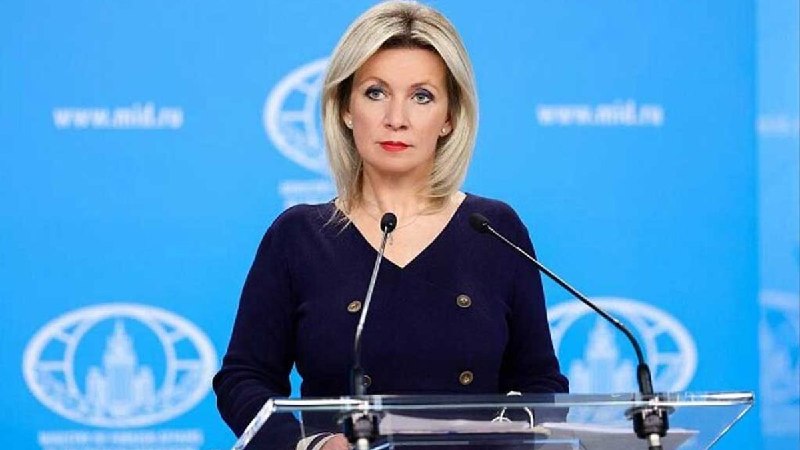
On 21 April 2026, Peter Magyar — who assumed the premiership after his Fidesz alliance swept Hungary's parliamentary elections earlier this year — told reporters in Budapest that his government would arrest Benjamin Netanyahu should the Israeli prime minister travel to Hungary. The International Criminal Court issued arrest warrants for Netanyahu and former Israeli Defence Minister Yoav Gallant in late 2024 on charges of using starvation as a weapon of war and intentionally directing attacks against the civilian population of Gaza. Hungary is a signatory to the Rome Statute, the treaty that established the ICC, meaning its courts are theoretically obligated to act on valid arrest warrants issued by the tribunal.
Magyar's announcement places Budapest at the centre of a diplomatic fault line that has been widening since the ICC's charges were filed. The court has no independent enforcement mechanism; it relies on member states to detain and surrender individuals when warrants are executed on their territory. In practice, no ICC signatory has yet arrested a sitting head of government on the basis of one of the court's warrants. Magyar's willingness to state plainly that Hungary would do so — and to use the phrase "Zionist regime" that his predecessor Viktor Orbán had partially adopted — marks a sharp rhetorical departure from the positions of Hungary's EU partners, most of whom have acknowledged the ICC's jurisdiction while studiously avoiding any commitment to execute the warrants on their own soil.
A Platform Built on Diplomatic Signal
The statement arrived as Magyar consolidates a political coalition that ran on a platform critical of EU institutions and NATO alignment. Having spent months positioning himself as a successor to Orbán while differentiating Fidesz from the former prime minister's more institutional style, Magyar appears to be using the ICC question as a test of his government's independent foreign policy credentials. The announcement signals to his domestic base that Hungary will not defer automatically to Western institutional frameworks — a message that resonates with the nationalist voter coalition that has sustained Fidesz for fifteen years.
For Orbán, the ICC had long served as a convenient target for nationalist rhetoric — a distant supranational body whose decisions could be cited as evidence of overreach by Brussels. Magyar appears to be inheriting that framework but applying it with a sharper edge, explicitly committing his government to enforcement rather than mere criticism. Whether this reflects genuine policy intent or an electoral calculation designed to keep the nationalist base mobilised ahead of local elections later this year remains unclear from the available record.
The Israeli government's response has been swift and dismissive. Jerusalem has rejected the ICC's jurisdiction outright, arguing that Israel is not a signatory to the Rome Statute and that the court lacks authority over the actions of a democratic state defending itself against armed militants. Washington has backed that position. The United States imposed sanctions on the ICC's chief prosecutor in 2024 after the warrants were issued — a move that analysts read as an unambiguous signal that the administration would treat any arrest of a sitting Israeli leader as a hostile act.
What the ICC Warrants Actually Require
The arrest warrants issued in late 2024 were the first time the ICC has moved against the leader of a major Western-aligned state. The court's Pre-Trial Chamber found sufficient grounds to allege that Netanyahu and Gallant bore individual criminal responsibility for acts that fell within the jurisdiction of the tribunal. Israel contested the jurisdiction ruling, arguing that the court's reasoning — which relied on the State of Palestine's membership as the basis for ICC authority over events in Gaza — was legally unsound.
The distinction matters because it explains why most European governments have handled the warrants with extreme caution. Acknowledging the ICC's jurisdiction does not automatically require a government to arrest a foreign leader who arrives on an official visit. The legal grey zone has allowed countries including Germany, France, and the United Kingdom to maintain that they respect the court's decisions without committing to any specific course of action when the hypothetical is raised. Hungary's position, by contrast, appears to be that execution of the warrant is a non-negotiable obligation — a reading that most international law experts consider technically defensible but practically explosive.
European Union member states are bound by the Rome Statute as a matter of their domestic law, which creates a direct legal conflict in the event that a state government chooses not to arrest a suspect it is obligated to detain. In practice, however, no EU member has faced formal enforcement action for failing to execute an ICC arrest warrant, and the political machinery for doing so moves slowly. Whether Budapest's open declaration changes the calculation for other governments — either by encouraging them to take a harder line or by reinforcing their resolve to avoid the precedent entirely — is a question the sources do not yet answer.
The Strategic Geometry of Budapest's Position
Hungary has for years occupied an anomalous position within the EU's foreign policy architecture, routinely aligning with the bloc on formal votes while maintaining closer bilateral relationships with Russia and China than any other member state. Orbán's government resisted EU sanctions on Russia, blocked military aid packages to Ukraine on multiple occasions, and cultivated personal relationships with both Vladimir Putin and Xi Jinping as a deliberate signal of strategic autonomy. Magyar has not signalled a departure from that orientation.
The announcement on Netanyahu fits that pattern. It allows Budapest to present itself as a government that honours its treaty obligations — at least the ones it chooses to honour — while drawing a sharp contrast with the reluctance displayed by Germany, France, and the Netherlands. The move also creates leverage. If Washington applies pressure, Hungary can present itself as the victim of great-power bullying. If the EU responds with criticism, Budapest can accuse Brussels of prioritising transatlantic solidarity over the rule of international law.
The timing matters. Magyar's government is still in its early months, and the policy infrastructure around it is not yet fully formed. Interviews with former Fidesz officials and European diplomats, as cited in recent reporting, suggest that institutional memory around ICC matters is thin within the current administration, and that the statement may have been drafted without a full review of the legal and diplomatic consequences. That does not make the commitment less significant — it may, in fact, make it more volatile.
Forward View: From Pledge to Precedent
The practical question is not whether Hungary will arrest Benjamin Netanyahu — it cannot do so if Netanyahu never sets foot in Hungary — but whether Budapest's declaration changes the political calculus for other states and for the ICC itself. A formal statement of intent from an EU member that it would execute the arrest warrant, if nothing else, shifts the debate inside European capitals that have spent months describing their own positions in carefully hedged language.
Israeli officials have not indicated any near-term plan for an official visit to Hungary, and the circumstances under which such a visit would occur are difficult to imagine given the current state of relations. But the warrant remains active, and the question of which states would execute it has moved from a hypothetical to a live political issue. Magyar has made Hungary the first state to answer that question directly — not with a legal brief or a diplomatic cable, but with a public statement that leaves his government no comfortable room to retreat.
Whether he intended to or not, Magyar has drawn a line that will define his foreign policy posture for months to come. The sources do not indicate that his government has prepared the institutional steps that would be required to act on its own declaration, and the political cost of executing a sitting foreign leader — with or without the legal backing of the ICC's warrant — remains formidable. What the statement achieves, for now, is to position Hungary at the fault line between a court it is obligated to respect and an ally it cannot afford to alienate, without offering any clear path through the collision.
This article was desked against Reuters and BBC coverage of the ICC arrest warrants issued in late 2024, alongside the Telegram-sourced statements from Peter Magyar's office. Monexus took a more direct line on the enforcement obligation angle than the wire services, which framed the story primarily as a diplomatic rupture with the EU rather than a test of Rome Statute implementation.
Wire provenance
This editorial synthesis draws on the following public wire/social posts:
- https://t.me/JahanTasnim
- https://t.me/ukrpravda_news