Iran's Diplomatic Caution: No Final Decision on Pakistan Ceasefire Talks
Tehran's foreign ministry says it has not made a final decision on attending planned ceasefire negotiations with Islamabad, citing ongoing violations including a maritime blockade as a key point of contention.
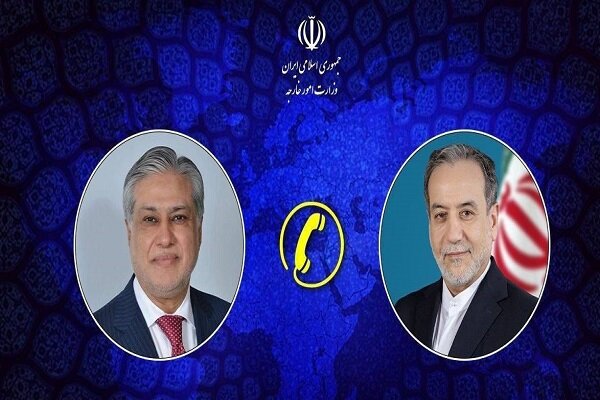
Iran has not made a final decision on whether to attend ceasefire talks with Pakistan, the Islamic Republic's foreign ministry spokesperson said on 21 April 2026, underscoring the fragility of recent diplomatic efforts between the two neighbours.
The statement, carried simultaneously by multiple Iranian state news agencies, marks the most direct official acknowledgment that Tehran remains unconvinced the conditions for direct negotiations have been met. The spokesperson cited ceasefire violations, specifically a maritime blockade, as evidence that the other side has not honoured its commitments.
Ceasefire Violations and the Maritime Blockade
The core of Tehran's hesitation centres on what Iranian officials describe as systematic ceasefire violations since any provisional agreement was reached. According to the foreign ministry briefing, the maritime blockade represents one of the most significant of these violations. The spokesperson said Iran "from the very beginning" encountered ceasefire violations by what it termed "the enemy," without naming Pakistan directly in the statements carried by state media.
The language matters. Iranian state messaging distinguishes between diplomatic engagement and what Tehran frames as adversarial action. By characterising the blockade as a violation rather than a negotiating position, Iran is attempting to shift the burden of diplomatic failure onto the other party while preserving its own room to manoeuvre.
Diplomatic Arithmetic and Islamabad's Position
Pakistan has publicly signalled its desire for direct talks, having extended an invitation to an Iranian delegation. The invitation represents Islamabad's effort to de-escalate tensions that have periodically threatened to spill into open conflict along the shared border. Whether Pakistan controls the actors responsible for the maritime restrictions — or whether those restrictions reflect broader sanctions regimes beyond Islamabad's direct authority — remains unclear from the available sources.
What is clear is that Tehran sees the blockade as a material breach that predates any obligation to engage in talks structured around goodwill. This positions Iran as the wronged party seeking accountability before sitting down at a table it might otherwise use to signal openness to negotiation.
The two countries have a history of border tensions, periodic military confrontations, and deeply suspicious relationships shaped by competing regional ambitions, sectarian considerations, and the ever-present shadow of great-power involvement in the Persian Gulf and South Asia. Any ceasefire framework would need to address not just the immediate military flashpoints but the underlying strategic calculations that drive both governments.
Regional Geopolitical Context
The Iran-Pakistan dynamic does not exist in isolation. Tehran is navigating a complex external environment: ongoing nuclear negotiations with Western powers, a resurgent US posture in the Gulf, and its own relationships with non-state actors across the region that complicate any bilateral diplomatic normalisation. Pakistan, for its part, faces its own economic pressures, a precarious IMF programme, and a security environment shaped partly by cross-border militancy that Iran has periodically blamed on Pakistani territory.
The maritime dimension is particularly significant. Any restriction on shipping lanes or port access carries implications for global energy markets, given Iran's proximity to the Strait of Hormoz, through which roughly a fifth of the world's oil passes. Whether the blockade in question targets Iranian vessels specifically or represents a broader enforcement action related to sanctions compliance is not specified in the available sources — a gap that obscures the precise nature of the dispute.
What the sources do establish is that Tehran is watching closely for signs that the other side will demonstrate goodwill before committing to formal talks. The foreign ministry's repeated emphasis on "no final decision" suggests Iran wants to keep the diplomatic window open without paying the reputational cost of walking away if conditions do not improve.
Stakes and Forward View
If the talks do not materialise, the immediate risk is renewed military confrontation along the Iran-Pakistan border. Both governments have demonstrated willingness to conduct cross-border strikes in recent years when they perceive actionable threats emanating from the other's territory. A breakdown in diplomatic engagement removes the pressure valve that talks — even preliminary ones — would provide.
For the wider region, the failure of Iran-Pakistan de-escalation would add another layer of instability to a Gulf already tense with US-Iran confrontation, Yemen's grinding conflict, and ongoing uncertainty about the future of the Iran nuclear agreement. It would also signal that even among states with some history of pragmatic engagement, the current environment is too mistrustful for successful diplomacy.
Conversely, if Iran decides to attend talks — and the foreign ministry's language leaves that door open — it would represent a notable display of diplomatic patience. Tehran has used similar delays in the past to extract concessions or signal displeasure before ultimately returning to the table. The question is whether Pakistan or its partners can offer enough in terms of verifiable ceasefire compliance to make Iran's participation worthwhile.
The next several days will determine whether the diplomatic channel holds or collapses. What the sources indicate, without ambiguity, is that on 21 April 2026, Iran had not made that decision — and was not yet ready to.
This publication's coverage prioritises statements from official government channels in both Tehran and Islamabad, supplemented by regional wire reporting. The framing reflects the absence of verified independent corroboration for specific blockade parameters from non-Iranian state sources.
Wire provenance
This editorial synthesis draws on the following public wire/social posts:
- https://t.me/mehrnews/94832
- https://t.me/WarMonitors/11421
- https://t.me/tasnimplus/5571
- https://t.me/tasnimnews_en/8843
- https://t.me/farsna/22105