Iran's Parliament Speaker Uses MAGA Slogan to Frame U.S. as Warmonger in Social Media Post
Mohammad Bagher Qalibaf, Speaker of Iran's Parliament, posted a question directed at the American public on X on April 21, 2026, invoking the MAGA slogan to accuse U.S. leaders of pursuing war to restore American greatness — part of a sustained Iranian public diplomacy campaign that blends domestic U.S. political language into its anti-American messaging.
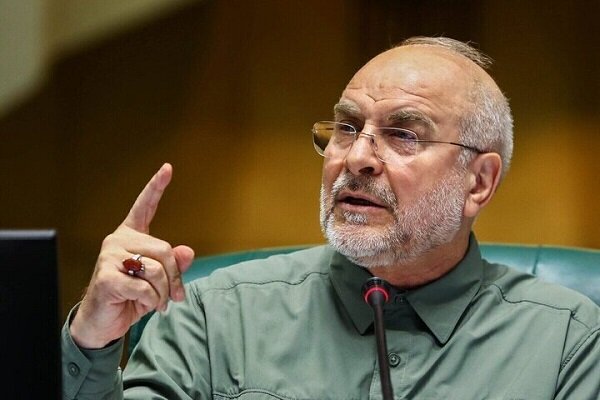
On the afternoon of April 21, 2026, Mohammad Bagher Qalibaf, Speaker of Iran's Islamic Consultative Assembly — the Majlis — posted a brief statement to X, the platform formerly known as Twitter. Addressed to "the American people," the post posed a question about U.S. leadership and war, threading in the familiar language of the Make America Great Again movement to make a political accusation. The post drew coverage across several Iranian state-linked news outlets including Fars News Agency, Mehr News, and Tasnim News's English-language service, which all carried the same framing: that American leaders are instrumentalising conflict to restore U.S. global standing.
The content of the post was narrow — a single rhetorical question — but its placement was deliberate. Qalibaf is a senior figure in Iran's political architecture, a former commander of the Islamic Revolutionary Guard Corps' Quds Force and a three-time presidential candidate before ascending to the speakership in 2020. His posts carry institutional weight even when they are not official policy statements. The use of the MAGA slogan in a foreign-policy context represents a refined piece of political theatre: it takes language native to American domestic politics and repurposes it to suggest that U.S. foreign policy is fundamentally self-interested and militaristic. The sources do not specify which U.S. policy actions Qalibaf was referencing, and the post does not name a specific conflict, administration decision, or military operation.
A Pattern in Iranian State Messaging
The post fits within a well-established Iranian communication strategy that targets Western domestic audiences in their own political vocabulary. This is not new — Iranian state media and officials have long adapted their rhetoric to the information environment of adversary nations. During the peak years of the Iran nuclear dispute, officials in Tehran calibrated statements for Western capitals, emphasising technical compliance to support diplomatic tracks. Now, with nuclear talks stalled and U.S. sanctions pressure sustained, the tone has shifted toward confrontation.
State-linked outlets including Tasnim and Fars framed Qalibaf's post as a direct question to American citizens — a rhetorical choice that seeks to bypass formal diplomatic channels and speak to public opinion directly. The implication is clear: Washington, not Tehran, is the source of regional instability. Whether or not that framing lands with American audiences is beside the point; the broadcast itself is the message. Iranian state media amplified the post across multiple languages and platforms, a distribution pattern that signals coordination rather than spontaneous commentary.
How Western Outlets Frame the Same Dynamic
Western governments and their allied media outlets have long characterised Iranian public messaging as coordinated disinformation, arguing that Tehran's media apparatus — including outlets like PressTV, Tasnim, and the broader network of semi-official news agencies — operates in service of a political objective rather than journalistic practice. The U.S. State Department and allied governments have repeatedly designated Iranian state media as instruments of influence operations, particularly in coverage of conflicts where Tehran has a stake, including Iraq, Syria, Yemen, and the ongoing war in Ukraine.
The MAGA framing in Qalibaf's post illustrates a broader phenomenon: the migration of domestic political slogans into foreign policy messaging. U.S. officials have used hardline rhetoric toward Iran in similar terms — characterising the Islamic Republic as a destabilising force, a sponsor of terrorism, and a threat to regional allies — and that language has filtered back into Iranian official communications as a mirror. Both sides, in this reading, use the other's domestic political language as a weapon, not because of genuine ideological alignment but because it serves a propaganda purpose.
The question that Western audiences face, and that this post is designed to raise, is whether U.S. foreign policy is genuinely driven by security interests or by a desire to preserve American hegemony at any cost. That framing — the security-versus-hegemony binary — is a persistent feature of Iranian state messaging and finds a receptive audience in parts of the Global South that view U.S. military presence as an extension of historical imperialism rather than a stabilising force.
The Geopolitical Context That Surrounds the Post
The post arrived during a period of elevated U.S.-Iranian tension. Talks over the Joint Comprehensive Plan of Action — the 2015 nuclear agreement from which the Trump administration withdrew in 2018 — have repeatedly stalled and restarted without resolution. U.S. sanctions remain in place, targeting Iran's oil exports, its banking sector, and senior officials including Qalibaf himself, who was sanctioned by the U.S. Treasury in 2019. Israeli strikes on Iranian-linked targets in Syria and Lebanon have compounded the pressure. In the Red Sea, the Houthis — an Iran-aligned group — have conducted repeated attacks on shipping, prompting U.S. and allied military responses.
In that context, a parliamentary speaker posting a rhetorical question to American voters is not a diplomatic communication. It is a signal. It tells domestic Iranian audiences that their government is watching American politics and drawing connections between U.S. domestic political movements and foreign policy decisions. It tells the Global South that U.S. military posture is linked to internal political preferences, not international law or collective security. And it tells U.S. policymakers that Iranian officials are operating on an informational battlefield that extends well beyond official negotiations.
The sources do not indicate any formal response from the U.S. government or from any U.S. official in the hours following the post. It is possible that the statement generated no official response, which itself is a data point — in the language of diplomatic signalling, silence can be either indifference or deliberate refusal to engage.
What Remains Uncertain
The post contained a question directed at the American public, but the sources do not provide the full text of what Qalibaf wrote — only the framing that Iranian state outlets used to describe it. The precise wording, whether the post included an image, and how many engagements it received are details that the available sources do not confirm. Qalibaf's prior X posts have included a range of political content, from domestic parliamentary business to regional foreign policy commentary, but the sources do not contain a catalogue of his social media history that would allow comparison with this specific post.
Whether the post was part of a coordinated campaign — for example, timed to coincide with a specific U.S. policy announcement or diplomatic development — cannot be determined from the available information. Iranian state media amplified it broadly, which suggests institutional support, but the evidence for deliberate timing relative to a specific external event is not present in the thread.
The stakes of this kind of messaging are diffuse rather than acute. Qalibaf's post is unlikely to alter U.S. policy or shift the balance of the nuclear negotiations. What it does is sustain a narrative — that U.S. global posture is driven by hegemonic ambition rather than legitimate security concerns — and that narrative, carried across Iranian state media and distributed through social platforms, reaches audiences in Europe, the Middle East, and parts of Asia who are already sceptical of U.S. foreign policy. Over time, the cumulative effect of that narrative is not measurable in a single news cycle, but it shapes the informational environment in which U.S. diplomacy operates.
This desk covered Qalibaf's post through the lens of Iranian state media framing, treating it as a public diplomacy signal rather than a news event in the conventional sense. Wire services carried the post's content through the same Iranian channels; Monexus reported the post as an act of rhetorical communication whose context is the sustained U.S.-Iranian standoff, not a discrete policy development.
Wire provenance
This editorial synthesis draws on the following public wire/social posts:
- https://t.me/farsna/124783
- https://t.me/mehrnews/89234
- https://t.me/tasnimnews_en/77891
- https://en.wikipedia.org/wiki/Mohammad_Bagher_Qalibaf
- https://en.wikipedia.org/wiki/United_States_sanctions_on_Iran