Iran Signals US Openness to Lifting Hormuz Blockade as Negotiations Loom
Iran's UN ambassador said Tuesday that Tehran has received indications Washington is prepared to remove its naval presence from the Strait of Hormuz, raising the prospect of renewed nuclear talks after years of standstill.
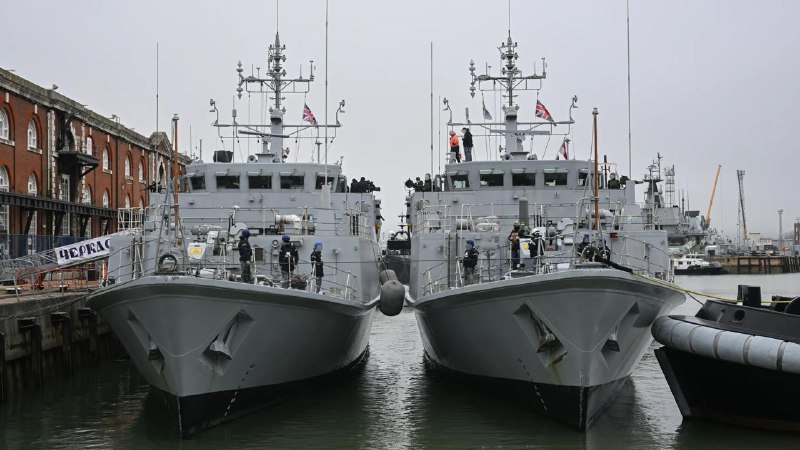
The headline coming out of New York on 21 April 2026 carried a weight that diplomats have learned to treat with caution: Iran says it has received signs that the United States is prepared to lift the naval blockade it maintains across the Strait of Hormuz. Amir Saeid Iravani, Iran's ambassador to the United Nations, made the disclosure in an interview with the BBC, according to reports from Mehr News and open-source intelligence monitors tracking the exchange. If the blockade is removed, Iravani said, the next round of broader negotiations between the two countries will follow.
That a senior Iranian official would go on the record with such a claim is unusual in itself. The Trump administration's maximum-pressure campaign against Tehran, which resumed after the collapse of the original Joint Comprehensive Plan of Action, had driven diplomatic contact to near-zero. No formal talks have taken place since 2022, and the US has maintained a carrier presence in the Gulf designed partly to signal its commitment to keeping the shipping lane open—and partly, critics argued, to underscore American leverage over a regime whose oil exports depend on that same waterway remaining passable.
The Signal and Its Substance
The exact language matters here. Iravani did not say Washington had agreed to lift the blockade. He said Tehran had received "some signs" and "indications" that the United States was prepared to act. That formulation leaves considerable room for interpretation—anywhere from a genuine diplomatic opening to a communication designed to test how the announcement would land in Tehran, Washington, and among European capitals watching from the sidelines.
The blockage itself—a loose term for the US naval posture that effectively monitors and can interdict vessels transiting the Strait—has been a persistent source of friction. Iran has long argued that the presence constitutes a form of economic warfare, and that the proceeds of any sanctions relief should not be held hostage to a physical American presence in Gulf waters that Tehran considers sovereign territory. The language of "lifting the blockade" is also more categorical than what Western officials typically use; US policy has been framed as freedom-of-navigation operations, not a formal blockade under international law. That distinction may prove consequential in any eventual agreement on terms.
What remains unclear from the available reporting is what Washington has actually said—whether the Biden administration, whose position in January 2025 was notably more skeptical of unilateral negotiations, has communicated anything substantive, or whether this is a reference to back-channel messages that have yet to produce any official record. The BBC interview, as reported through Iranian state-adjacent media, did not specify which American counterpart had transmitted the signals or through what diplomatic channel.
Reading the Tea Leaves
Three interpretations present themselves. The first is the optimistic read: that after years of failed maximum-pressure tactics, the Trump administration has concluded that a negotiated settlement to the nuclear standoff is preferable to indefinite economic attrition, and that removing the naval presence is a concrete gesture designed to bring Iran back to the table in good faith. Under this reading, the Hormuz posture was always a negotiating card, and it is now being played.
The second interpretation is more cautious. It holds that the signals Iravani described may be informal, fragmentary, or deliberately ambiguous—and that Tehran may be broadcasting them partly to demonstrate that its diplomatic isolation is lifting, a domestic political priority for a government facing continued economic strain. Iranian officials have in the past amplified diplomatic contacts to strengthen their position ahead of negotiations, a tactic Western interlocutors have learned to discount.
The third reading is structural: that both sides are responding to a changed regional calculus. The ceasefire in Ukraine has freed up diplomatic bandwidth in Washington that had been consumed for three years by European security questions. Meanwhile, Iran's nuclear programme has advanced to a point where the originalJCPOA's constraints—already weakened by American withdrawal—are further eroded. The negotiating window, such as it is, may be closing on the Western side as well.
The sources reviewed for this article do not adjudicate between these interpretations. What can be said with confidence is that the statement was made, that it was made on the record to a mainstream international broadcaster, and that it represents a departure from the near-total diplomatic silence that has characterized the relationship since 2022.
The Chokepoint and Its Leverage
The Strait of Hormuz is not an abstraction in these negotiations. Roughly a fifth of the world's oil and a third of its liquefied natural gas pass through the 21-mile-wide waterway between Oman and Iran each year. That volume makes it one of the most strategically sensitive commercial arteries on earth—and its control is a structural fact that neither side can afford to ignore.
Iran has repeatedly threatened to close the strait in response to perceived aggression, most recently during heightened tensions following the US withdrawal from the JCPOA. The threats have never been carried out at full scale, partly because such an action would be economically catastrophic for China's energy imports—a relationship Tehran cannot afford to damage—but also because a complete closure would invite the kind of military response that Tehran has consistently sought to avoid. The naval blockade, from Iran's perspective, is both a symptom of American hostility and a reminder that the strait cannot be taken for granted.
From the American side, the presence has served multiple functions. It assures Gulf allies—Saudi Arabia, the UAE, Qatar—that Washington remains committed to freedom of navigation. It provides intelligence on Iranian naval movements. And it maintains a credible threat that a blockade, if Iran ever attempted one, could be met with overwhelming force. Removing that posture is not, therefore, a costless concession. It signals a willingness to rely on diplomatic rather than physical deterrence—a shift that will require reassurance to partners who have built their regional security assumptions around an American naval footprint.
The Architecture of a Deal
The nuclear question remains the centre of gravity. The original JCPOA, negotiated in 2015 between Iran and the P5+1 (the United States, United Kingdom, France, Germany, Russia, and China), collapsed after the Trump administration withdrew in 2018, reimposing the sweeping sanctions that had been lifted under the deal. Iran responded by abandoning its own commitments under the agreement, enriching uranium to levels far beyond what the JCPOA permitted. The International Atomic Energy Agency has repeatedly documented Tehran's expanded programme, and Western intelligence assessments have placed Iran closer to a weapons-capable threshold than at any point since the 1979 revolution.
Any new negotiation would have to contend with a set of facts that did not exist when the original deal was struck. Iran's programme is larger, its enrichment infrastructure is more advanced, and the political trust that underpinned the 2015 agreement has been comprehensively destroyed. What Washington might demand in return for lifting the naval posture—and what Iran might be willing to concede—remains speculative at this stage. The sources reviewed for this article describe the Hormuz statement but do not specify the broader agenda that would govern any renewed talks.
European parties to the original agreement have publicly maintained their commitment to diplomacy, and France, Germany, and the United Kingdom will almost certainly seek roles in any new negotiating format. Russia and China, both of which have deepened economic ties with Iran during the sanctions period, have their own interests in any outcome—and their own relationships with Washington, which have shifted considerably since 2025.
Stakes and the Road Ahead
If genuine, an agreement to remove the naval blockade and re open nuclear negotiations would represent one of the most significant diplomatic reversals in recent Middle Eastern history. For Iran, the immediate payoff would be a reduction in the physical expression of American enmity and, potentially, the beginning of a path toward sanctions relief that could ease the economic pressure on ordinary citizens. For the United States, it would mean accepting a form of engagement with a government it has spent years trying to isolate—and trusting that diplomatic tools can achieve what maximum pressure could not.
The risks are equally concrete. Gulf allies who have watched the US posture toward Iran evolve will be watching closely for signs that Washington is pivoting toward accommodation at their expense. Saudi Arabia and the UAE have their own concerns about Iranian regional behaviour—its support for proxies in Yemen, Iraq, and Lebanon—that a nuclear deal alone would not address. Any agreement that is perceived to neglect these concerns risks fracturing the coalition that has underpinned American strategy in the Gulf for decades.
Whether the Hormuz statement marks the beginning of a genuine process or a diplomatic feint will become clearer in the coming weeks. The next round of negotiations, if they materialise, will test whether the language of "signs" and "indications" can be translated into binding commitments on both sides. The Strait of Hormuz will remain the prize at the centre of the table—open enough for now, but never taken for granted by any party that has reason to remember its importance.
Monexus covered this story as a diplomatic development with significant structural implications. The wire framing, as represented in the Iranian state-adjacent sources that first carried Iravani's statement, inclined toward a narrative of American capitulation. This article treats the same facts with more epistemic caution, reflecting the genuine ambiguity in what remains, at this stage, a preliminary signal rather than a confirmed outcome.
Wire provenance
This editorial synthesis draws on the following public wire/social posts:
- https://t.me/mehrnews/918374
- https://t.me/osintlive/284739
- https://t.me/mehrnews/918371
- https://t.me/wfwitness/918482