Iran's Strait of Hormuz: How Geography Became Tehran's Most Credible Deterrent
A New York Times analysis circulating through regional wire services on 21 April 2026 argues that Iran's geographic position—anchored by its control of the Strait of Hormuz—may prove more strategically durable than any nuclear agreement or military posture.
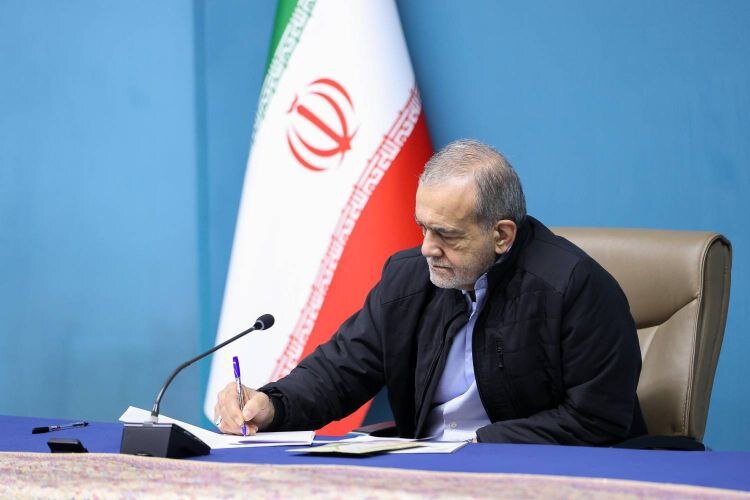
The New York Times published an analysis on 21 April 2026 arguing that Iran's geographic position—concentrated around its hold on the Strait of Hormuz—may constitute the Islamic Republic's most durable strategic asset, regardless of what constraints international negotiators place on its nuclear programme. The reporting, picked up by Persian-language wire services including Al Alam and Tasnim News, frames Tehran's control of the world's most critical energy chokepoint not as a contingency but as established fact. "It has become clear that Iran already has a deterrent: its geography," the newspaper stated, according to translations circulated by regional outlets.
The analysis cuts against a decade of Western policy premised on constraining Iranian nuclear capability through incremental sanctions relief and international monitoring. If the Times's framing holds, that entire architecture rests on a misapprehension of where Tehran's actual leverage resides—not in enriched uranium or advanced centrifuges, but in the 21 million barrels of oil that transit the narrow waterway daily.
Geography as Strategic Fact
The Strait of Hormuz is not merely important. It is, by volume, the world's single most critical maritime chokepoint. Roughly 20 percent of global oil shipments and 20 percent of globally traded liquefied natural gas pass through the 33-kilometre-wide passage separating Iran from Oman. The New York Times analysis—echoed across regional wires—positions this physical fact as Tehran's foundational strategic consideration, one that no diplomatic agreement can fundamentally alter. Geography does not sign treaties. It does not observe enrichment limits. It sits there, immutable, regardless of what foreign ministers agree in Vienna or Geneva.
What changes with a nuclear deal is the political and legal context around Iranian behaviour, not the underlying material reality. A uranium enrichment facility can be bombed, sanctioned, or converted. The Islamic Republic's 1,500-kilometre coastline along the Persian Gulf cannot be relocated. Western planners have spent considerable resources constructing a framework that addresses the symptom—Iranian nuclear capability—while leaving the structural condition untouched.
The Nuclear Question as Secondary
The New York Times framing suggests that whether Iran emerges from ongoing regional tensions with strict nuclear limits or宽松 restrictions, the strategic calculus remains largely unchanged. The newspaper's assessment, as relayed through multiple regional wire services, indicates that Tehran possesses what analysts term a credible second-strike capability of a different kind—not nuclear Mutually Assured Destruction, but economic MAD. Any military strike that significantly disrupts Hormuz transit would send oil prices to levels that destabilise the global economy, including that of the United States, its Gulf allies, and every major industrial power.
This reframing matters because it shifts the terrain on which international negotiations occur. A deal that limits Iranian nuclear activity to 3.67 percent enrichment may satisfy Western domestic political demands for visible constraints. But it leaves untouched the chokepoint that already gives Iran de facto veto power over the region's energy exports. Critics of the prevailing diplomatic approach—and there are increasingly vocal ones in Gulf diplomatic circles—argue that Western negotiators have been arguing about the wrong instrument while the real one sat undisturbed.
Structural Leverage and the Limits of Sanctions Architecture
The sanctions regime imposed on Iran since 2006 represents one of the most comprehensive economic pressure campaigns in modern diplomatic history. The restrictions have inflicted genuine pain on Iranian households and constrained the Revolutionary Guards' financial operations. But they have not—because they structurally cannot—altered the strait's geography. Sanctions cannot reroute global shipping lanes. They cannot manufacture an alternative to Hormuz transit. They cannot, in other words, eliminate the leverage that is built into the earth's topography.
This creates a fundamental asymmetry in any negotiated outcome. Western diplomats present sanctions relief as the carrot that induces Iranian nuclear compliance. Tehran, from this vantage point, faces a different equation: why trade away the one asset that cannot be taken by sanctions when the sanctions can be reimposed the moment the political climate shifts in Washington? The New York Times analysis implies that Iranian strategists have arrived at precisely this conclusion—and structured their negotiating posture accordingly.
The Forward View: What This Means for Regional Stability
If the thesis embedded in the Times analysis is correct, several implications follow. First, the leverage asymmetry between Iran and its Gulf neighbours—and between Iran and Western powers—is more permanent than the nuclear debate suggests. Second, any military contingency planning by the United States or Israel that assumes the ability to strike Iranian infrastructure without catastrophic economic spillover is operating on faulty assumptions. Third, Gulf states that have pursued normalisation with Israel as a hedge against Iranian dominance are doing so on the basis of a security architecture that may prove less robust than advertised.
The sources do not specify what specific diplomatic developments prompted the New York Times analysis at this particular moment. Regional tensions remain elevated, and the reporting circulates against a backdrop of ongoing negotiations over Iran's nuclear file. What the Times appears to be doing is naming aloud what regional analysts have long argued in private: that the framework governing Middle Eastern energy security has a geographic floor beneath which no amount of diplomatic creativity or military posturing can push it.
That floor is Persian. It is shallow in places. And it sits exactly where it has always sat—controlled, ultimately, by Tehran.
This publication's wire coverage led with the geographic-strategic dimension rather than the nuclear programme framing dominant in Western headlines. Regional wire services framing Iran as the focus of the analysis—rather than a party to be contained—reflects a genuinely different baseline assumption about where agency and leverage reside in the Gulf security equation.
Wire provenance
This editorial synthesis draws on the following public wire/social posts:
- https://t.me/alalamarabic
- https://t.me/alalamarabic
- https://t.me/alalamarabic
- https://t.me/tasnimnews_en
- https://t.me/JahanTasnim