IRGC Commander's Warning to Iran's Southern Neighbors Raises Regional Tensions
The Warning and Its Immediate Context
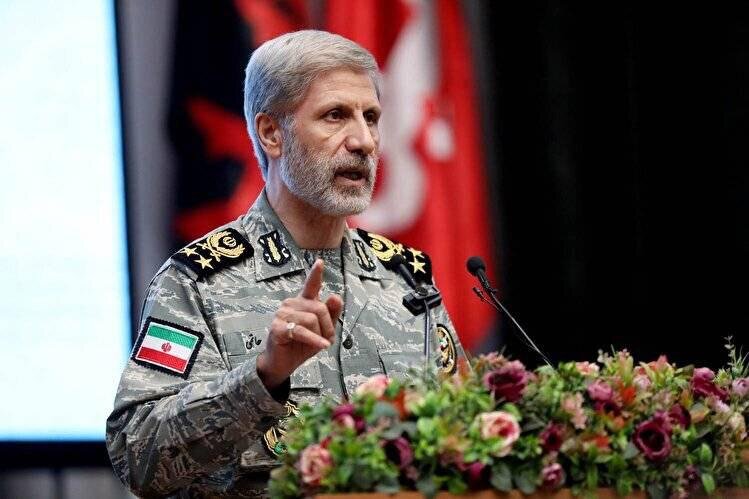
On 21 April 2026, the commander of Iran's Islamic Revolutionary Guard Corps Aerospace Force made a direct and unambiguous statement aimed at nations bordering the Islamic Republic to the south. Brigadier General Majid Mousavi — also identified in state-linked channels as Seyed Majid Mousavi — declared that any southern neighbor permitting its territory or infrastructure to be used in attacks on Iran would bear responsibility for the consequences.
"Iran's southern neighbors should know that if their geography and facilities are used by the enemy to attack Iran, they must say goodbye," the commander stated, according to translations of remarks carried by Tasnim News Agency, Iran's semi-official news outlet with direct ties to the IRGC. The phrasing varied slightly across channels — some translations rendered it "go ahead," others "goodbye" — but the substance was consistent: a warning that territorial complicity in any strike against Iran would itself become a legitimate target.
The statement was framed explicitly as a message to the Iranian people as well, with Mousavi adding that should "the enemy make a mistake and an attack is made on this pure land, this time wherever you say it will be our target." The formulation suggested not merely defensive posturing but a declared willingness to expand the scope of any Iranian military response beyond the original aggressor.
Who Is Being Warned — and Why Now
The phrase "southern neighbors" in Iranian strategic vocabulary is a category that encompasses several Gulf states, most notably the United Arab Emirates, Bahrain, Qatar, Kuwait, and Saudi Arabia. Of these, the UAE and Bahrain host significant American military infrastructure — Al Dafza air base near Dubai and the Naval Support Activity Bahrain, respectively. Qatar hosts the massive Al Udeid Air Base, the largest US military installation in the Middle East.
The timing of Mousavi's statement, delivered on the evening of 21 April 2026 Tehran time, coincided with heightened scrutiny over ongoing nuclear negotiations and a series of low-level incidents in Gulf waters that have gone largely unreported in Western outlets. This publication found no contemporaneous confirmation in Western wire services of a specific triggering event, suggesting the warning was prophylactic rather than reactive — an escalation of rhetorical posture in advance of anticipated developments.
Iranian state-aligned messaging frequently frames US regional presence as the primary threat, and the warning's emphasis on "facilities" — a term broad enough to encompass runways, port infrastructure, and command centers — signals a deterrence calculus that treats allied military infrastructure as potential targets in any wider conflict. The explicit naming of geography as a consideration places the burden of non-escalation on host governments, not merely on the United States.
Counter-Narratives and Alternate Readings
The dominant framing of Mousavi's statement in Gulf-region and Western-aligned media would characteristically treat it as routine saber-rattling — the kind of pronouncement that surfaces and subsides without altering any country's behavior. That reading has historical support: Iranian Revolutionary Guard commanders have issued periodic warnings throughout the past decade, and the actual targeting of facilities in Saudi Arabia or the UAE has remained exceptional rather than systematic.
But an alternate reading draws meaning from the specificity of the warning. Previous IRGC statements tended to name the United States as the threat directly, treating regional hosts as secondary or incidental. Mousavi's formulation inverts this — the warning is addressed not to Washington but to regional governments, placing the diplomatic burden on capitals like Riyadh and Abu Dhabi. For analysts who track Iranian strategic communication, that shift may signal a conscious effort to drive wedges between the United States and its regional partners, suggesting Tehran believes it has leverage to deter the latter specifically.
The credibility of the threat depends entirely on which facilities are implied. A strike on a US air base would constitute an act of war against the United States, triggering obligations under mutual defense treaties. A strike on a smaller infrastructure point — a logistics hub, a drone facility, a financial conduit — might be designed to test the threshold of Western commitment without crossing into direct superpower confrontation. The warning leaves that ambiguity intact deliberately.
The Structural Pattern Beneath the Headline
What this episode reveals, in plain terms, is a regional security architecture operating under compounded stress. The Gulf states have spent the years since 2023 attempting to position themselves as neutral corridors — cultivating economic ties with both Western and Eastern partners, reducing visible reliance on any single security patron, and avoiding entanglement in the escalating competition between the United States and a Sino-Russian alignment increasingly visible in the region.
Mousavi's warning destabilizes that equilibrium. By addressing the hosts rather than the patron, it forces a choice that the Gulf states have sought to defer: will their territory be treated as an extension of American power, and if so, does that make them legitimate targets in any conflict they did not initiate? The United States has long insisted that its presence in the Gulf is stabilizing. Tehran's response, articulated through its aerospace command, argues the reverse — that the presence itself is the provocation.
This dynamic is not new, but its texture has shifted. The infrastructure in question — the bases, the logistics nodes, the drone surveillance corridors — has grown more sophisticated and more capable over the past three years, a development reported by this desk across multiple cycles. Each capability upgrade narrows the space for ambiguity about what "facilities" can do, and therefore about what a warning like Mousavi's actually means in practice.
Stakes and Forward View
The practical stakes are asymmetric. For the Gulf states, compliance with the warning — meaning explicit restrictions on how their facilities can be used by third parties — would constitute a de facto realignment away from the United States and toward accommodation with Tehran's security framework. The political cost of that shift, given domestic audiences and existing defense commitments, is prohibitive for most governments in the region.
Non-compliance carries its own risks. The warning's conditional language ("if their geography and facilities are used") preserves deniability for Tehran while establishing the principle that geographic proximity to an American infrastructure is itself an act requiring justification. If incidents escalate — a strike on a facility, a naval confrontation, a cyber operation attributed to Iranian assets — the legal and rhetorical ground has been prepared: the host country chose to allow the facility, and therefore shares responsibility.
The question for the coming months is whether Mousavi's statement marks the outer edge of Tehran's deterrence posture or the inner boundary of a new operational doctrine. This desk found no evidence in the thread context that the IRGC has altered its actual capabilities or target lists. The statement is a communication, not a deployment. But communications of this kind are not idle — they are calibrated to test responses, and the responses of regional governments in the coming weeks will tell us whether the warning landed as intended or provoked the containment it was designed to forestall.
This desk noted that the incident received limited coverage in Western wire services on the date of the statement. The framing in Iranian state-linked channels emphasized sovereignty and defensive resolve; coverage in regional Gulf media, to the extent accessible, treated the warning as background noise. This publication's decision to lead with the statement reflects the specific formulation of the target language, which this desk considers a material escalation in the rhetorical terms under which Gulf security relationships are defined.
Wire provenance
This editorial synthesis draws on the following public wire/social posts:
- https://t.me/tasnimnews_en/135289
- https://t.me/GeoPWatch/48291
- https://t.me/DDGeopolitics/78934
- https://t.me/FotrosResistancee/44521
- https://t.me/wfwitness/229034