The Leverage Play: Inside Trump's Dual-Track Iran Strategy
As Trump threatens unprecedented consequences against Tehran while simultaneously backing a diplomatic channel through Pakistan, the real game is a pressure campaign designed to extract maximum concessions — and the markets know it.
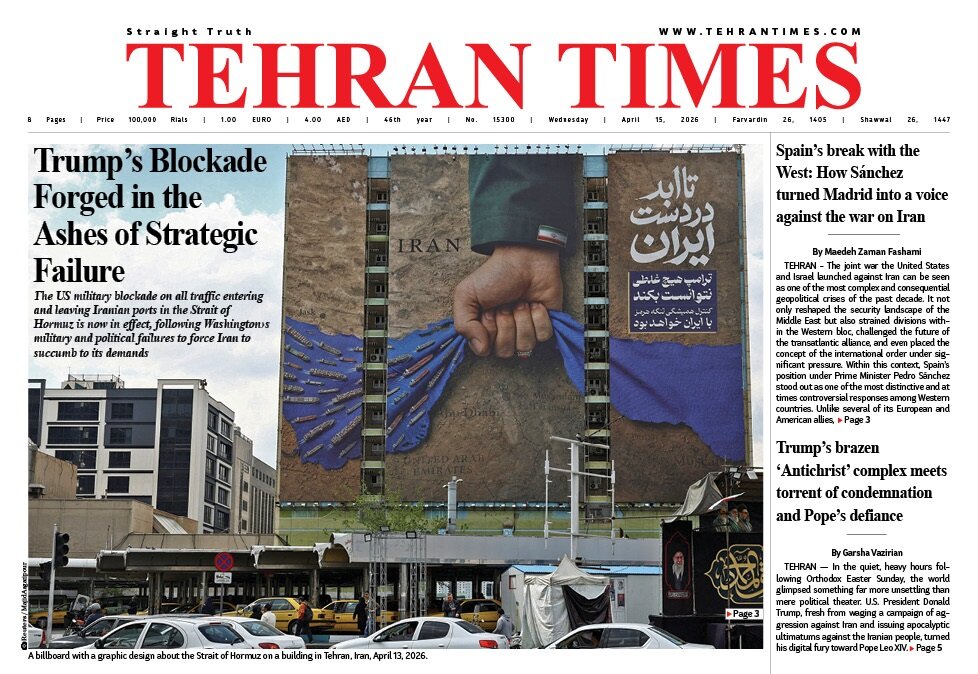
On 20 April 2026, as Iran signalled it would send a negotiating team to Pakistan for a second round of talks, President Donald Trump issued a separate, more alarming statement. "If Iran doesn't negotiate, they are going to see problems like they've never seen before," Trump said, in remarks that drew immediate attention across diplomatic and financial channels alike. The juxtaposition — a diplomatic opening and an explicit threat of escalation issued within hours of each other — is not accidental. It is the architecture of the administration's current Iran strategy: compress the target state into a corner and then offer a door, simultaneously.
The threat was the public half of a dual-track approach. The private half, already underway, is the back-channel via Pakistan that brought Iranian negotiators to the table in the first instance. Tehran has signalled willingness to continue that engagement, according to reporting from Polymarket and multiple X/Twitter threads citing direct sources on 20 April 2026. The question is whether the concessions being demanded are survivable for a regime that has spent years building leverage precisely so it would never have to surrender it at this price.
The Negotiating Trap
The ceasefire terms being pressed on Iran through the Pakistani mediation channel are punishing. Iran is projected to surrender its enriched uranium stockpile this year — a 65 percent probability, according to Polymarket pricing updated on 20 April 2026. That figure alone represents the single largest concession Tehran has ever been asked to make, effectively abandoning a program its nuclear architects have spent decades developing. The surrender condition is not theoretical: it appears in the framing of the mediation process itself, implying the U.S. has structured the talks around a single non-negotiable outcome.
Iran's willingness to send a second team to Pakistan, despite the terms on the table, suggests a regime in a genuine dilemma. Hardliners want to resist; pragmatists see the arithmetic. The United States has simultaneously increased military posture in the Gulf and kept the diplomatic door open — a combination designed to make the cost of resistance exceed the cost of compliance. That is not a new playbook, but it is one that, when combined with the financial architecture of global markets reacting in real time to every presidential statement, has created a pressure environment without modern precedent.
The Polymarket odds on a formal announcement ending military operations against Iran by month's end sat at 37 percent on 20 April 2026. That is not a prediction — it is a market calibration of probability, reflecting the informed view of traders who have direct financial stakes in the outcome. The figure has moved on every significant piece of news from either side of the negotiation, suggesting that the financial community is treating the diplomatic track as a live and material variable in pricing risk across energy markets globally.
The Market Signal Problem
The financial dimension of this crisis goes beyond the price of oil. The BBC reported on 20 April 2026 that its investigation had found a consistent pattern of unusual trading spikes in financial markets ahead of public announcements by President Trump — including during the period when the Iran conflict became publicly visible. The data, if confirmed, would suggest that material information about the administration's intentions has moved markets before those intentions were publicly disclosed. That is either a serious intelligence-security failure or something more troubling: evidence that the timing of policy announcements has been calibrated to financial outcomes, or that information has leaked from within the executive branch's decision-making apparatus.
The pattern, if real, is not trivial. The financial consequences of a U.S.-Iran military escalation extend far beyond stock indices. Energy futures, defense contractors, regional sovereign debt, insurance markets covering Gulf shipping — all of these reprice in response to statements that originate from a single person's social media activity or a podium appearance. A pattern of advance trading before those statements is not a coincidence that statistical noise would produce. It is either a leak problem or a design problem, and neither is acceptable in a democracy where markets are supposed to process public information, not privileged information.
The CoinDesk reporting from 20 April 2026 documented specific instances in which Trump's statements moved bitcoin by between 5 and 12 percent in single sessions. That cryptocurrency — theoretically immune from direct monetary policy, since no central bank controls its supply — turns out to be highly sensitive to the same geopolitical signalling that moves oil. This is a market distortion problem with implications that extend well beyond any single asset class. If the price of a decentralised digital asset can be moved by a U.S. presidential statement with the consistency that CoinDesk documented, then the broader financial system is more vulnerable to executive-branch signalling risk than any regulatory framework currently in place acknowledges.
The Energy Math
Trump said on 20 April 2026 that gasoline prices would drop when the Iran war ends. The statement was not precise about mechanism or timeline, but the political logic was clear: a president whose approval ratings have tracked consumer energy prices wants to be associated with the post-conflict scenario, not the conflict itself. The problem is that the relationship between the Iran conflict and gasoline prices is not the simple one Trump implies.
The market turmoil generated by the escalation itself — the uncertainty premium embedded in oil futures during an active conflict with a major Gulf producer — has already elevated prices beyond what pure supply-and-demand fundamentals would predict. Removing the uncertainty premium would produce relief at the pump, but only if the negotiated outcome includes a sanctions relief component that restores Iranian crude to the global market at pre-conflict volumes. That outcome is not guaranteed. If Iran complies with the uranium surrender condition, sanctions relief follows — but the timeline for restored production, logistics reorientation, and shipping insurance normalisation means consumers do not see price relief for months after the ceasefire is declared.
There is a further complication: if the negotiation collapses and military operations intensify rather than end, the oil price spike that follows would be significant. Analysts who model Gulf conflict scenarios routinely put a major Iran escalation at $120 per barrel or above for benchmark crudes within weeks. That translates directly to pump prices in the United States, Europe, and Asia — with the most acute pressure on lower-income consumers in import-dependent economies, exactly the populations most sensitive to energy price shocks and least equipped to absorb them.
What Comes Next
The next ten days will determine whether the Pakistani mediation channel produces a face-saving formula for both sides, or whether the escalating rhetorical pressure is designed to extract concessions at the table by threatening destruction off it. The 37 percent probability on a formal military operations announcement by month's end is not a reliable forecast — it is a snapshot of market belief given current information, and that information changes with every statement from Tehran, Washington, or Islamabad.
The 16 percent probability on a Trump visit to Pakistan this month adds another variable. A presidential visit would signal that the administration is willing to invest significant political capital in the outcome, which would raise the pressure on Tehran while also raising the domestic political stakes for a president who has stated, repeatedly, that the end of the Iran conflict will be good for American drivers. A visit also raises the possibility of a photo-opportunity deal — a signed statement, a handshake, a declaration — that resolves the immediate crisis without resolving the structural questions about verification, monitoring, and the long-term disposition of Iran's nuclear infrastructure.
The structural question does not go away with a ceasefire. Iran's nuclear programme, the regional security architecture of the Gulf, the alliance structure that the United States has built with Saudi Arabia and the UAE, and the question of what role China and Russia play in any post-conflict arrangement — these are questions that a one-month negotiation does not answer. What a deal does is buy time, shift the market, and give the Trump administration a headline it can use. Whether the underlying pressures that produced this crisis are addressed is a separate and much longer question.
This publication tracked the BBC investigation alongside its own reporting on the Pakistani mediation channel. The financial market angle — the advance trading patterns, the Polymarket pricing as a geopolitical intelligence tool — received less prominence in the wire than it warranted, in our view. Energy desk coverage has been primarily calibrated on the policy announcements; the structural financial implications of presidential signalling risk deserve more sustained analysis.
Wire provenance
This editorial synthesis draws on the following public wire/social posts:
- https://x.com/polymarket/status/1913349012344283136
- https://x.com/unusual_whales/status/1913298292979032198
- https://x.com/polymarket/status/1913234192316461060
- https://x.com/polymarket/status/1913218063154823416
- https://x.com/unusual_whales/status/1913173871476109649