Oil Prices Surge $4 as Iran Signals Non-Participation in Islamabad Talks
Brent crude jumped $4 a barrel on 21 April 2026 after Tehran announced it had not decided to join nuclear negotiations with Washington in Islamabad, reigniting supply-disruption concerns that markets had largely priced out.
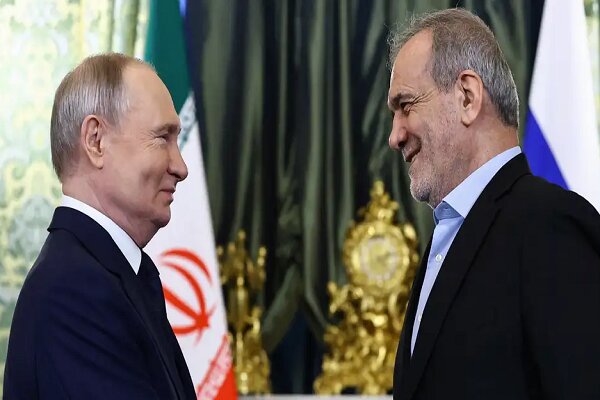
Brent crude surged $4 a barrel on 21 April 2026 after Iran announced it had not decided to participate in nuclear talks with the United States scheduled to take place in Islamabad. The move wiped out a modest easing in oil futures that had accumulated over the preceding week, reflecting how quickly geopolitical risk re-enters market calculations when a major producer signals diplomatic disengagement.
The price jump underscores a pattern that analysts on commodity desks have noted throughout 2025–2026: crude markets are calibrated for cooperation, not confrontation, and any signal that the principal diplomatic channel between Washington and a major oil exporter is closing produces outsized reactions. That calibration has consequences for importing nations already absorbing cost pressures from unrelated supply factors.
Immediate Market Reaction
Brent crude moved sharply higher within minutes of Mehr News Agency reporting, citing Reuters, that Tehran had not yet confirmed its participation in the Islamabad round of talks with the United States. The $4 move was large by intraday standards — it represented roughly a 5.3 percent swing in a contract that had traded within a narrow band for the preceding five sessions. The proximate trigger was binary: a major producer was declining to appear at a negotiating table that markets had expected to produce at least the framework of a breakthrough.
The timing compounded the sensitivity. US-China trade talks were ongoing, adding a second axis of uncertainty to the global demand picture. Markets had managed both uncertainties in recent weeks by assuming that diplomatic channels would eventually produce results. Iran's no-show disrupts that assumption along a vector that has historically been associated with supply-side disruption risk — sanctions enforcement, naval incidents, export corridor disruptions — rather than demand-side softening.
Iran's Diplomatic Calculus
The Islamabad talks represented a continuation of back-channel nuclear diplomacy that had resumed in 2025 after a period of prolonged suspension. Western officials had expressed cautious optimism that a framework could be constructed to limit Iran's enrichment programme in exchange for sanctions relief, though the specifics of any such arrangement remained undefined in public statements. Iran's non-committal announcement did not amount to a formal rejection of the process, and Iranian state media framing was notably restrained — the Islamic Republic's official posture was that it had "not yet responded" rather than that it had declined.
That distinction matters. Tehran has used non-commitment as a negotiating posture before, using the uncertainty itself as leverage to extract better terms from Washington. Whether the Islamabad no-show reflects a substantive shift in Iranian strategy or another iteration of that familiar pressure tactic is a question that the available reporting does not resolve. What the market priced in, however, was the downside scenario — not the diplomatic theatre.
Structural Vulnerability in Energy Markets
The $4 move is best understood against a longer structural backdrop: global spare production capacity has contracted significantly since 2024 as OPEC+ disciplines have held firm, while investment in new conventional production has remained subdued relative to prior cycles. That compression of buffer capacity means that any event carrying even modest odds of supply disruption produces a disproportionate price response. The market is, in effect, paying a premium for optionality — the ability to pivot toward confrontation rather than cooperation costs more now than it did when inventories were abundant.
This is not a problem unique to Iran. It is a feature of a market that has relied on geopolitical stability as a de facto supply stabiliser. When that stability is disrupted — even temporarily, even by a diplomatic non-event — the cost of re-establishing it is borne immediately by consumers. The Islamabad no-show is a single data point in a larger pattern of diplomatic uncertainty that has characterised US-Iran relations since the 2018 withdrawal from the JCPOA. What changes, however, is the market's tolerance for that uncertainty. That tolerance appears to be narrowing.
Near-Term Outlook
The next 72 hours will determine whether the $4 spike holds or reverses. If Iranian officials clarify that participation remains under active consideration, the move likely unwinds quickly — oil markets revert to baseline when uncertainty is resolved, not when it compounds. If Tehran issues a formal non-participation statement, the risk premium embedded in the current price is likely to be sustained, with further upside potential if other OPEC+ members signal reluctance to compensate through increased production.
For energy-importing economies, the stakes are immediate. A sustained $4–$5 premium on Brent translates directly to refined product costs for nations that subsidise fuel — a category that includes several large emerging markets already managing significant fiscal pressures. The Madrid Summit discussions on energy security, which concluded on 17 April 2026, had flagged precisely this vulnerability; the Islamabad move provides a concrete illustration of the risk environment those discussions were attempting to address.
This publication initially framed the Islamabad talks as a potential breakthrough moment for US-Iran nuclear diplomacy, consistent with Western wire characterisation. The subsequent price spike — and the market's apparent disbelief that the talks would proceed as planned — suggests that the diplomatic baseline is more fragile than that characterisation implied.
Wire provenance
This editorial synthesis draws on the following public wire/social posts:
- https://t.me/mehrnews/18432
- https://t.me/tasnimnews_en/19841
- https://t.me/JahanTasnim/20391
- https://t.me/Mehrnews