Pakistan Awaits Iran's Response as Islamabad Peace Talks Deadline Looms
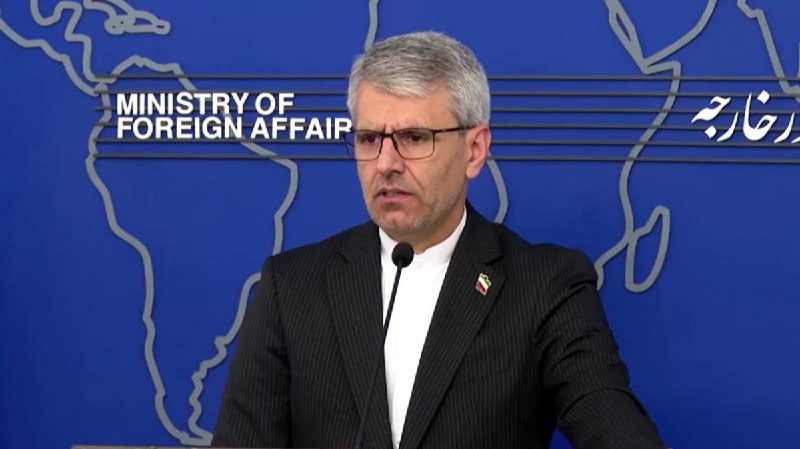
Pakistan's Information Minister Ataullah Tarar said on 21 April that Iran had not formally confirmed its participation in the Islamabad peace talks, with the ceasefire set to expire within hours. Speaking at 19:30 PST, Tarar stated that Pakistan was still awaiting official word from Tehran and that diplomatic efforts to secure Iran's attendance were continuing. The timing leaves Islamabad in a precarious position: it has positioned itself as the mediating venue for a trilateral process that includes the United States, yet the outcome hinges entirely on whether Iran formally commits before the ceasefire window closes.
Islamabad's Diplomatic Gambit
Pakistan's Information Ministry has framed the country as a willing bridge between Washington and Tehran, a role that carries both prestige and risk for a state with limited leverage over either party. The official line from Tarar's office is that Pakistan has made sincere efforts to convince Iran's leadership to send a delegation and that those efforts are ongoing. The sources provide no timeline for a formal Iranian response, which makes the ceasefire deadline — set for 4:50 am PST on 22 April according to one report — the operative constraint on whether the talks proceed as planned.
That Islamabad is still hostessing talks after weeks of tit-for-tat escalation is not trivial. Middle powers in South Asia have historically been drawn into US-Iran tensions through secondary effects — sanctions spillover, IMF programme conditionality, energy price shocks — even when they are not primary actors in the dispute. By continuing to extend the diplomatic option, Pakistan is betting that its role as venue gives it some standing with both sides. Whether that bet holds depends entirely on Tehran.
The American Dimension
The United States appears in the framing of these talks as a named party alongside Pakistan and Iran, which gives the process a trilateral character that goes beyond classic bilateral mediation. The sources do not detail the level of US engagement — whether officials from Washington are present in Islamabad, or whether the American role is confined to back-channel communication through a third government. That distinction matters. A visible US presence in the room would give the talks legitimacy in the eyes of Western financial markets and Gulf partners, but it would also be a provocation that Tehran's negotiating team would find difficult to accept publicly.
The US has signalled interest in a negotiated outcome, but the structural incentives on all three sides point in different directions. Washington faces domestic pressure to avoid any image of direct engagement with a Tehran it has sanctioned extensively. Iran faces pressure from its own hardliners to extract concessions before agreeing to any format that implies parity with Washington. Pakistan has the weakest hand: it wants to demonstrate diplomatic relevance to both powers while managing the domestic costs of being adjacent to a conflict neither side fully controls. The sources offer no indication that the trilateral format has been agreed in principle — only that the talks were meant to happen and Iran has not yet confirmed.
What Tehran's Silence Means
Iran's failure to confirm a delegation is not the same as a refusal, and the distinction matters for assessing what comes next. One reading is that Tehran is using the confirmation window as a pressure lever — forcing Pakistan and the US to demonstrate exactly how much they need a diplomatic outcome before Iran commits. Another reading, consistent with how Iranian diplomatic communications have operated in recent months, is that internal deliberations within Tehran have not concluded, and the bureaucratic process for authorising a delegation is running up against the ceasefire clock.
The sources do not indicate which of these readings Islamabad itself believes is correct. Tarar's statement is calibrated to sound measured rather than alarmist — he emphasises that Pakistan is still working on it — which suggests the Pakistani side is not yet convinced Iran will walk away. What the sources do make clear is that no formal confirmation had been received at the time of the minister's statement on the evening of 21 April. The gap between "not confirmed" and "refused" will be closed by events within the next several hours.
The Ceiling on Diplomatic Outcomes
The structural problem with this kind of last-minute mediation is that it tends to produce agreements that paper over a standoff rather than resolve it. A ceasefire extension buys time. A set of agreed talking points buys nothing of substance. What the sources do not address — and what the format of a rapid-fire diplomatic summit in Islamabad cannot easily overcome — is whether there is any substantive common ground between a US that has maintained maximum-pressure sanctions and an Iran that has deepened its nuclear programme in response. Mediation works when the principals want a deal. When they want a delay, a venue, or a political signal more than an outcome, the mediator ends up holding an agenda they cannot control.
Pakistan's Information Minister said the situation was still evolving. The ceasefire is set to end on the morning of 22 April. Islamabad has kept the door open. Whether anyone walks through it depends on Tehran — and on how much longer Iran's leadership wishes to be seen as open to dialogue without committing to one.
This publication covered the story through Pakistani official sources rather than wire-service aggregation, with particular attention to what the absence of a formal Iranian confirmation meant for the credibility of the diplomatic process — as opposed to treating the talks as an established fact that simply needed to be described.
Wire provenance
This editorial synthesis draws on the following public wire/social posts:
- https://t.me/TheCradleMedia/2851
- https://t.me/DDGeopolitics
- https://t.me/tasnimplus
- https://t.me/osintlive
- https://t.me/ClashReport