The Premier League's Chasm: Leicester's Decade of Decline and What It Means for English Football's Fractured Middle
A decade after a 5,000-to-1 title win, Leicester City face relegation to League One — and the arithmetic reveals a Premier League growing more unequal at both ends.
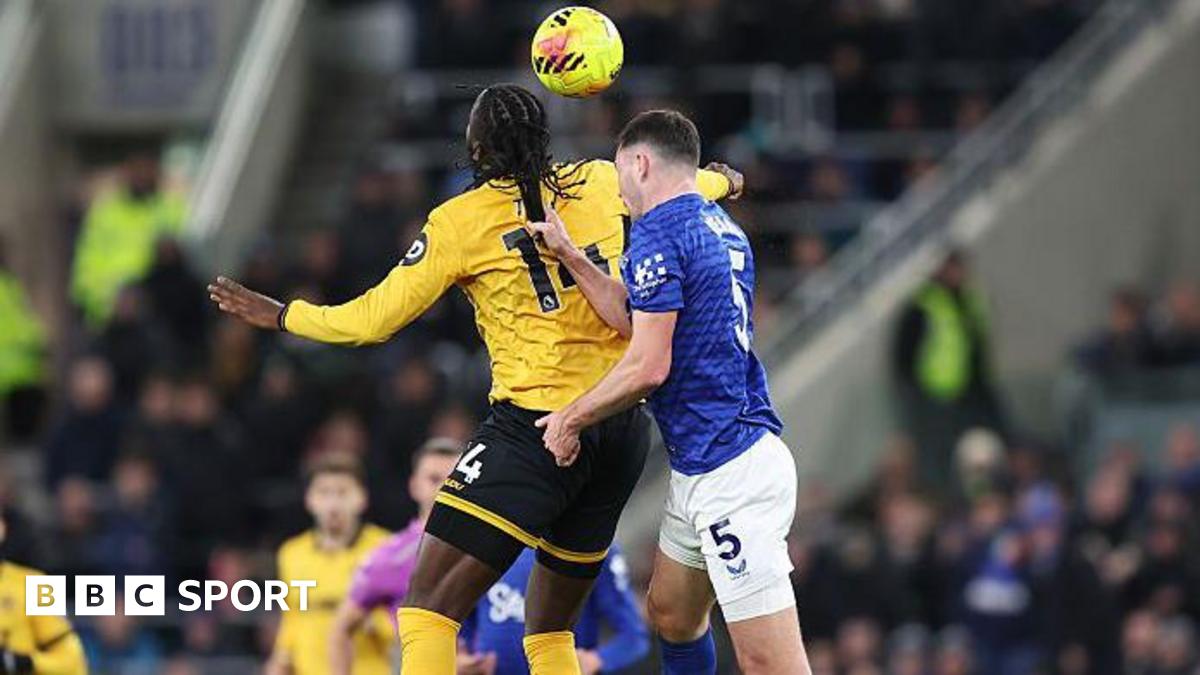
On 2 May 2016, Leicester City clinched the Premier League title in a way that reordered the assumptions of English football. The odds were 5,000 to 1. The squad cost less than Manchester United's bench. The manager was a tactician whose methodology existed entirely outside the sport's established canon. Nothing about that season conformed to the financial logic the league had spent two decades normalising — and nothing about the decade that followed has confirmed that the logic was ever actually broken.
By April 2026, Leicester stand near the foot of the same table they once dominated, fighting to retain top-flight status for the third time in seven years. The arithmetic of that fight — who survives, who drops, and on what points total — is now inseparable from a broader structural question: has the Premier League's middle tier become structurally unstable, or has it simply returned to what the financial architecture always intended?
The fall and its mechanics
Sky Sports traced the contours of Leicester's decline in a report published on 21 April 2026, noting the club's trajectory from 2016 triumph to the edge of League One. The drop has been swift and, in structural terms, explicable. Repeated cycles of selling best players — components of the 2016 squad dispersed to Manchester City, Liverpool, Chelsea, and elsewhere — were matched against incomplete reinvestment and ownership decisions that proved misaligned with a league growing more expensive in real terms. When relegation struck in 2023, the parachute payments cushioned the fall but did not arrest it. The club returned to the Premier League with a skeleton assembled for survival, not continuation.
What distinguishes Leicester's situation from ordinary football misfortune is the speed of the reversal relative to the scale of the original achievement. Most title-winning sides sustain at least one generation of core players; Leicester's core dispersed within two seasons. The reasons were partly commercial (players had release clauses, the club had debt) and partly sporting (the manager who engineered the win was replaced within a year). But the structural lesson generalises: in a league where the top six clubs operate with revenue bases five to eight times larger than the average survivor, a singular tactical advantage can be exploited and neutralised faster than it can be consolidated.
The bottom of the table, April 2026
The Athletic's Telegram thread from 20 April 2026 outlined the current state of the relegation battle with specificity: multiple clubs within a narrow points range, fixtures carrying disproportionate weight, and a gap between 17th and 18th that one bad week can open or close entirely. The nature of the battle has changed over the past decade. Earlier iterations of the bottom-six fight involved clubs with comparable revenues and comparable structural limitations. The 2025–26 version features a Leicester whose parachute money is expiring, an Ipswich whose first season back has exposed the gap between Championship infrastructure and Premier League demands, and a cluster of clubs whose manager appointments in January suggest planning for survival rather than progress.
The sources do not specify which clubs sit in which positions as of the filing date — Telegram threads offer real-time state-of-play, not archival snapshots — but the pattern is consistent: the bottom six positions are contested by clubs whose financial foundations are being tested at a moment when the top half's commercial dominance has never been more entrenched. The revenue gap between finishing 17th and finishing 11th now exceeds £40 million per season in broadcast income alone. That differential funds the difference between a squad built to survive and a squad built to consolidate.
A sixth place that qualifies
The Athletic separately reported on 21 April 2026 a rule nuance that has gained new relevance this season: finishing sixth in the Premier League could, under specific conditions, yield a Champions League qualification spot for the following season. The mechanism involves England's coefficient ranking relative to other UEFA federations and the interaction between that ranking and the number of clubs from the country's top performance tier that qualify automatically. In practical terms, it means a club finishing sixth might enter the competition proper rather than a qualifying round — a financial prize worth between £30 million and £50 million depending on run depth.
The implication is structurally curious. A sixth-place finish confers Champions League access precisely when the clubs most likely to finish sixth are those caught between the top six's dominance and the relegation threshold. The clubs with the most to gain from this arrangement are those already operating near the ceiling of their natural financial tier — not those challenging the established order, but those trying to hold position within it. In a league where the top six positions are, by revenue and squad depth, effectively fixed for any given season, the competition for seventh through tenth has quietly become more consequential than the competition for fourth.
The ball and the distance goal
One footnote to the season's narrative comes from an unexpected direction. ESPN reported on 21 April 2026 that sports scientists have been asked to evaluate whether the new Premier League match ball — introduced this season — correlates with the frequency of long-range goals. The reporting noted that while teams are not attempting more shots from distance this season, the conversion rate from long range has increased. Scientists studying the ball's aerodynamic properties have proposed that its texture and panels alter air resistance in ways that affect swerve and bounce at high velocity, making the ball less predictable for goalkeepers at range.
If the correlation holds, it is a reminder that the Premier League's product — the spectacle itself — is subject to engineering decisions made by a single manufacturer. The ball change was not announced as a policy intervention in goal-scoring patterns; it was presented as a product refresh. Yet its effects, if material, reshape the competitive balance between goalkeepers and shooters in a way that can swing individual matches and, by extension, seasonal outcomes. That the governing body does not treat such effects as its own responsibility says something about the distance between the league's commercial operations and its sporting governance.
Stakes and structural questions
The Premier League's structural problem, illustrated across these storylines, is one of concentration. Revenue flows upward — broadcast deals, commercial partnerships, and the compounding effect of European competition qualification — because the league's brand is inseparable from its top clubs. Those clubs, in turn, extract the majority of the benefit when the league's commercial value rises. The clubs in the bottom half do not participate in that rise proportionally; they participate in the cost structure it generates, as transfer and wage markets adjust to the spending power of the top tier.
Leicester's trajectory makes the logic visible. The 2016 title was not a sign that the system had become more open; it was a sign that the system had a rare gap, which the gap's occupants filled before the gap closed. What has followed — promotions, relegations, parachute payments, squad churn, managerial instability — is the sport's financial architecture operating as designed. The clubs at the bottom do not fail because they are poorly managed, though some are. They operate in an environment where the cost of competing has risen faster than the revenue available to those outside the Champions League qualifying zone, and that gap widens every season.
The rule that makes sixth place Champions League-eligible is, in this context, a patch — a mechanism that occasionally rewards a club at the wrong end of the structural gradient with the revenue that would ordinarily flow only to those at the top. It is better than nothing for those clubs. It does not address why the gradient exists, or why the clubs capable of finishing sixth are increasingly those for whom sixth represents the ceiling rather than a step toward something larger.
The season concludes in May. Leicester's fate will be known within weeks. The structural conditions that produced their decline — and the conditions that keep other clubs in the same position — will not resolve with a final whistle.
This desk noted that while Leicester's story received substantial coverage in the British sports press throughout the decade, the framing rarely connected on-field decline to the league's revenue architecture. Stories about the title win and stories about the relegation battle have largely remained in separate narrative lanes.
Wire provenance
This editorial synthesis draws on the following public wire/social posts:
- https://t.me/TheAthletic/11435
- https://t.me/TheAthletic/11433