Putin's Shadow Logic: What the Russia–North Korea Diplomatic Rush Tells Us
A Russian interior minister arrived in Pyongyang on the same day South Korea revealed intelligence about a third North Korean uranium enrichment site — two developments that, read together, point to a deepening axis with consequences far beyond the Korean Peninsula.
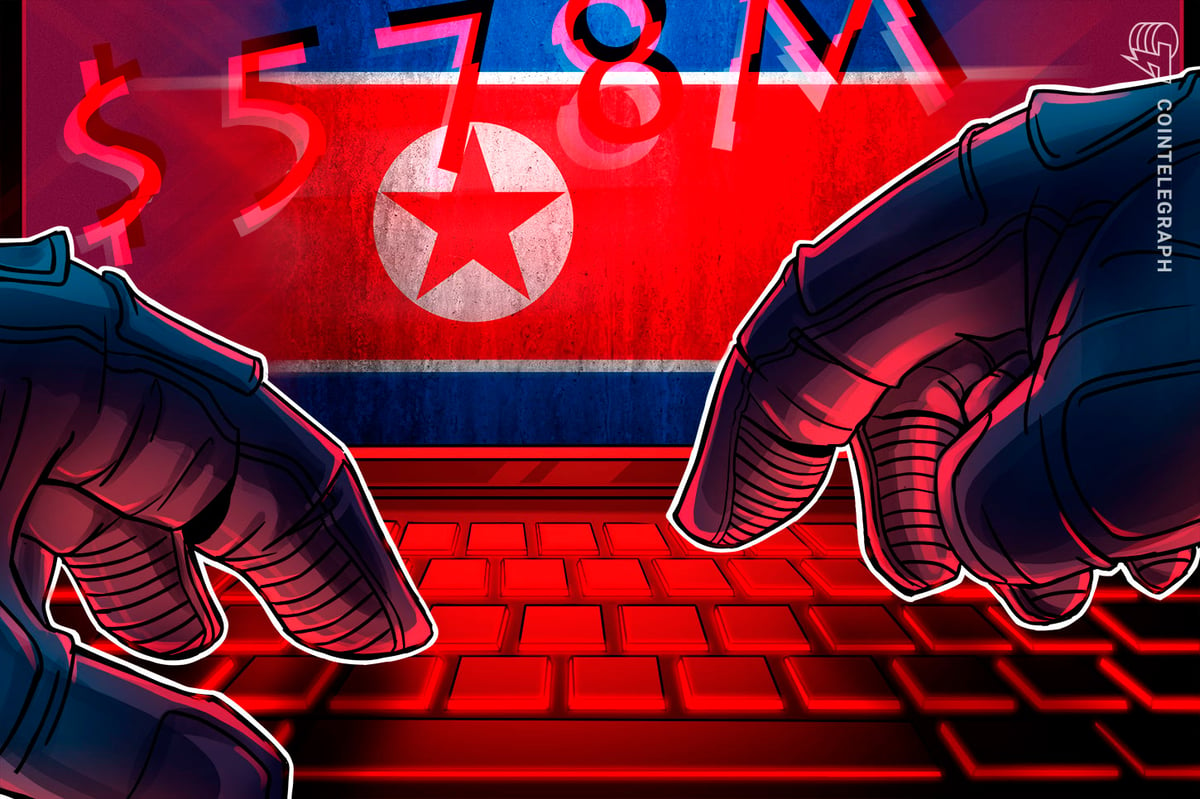
A Russian interior minister landed in Pyongyang on 21 April 2026, the same day Seoul confirmed what intelligence analysts had long suspected: North Korea operates a third uranium enrichment site that the United States had classified until recently. The timing is unlikely to be coincidental.
Konstantin Kolokoltsev, who oversees Russia's interior ministry and is a longstanding member of President Vladimir Putin's security apparatus, arrived in the North Korean capital as part of an inter-governmental consultation mechanism that has accelerated sharply since Russia launched its full-scale invasion of Ukraine in February 2022. The trip, reported by Reuters citing wire dispatches, follows a pattern established over the past three years: Russian officials making repeated, high-profile visits to Pyongyang while normalised cooperation agreements accumulate into something structurally more consequential than diplomatic courtesy.
The Third Site and Why It Matters
The South Korean government's apparent disclosure of a third North Korean uranium enrichment facility represents a notable shift in intelligence-sharing practice. According to reporting by Nikkei Asia, Seoul confirmed the existence of the site — one that had previously been held in US classified channels — in what amounts to an unusual public acknowledgment of the limits of containment policy. North Korea already operates the Yongbyon complex, the country's primary declared nuclear facility. A third site would suggest an enrichment architecture deliberately distributed to complicate the targeting calculus of any preventive strike scenario.
The disclosure comes as North Korean ballistic missile transfers to Russia — documented by US and Ukrainian intelligence officials — have accelerated. Artillery rounds, short-range missiles, and now the systems that enable uranium weapons: the transaction chain is deepening. Moscow, for its part, has provided political cover, technology, and increasingly, economic lifeline to a regime whose international legal standing has eroded to near-irrelevance.
What makes the current moment different from the arms-for-cash arrangements of earlier decades is the institutional texture. This is not a one-off weapons deal. It is an embedded relationship between two governments — one sanctioned by the international system, the other isolated by it — operating in a shared posture of defiance against Western-led order. The Russia–North Korea axis is no longer transactional. It is structural.
Counter-narrative: Is This Mostly Domestic Signalling?
The alternate reading holds that both sides are performing toughness for domestic audiences as much as executing a coordinated strategic plan. Putin needs to demonstrate that Russia's isolation is overstated; Kim Jong Un needs to demonstrate that his regime's pivot to Moscow has yielded material returns. The visits and the uranium revelations are, in this reading, theatre — loud enough to register in Washington and Seoul but insufficiently coordinated to constitute a formal military alliance of the Cold War type.
That reading has merit on the surface. Neither side has formalised a mutual defence treaty, and North Korea's military contribution to Russia's war in Ukraine, while real, remains a fraction of what a full-scale alliance would entail. The diplomatic consultation visits are also cyclical — Russia and North Korea have held defence and interior ministry talks periodically since the Cold War era.
But the substance is accumulating faster than the form. The uranium enrichment disclosure, the documented transfers of missile technology, and the repeated ministerial-level exchanges have compressed what used to be years of diplomatic motion into months. The pattern suggests momentum, not performance.
India-Korea and the Structural Contour of the Moment
On the same day Kolokoltsev arrived in Pyongyang, Prime Minister Narendra Modi and South Korean President Lee Jae-myung held a business leaders' dialogue in New Delhi that produced a joint photograph and a series of bilateral investment commitments. The image, reported by LiveMint, was a study in contrast: Modi and Lee smiling, surrounded by executives, in a setting of normalised economic diplomacy.
The two stories are not unrelated. South Korea's decision to publicly disclose the third uranium site — effectively taking the US intelligence it had received and making it a matter of regional public record — reflects a pressure point in a relationship where Seoul depends heavily on American security guarantees but increasingly absorbs the costs of their maintenance. The India-Korea dialogue, meanwhile, illustrates the secondary architecture: a network of middle powers adapting to a world where the US-led order no longer automatically produces security outcomes. India and South Korea are both treaty allies of the United States in formal terms. Both are also navigating relationships with a Russia whose influence in their neighbourhoods is not declining but recalibrating.
The structural picture is this: at the precise moment a Russia–North Korea axis deepens — with proliferation implications that reach well beyond the Korean Peninsula — the diplomatic responses fragment along bilateral lines rather than cohere into a multilateral answer. Seoul disclosed what it knew and then pivoted to India. Washington watches. The coherence the moment demands is not what the system is currently producing.
Stakes
If the uranium enrichment partnership between Moscow and Pyongyang matures into a technology-transfer relationship — Russia possessing the enrichment knowledge, North Korea possessing the distributed infrastructure — the proliferation ceiling shifts. The Non-Proliferation Treaty regime, already strained by the North's successive withdrawals, absorbs a further structural blow. The information environment becomes one in which a third site is not a rumour to be verified but a known capability to be contained.
South Korea, Japan, and the broader East Asian security architecture bear the immediate weight of this shift. The United States retains its extended deterrence commitments, but the credibility of those commitments rests on a deterrence logic that is weakened — not strengthened — by the normalisation of technology-sharing between a nuclear power and a proliferating state. The India-Korea dialogue signals that middle powers understand this dynamic. What they have not yet produced is a coordinated response.
The sources do not specify what guarantees or commitments Kolokoltsev carried in his briefcase to Pyongyang, nor do they confirm whether the uranium site disclosure was the result of deliberate South Korean strategic communication or an inadvertent release. What is clear is that both events occurred within the same forty-eight-hour window, and that the logic connecting them — a Russia using North Korea as a proliferation partner while the West scrambles to contain the fallout — is not speculative. It is evidenced.
This desk covered the Russia–North Korea ministerial exchange as a concrete diplomatic event rather than a proxy-war narrative. The uranium site disclosure was treated as a factual development requiring structural context rather than a dramatic reveal.
Wire provenance
This editorial synthesis draws on the following public wire/social posts:
- http://reut.rs/4mGgzQt