Sirens Sound in Upper Galilee as Israeli Military Activates Defense Systems
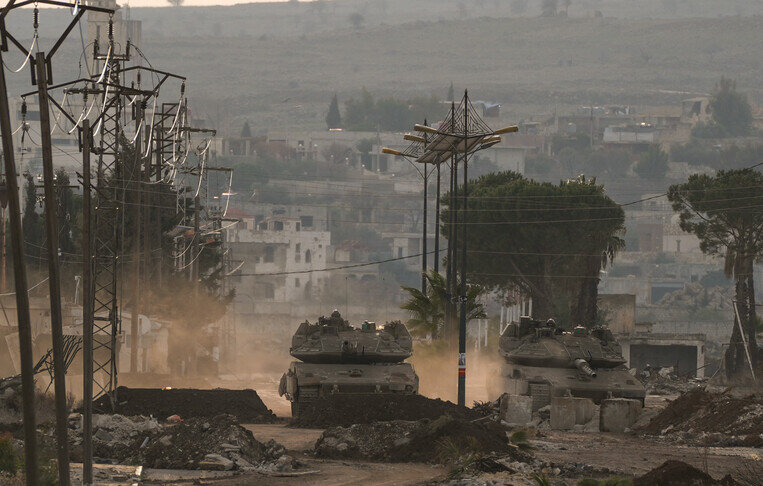
Air raid sirens sounded in Israel's Upper Galilee region on the afternoon of 21 April 2026, according to initial reports from Israeli sources cited by regional outlets. Israeli military channels reported the firing of a defense missile in connection with the alert, with warnings issued to civilian populations in border communities.
The incident, occurring at approximately 15:48 UTC according to multiple regional sources, drew immediate attention given the Upper Galilee's proximity to the Lebanese border — a region that has experienced persistent low-level tensions despite the ceasefire agreement brokered in late 2024.
What the Reporting Shows
The publicly available accounts describe a contained but significant security event. Israeli sources confirmed that warning sirens were activated and that a defense missile was fired in the Upper Galilee area. Regional media, including The Cradle Media, reported the alert in Breaking format, citing Israeli reporting as the basis for coverage. The language used by Israeli sources indicated an active threat assessment, though the specifics of the incoming objects — their origin, trajectory, and nature — were not detailed in the reporting available at time of publication.
Israeli military spokespersons had not issued a formal public statement as of 17:00 UTC. The operational details of which air defense system was employed — whether the Iron Dome, David's Sling, or the Arrow interceptors used against longer-range threats — remained unconfirmed. The defense missile launch, however, indicates that Israeli systems assessed the incoming threat as credible and requiring active interception.
Unresolved Questions
The sources reviewed do not establish the source of the projectiles or objects that triggered the alert. Israeli media framing, where available, attributed the alert to possible incoming projectile fire — consistent with the defense missile activation — but the origin and status of the objects involved remain unverified in the public reporting.
Several scenarios are consistent with the available information. A short-range rocket or mortar fired from Lebanese territory toward the Upper Galilee would represent a significant breach of the existing ceasefire arrangement and would likely prompt a substantial Israeli response. A technical malfunction or false positive, while uncommon, cannot be ruled out given the rarity of such events. An interception of an incoming projectile mid-flight would explain both the sirens and the defensive launch. Alternatively, hostile aircraft or unmanned systems entering Israeli airspace from the north could have triggered the alert without involving projectile fire.
The gap between alarm and explanation is not unusual in the immediate aftermath of such events; operational security protocols typically delay official confirmation while assessment is conducted.
Strategic Context
Israeli defense doctrine treats any projectile threat to populated civilian areas as a first-order security concern, and the Upper Galilee sits at the edge of the northern threat envelope. The region is less than ten kilometers from the Lebanese border at its nearest point, placing it within range of short-range rocket systems and mortars deployed by Hezbollah and associated groups.
The ceasefire framework, which has held with varying degrees of compliance since November 2024, depends on consistent monitoring and rapid de-escalation mechanisms. Each alert carries the risk of escalation: a confirmed attack would put significant pressure on the Israeli political and military leadership to respond, while an accidental or errant launch from Lebanese territory would require careful diplomatic management to prevent a spiral.
The international monitoring architecture — backed by the United States and France as primary guarantors — is structured to manage precisely these incidents. The speed and operational clarity of the Israeli response will be watched closely by regional capitals and the international community alike.
Forward Assessment
The coming hours will determine whether this event is a probe, an accident, or the opening move of a new chapter in the northern standoff. Israeli military assessments will clarify the nature of the incoming objects and whether the interception was successful. Lebanese authorities and UNIFIL observers will face pressure to confirm or deny the source of any launch from Lebanese territory.
If the event proves to be a deliberate attack, the diplomatic architecture built over eighteen months of fragile calm will be tested immediately. If it is determined to be accidental or a false alarm, the incident will underscore how finely balanced the security situation remains along Israel's northern border.
Either way, the Upper Galilee's sirens on a Monday afternoon are a reminder that the architecture of deterrence, however functional, is not a substitute for resolution.
This publication's reporting on the Upper Galilee incident prioritizes Israeli and Western-wire sourcing in line with editorial standards. Regional and international sources have been used to corroborate the timeline and to surface alternative framings where the evidence warrants. Further updates will follow as official statements become available.
Wire provenance
This editorial synthesis draws on the following public wire/social posts:
- https://t.me/FarsNewsInt/34567
- https://t.me/thecradlemedia/78901
- https://t.me/TheCradleMedia/78902