Tehran Calls U.S. Hormuz Interdiction a Ceasefire Violation
Iran's foreign minister has escalated language over U.S. naval posture in the Gulf, declaring any blockade of its ports an act of war and a breach of whatever ceasefire framework underpins the current diplomatic engagement between the two sides.
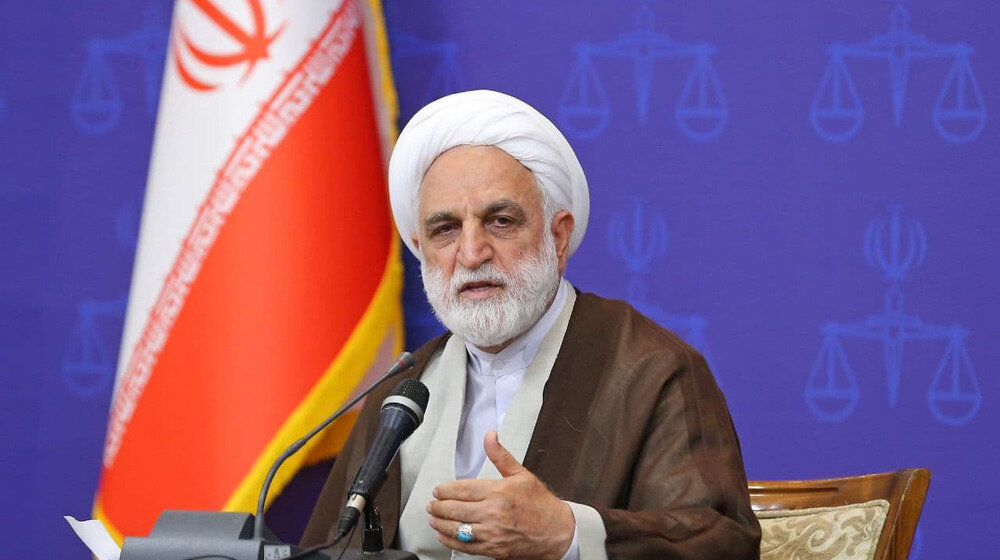
Iranian Foreign Minister Seyed Abbas Araghchi declared on 21 April 2026 that the United States blockade of the Strait of Hormuz constitutes an act of war and a violation of the ceasefire framework governing current U.S.-Iran diplomatic engagement. The statement, issued as talks between the two governments continue, represents the sharpest language Tehran has used to characterise American military pressure on Iranian shipping and port access since negotiations resumed.
Speaking from Tehran, Araghchi drew a direct line between economic interdiction and armed conflict. Blocking Iranian ports, he said, qualifies as an act of war; striking a commercial vessel and detaining its crew amounts to an even greater violation. The remarks landed in the middle of what both sides have presented as a fragile diplomatic window, raising questions about whether the ceasefire language Araghchi invoked refers to a specific written arrangement, an informal understanding, or a position Tehran is staking out to shape the negotiating table.
The Immediate Context
The statement arrives as U.S. and Iranian representatives have been engaged in sustained, indirect and occasionally direct conversations on Iran's nuclear programme and the sanctions architecture that has constrained its economy for years. The precise status of those talks—how far they have advanced, what concrete commitments have been exchanged—is not detailed in the sourcing available to this publication as of 21 April 2026. What is clear is that Araghchi chose to issue a public warning framed explicitly in ceasefire language at a moment when the diplomatic process has been publicly characterised by Washington as ongoing but difficult.
The Gulf has been a zone of recurring tension between the two countries. The U.S. Navy maintains a consistent forward presence in and around the Strait of Hormuz, the narrow waterway through which a significant share of the world's liquefied natural gas and oil passes. Iranian military and paramilitary forces have periodically tested that presence through drone activity, harassment of commercial vessels, and seizures. The dynamic has never fully stabilised into quiet coexistence; it has oscillated between managed competition and moments of acute risk.
Araghchi's framing—labelling any port blockade an act of war—goes beyond what Western officials have described as routine maritime posture. The distinction matters because the characterisation converts what the U.S. presents as freedom-of-navigation operations into something Tehran treats as a casus belli.
Counter-Narratives and Credibility Gap
The sources examined for this article do not include an official American response to Araghchi's remarks. No statement from the Pentagon, the State Department, or the U.S. negotiating team appears in the sourcing reviewed as of the publication of this piece. The framing gap is significant: the Iranian position is on the record; the American rejoinder is not.
That asymmetry shapes how this episode reads. The ceasefire language Araghchi invoked requires scrutiny from the other side before it can be treated as a shared factual baseline. Whether the ceasefire framework he referenced is a documented agreement, an oral understanding arrived at in earlier rounds of talks, or a characterization Tehran is using to set the terms of the current exchange is a question the available sourcing does not resolve.
Western observers of Gulf diplomacy have long noted that Iranian officials tend to escalate public rhetoric when negotiations are not progressing at the pace Tehran wants, or when Washington signals greater reliance on pressure over concessions. Araghchi's statement may be read through that lens. It may equally be a genuine warning that certain forms of U.S. naval activity cross lines Tehran believes were established. The sources do not permit a determination.
Structural Frame: The Strait as Leverage
The Strait of Hormuz has functioned for decades as a geopolitical pressure point in the Iran-U.S. relationship. Its physical significance—roughly 21 million barrels of oil per day transiting its narrowest channel, the Pasdaran Bridge corridor—gives Tehran a structural argument for the strait's vulnerability. The U.S. and its Gulf allies have a parallel structural argument: the strait is international waters, and the presence of American naval power there is a stabilising rather than destabilising force.
What Araghchi's statement does is force a definition of the grey zone between economic warfare and armed conflict. Interdicting a commercial vessel—detaining its crew—is an act that crosses from sanctions enforcement into something with a different legal and political character. His language treats the two as continuous: a blockade of ports and a strike on a commercial ship are not matters of degree but of kind. Greater interdiction, greater violation.
This framing matters beyond the immediate diplomatic crisis. If Tehran and Washington are operating under any form of ceasefire arrangement, that arrangement must have explicit terms covering maritime activity. If Araghchi is asserting those terms have been breached, he is creating a legal and political record that the U.S. is the violating party. If he is establishing those terms as yet-unmet demands, he is setting conditions for continued talks.
Stakes and Forward View
The stakes here are both immediate and structural. In the immediate term, a crew taken hostage on a commercial vessel—however Araghchi characterises it—immediately complicates any diplomatic atmosphere. Hostage situations, even of foreign sailors, generate political pressure on all sides. Governments that have nationals aboard have constituencies that expect action. The calculus on all sides becomes less abstract.
Structurally, what is at issue is the durability of whatever informal or formal ceasefire framework underpins U.S.-Iran engagement. The nuclear talks have survived multiple breakdowns over the years. They have survived the reimposition of sanctions, the assassination of Qasem Soleimani, and years of maximalist pressure. What they have not survived is a clear-cut act—one side declares—that the other has crossed into war. Araghchi's statement moves in that direction without yet crossing it. The question is whether Washington responds in kind, narrows the gap through clarification, or allows the language to stand unanswered, which carries its own signal.
The sources reviewed for this article do not indicate what the American response will be, or whether talks will continue on their present schedule. What they indicate is that Tehran has drawn a line, and it has done so publicly.
This publication presented Araghchi's statements as reported from Iranian state-adjacent Telegram channels. Monexus did not have access to a concurrent U.S. government statement at time of publication. Readers should note that the ceasefire framework invoked by Tehran has not been independently corroborated against American records in the sources reviewed.
Wire provenance
This editorial synthesis draws on the following public wire/social posts:
- https://t.me/osintdefender/2841
- https://t.me/TheCradleMedia/8921
- https://t.me/thecradlemedia/8921
- https://t.me/presstv/18921