Trump's Strait Ultimatum Meets Tehran's Conditions — and the Clock Runs Out
With hours remaining on a fragile ceasefire, Iran has told mediators it will dispatch a delegation to Islamabad — but only once the United States lifts its naval blockade on Iranian ports. The sequencing dispute exposes the distance between two governments that have spent years refusing to speak directly.
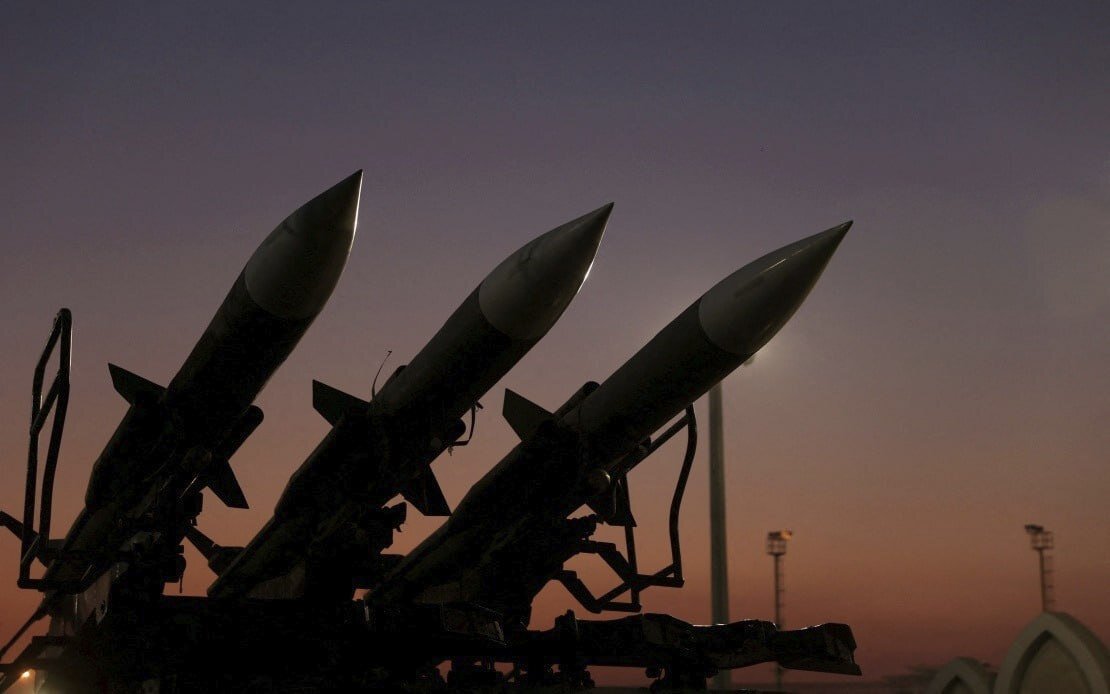
At 17:08 UTC on 21 April 2026, seven hours remained before a ceasefire between the United States and Iran was set to expire. The number was not incidental — it was the precise margin by which two governments that have not held formal diplomatic talks in years were either moving toward a negotiated pause or sliding back toward open confrontation.
The signal from Tehran that afternoon was carefully conditional. According to reporting by the Wall Street Journal, Iran had informed mediators it would send a delegation to Islamabad for talks — but only once the United States lifts the naval blockade it has imposed on Iranian ports. The Journal first disclosed the offer at 17:06 UTC, with IntelSlava and ClashReport confirming the substance within minutes. The Iranian Foreign Ministry, speaking through its own press channels, was less elliptical: any diplomatic path must be measured against Iranian interests and standards, and no final decision had yet been taken on participation.
The Trump administration's posture was, by contrast, declarative. Earlier on 21 April, the President told reporters the United States "totally controls the Strait of Hormuz" — a statement backed by visible naval presence but one that Tehran disputes as legal fact rather than operational claim. Separately, according to posts by the Unusual Whales feed tracking presidential statements, Trump said he did not intend to extend the ceasefire. The clock, not the negotiation, was the instrument Washington was relying on.
The Blockade as Bargaining Chip
The US naval interdiction of Iranian-port commerce is the central unresolved question. Iranian state media — Al Alam, the Arabic-language service closely aligned with Tehran's foreign policy apparatus — carried a statement from the Foreign Ministry characterising the blockade as a violation of international law. The statement went further, accusing the opposing party of having initiated the conflict and subsequently broken its own pledges, while noting that Iran had remained fully committed even after the United States withdrew from the 2015 nuclear agreement.
Whether or not that framing survives legal scrutiny, it reflects the operative Iranian position: the port blockade is not a legitimate enforcement measure but an act of economic warfare that Tehran cannot simply acknowledge as a precondition for talks. For Iran to send a delegation to Islamabad without the blockade being lifted would be to accept the humiliation of negotiating under duress — a concession no Iranian government, reformist or otherwise, has been willing to make in living memory.
The United States has its own domestic political calculus. Trump faces pressure from a base that has consistently framed diplomatic engagement with Iran as weakness, and an extension of the ceasefire could be portrayed domestically as capitulation. The President's stated reluctance to extend the timeline reflects that political reality more than it reflects any military necessity — the US navy already operates freely in the Gulf, and the blockade's enforcement value is primarily economic rather than strategic.
Islamabad's Uncomfortable Role
Pakistan occupies an awkward geographic and political position in this exchange. The talks Iran has conditionally agreed to would take place in Islamabad — a city that hosts a US embassy, maintains close intelligence ties to Washington, and yet shares a long border and deep commercial relationship with Iran. Islamabad has an interest in being seen as a facilitatory power rather than a venue under American direction, which is likely the reason the location was proposed — a neutral site short of the diplomatic distances Iran and the US have imposed on each other.
Pakistan's stake is not only political. A return to open hostilities in the Gulf would compress shipping lanes, raise insurance premiums, and drive oil prices upward in ways that disproportionately affect importing nations near South Asia's flank. Pakistan itself imports significant volumes of crude and refined products through Gulf routes that, while not dependent on the Strait of Hormuz directly, sit within the broader risk perimeter that any escalation would widen.
The Iranian Foreign Ministry statement on "result-oriented" action — carried by Euronews at 16:53 UTC — suggests Tehran wants visible American steps before it commits to a delegation. The phrasing implies that lifting the blockade is necessary not just as a goodwill gesture but as evidence that Washington is capable of reciprocal restraint. This is a negotiating demand dressed as a legal argument, and it is one that will be difficult for the US to meet without appearing to concede leverage.
What Happens if the Clock Expires
The ceasefire, as currently structured, requires one of two outcomes by expiration: extension, or a return to the kinetic posture both sides held before the pause began. There is no publicly disclosed third track — no mechanism for a seamless transition to formal talks that does not involve at least one party appearing to have blinked first.
For Iran, expiry without an agreement returns the country to the position it occupied before the ceasefire: under naval pressure, unable to export oil freely through its southern ports, and facing an economy that has survived sanctions but not the compounding effect of a sustained blockade. Tehran has made the case through its Foreign Ministry that it has acted responsibly throughout — a framing designed partly for domestic audiences and partly for the multilateral observers who still track Iranian compliance with its nuclear obligations.
For the United States, expiry without extension returns the administration to a posture of leverage it has already signalled it intends to use. The President's statement that he does not want to extend the ceasefire is not, in itself, a decision to resume strikes — but it removes the diplomatic cushion that makes extension of the negotiating window politically palatable. The operational question is whether the blockade remains in place regardless of the ceasefire's formal status, and whether Tehran interprets a non-renewal as a resumption of hostilities or simply the expiry of a diplomatic pause.
The Strait and the Dollar
Trump's assertion that the United States "totally controls the Strait of Hormuz" is, in operational terms, largely accurate. The US Fifth Fleet operates from Bahrain and maintains a persistent presence in and around the Gulf approaches. But the statement carries a second meaning that is economic rather than military: to control the Strait is to control the flow of roughly one-fifth of global oil traded through seaborne routes. That choke-point power has historically been a tool of dollar-denominated energy market management, and it remains one.
Tehran has never accepted that logic without resistance. Iranian policy over two decades has included sustained investment in alternative export routes — pipeline projects through Turkey, Pakistan, and Central Asia — as well as diplomatic campaigns to frame American naval presence in the Gulf as an extraterritorial imposition rather than a legitimate security arrangement. Neither project has succeeded in displacing the fundamental reliance on Hormuz transit, but together they have provided enough political cover to allow Tehran to resist without capitulating on the blockade question.
The outcome of this seventy-two-hour diplomatic interval will determine whether a negotiating channel remains open, or whether two governments that have spent years communicating through proxies and state media are left once again to manage a confrontation without talking to each other directly.
This publication's coverage of the ceasefire focuses on the conditionality structure — Iran's demand for blockade removal versus Washington's stated reluctance to extend — as the key tension point, rather than framing the story primarily around a ticking-clock narrative that treats extension or collapse as the only available outcomes.
Wire provenance
This editorial synthesis draws on the following public wire/social posts:
- https://t.me/IntelSlava/48712
- https://t.me/ClashReport/19443
- https://t.me/alalamarabic/294851
- https://t.me/alalamarabic/294850
- https://t.me/euronews/88291
- https://x.com/unusual_whales/status/1913201899280458134
- https://x.com/unusual_whales/status/1913198848122556634