Trump Warns Iran Strike Imminent as Ceasefire Clock Nears Zero
President Donald Trump told reporters on April 21, 2026 that he expects US forces to resume bombing Iran if no deal is signed by the deadline, declaring the US military "ready" and "totally loaded up." Iran, through Tasnim state media, says it is prepared for a renewed conflict as the ceasefire window closes.
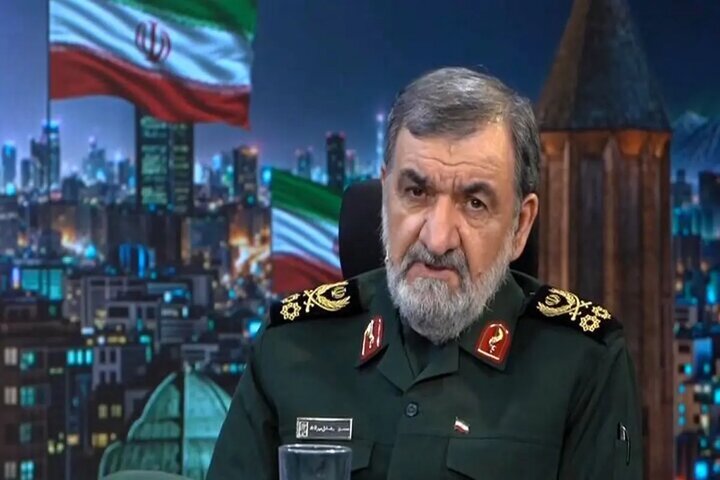
President Donald Trump told reporters at the White House on April 21, 2026 that he expects US forces to resume bombing Iran if no deal is signed by the end of the ceasefire window, declaring the American military "ready" and "totally loaded up" for potential action.
Speaking to assembled journalists, Trump said the United States used the ceasefire period to replenish ammunition stockpiles and that US forces are now "much more powerful than we were before the ceasefire." He acknowledged that Iran has "probably done some restocking" of its own missile arsenal and conducted some repositioning during the pause in hostilities. But he added that American forces can "hit their infrastructure very hard," citing bridges and power plants as potential targets.
The President's comments came as the ceasefire — originally negotiated during a temporary halt in operations — entered its final hours with no signed agreement in sight. When pressed on whether he would need at least the prospect of a signed deal today and tomorrow or resume bombing, Trump replied plainly: "Well, I expect to be bombing."
Deadline Pressure and Diplomatic Silence
The Trump administration had used the ceasefire period explicitly to restock military supplies, according to the President's own account. The resupply effort was deliberate: US officials had made clear they viewed the pause not as a diplomatic opening alone but as a tactical window to reload. The President's assertion that "we used the ceasefire to restock" contrasts with earlier US framing that the halt was primarily designed to give space for nuclear negotiations.
On the Iranian side, Tasnim news agency — citing sources it described as familiar with the matter — reported on April 21 that Iran is prepared for a potential new round of war as the final hours of the ceasefire deadline approach. The report said Iranian officials had anticipated over the preceding two weeks the possibility that hostilities would resume. That assessment, if accurate, suggests Tehran entered the ceasefire expecting it to fail rather than hoping it would hold.
The Hormuz Claim
Trump also asserted that the United States "totally controls the Strait of Hormuz," a narrow waterway through which roughly a fifth of the world's oil passes. The claim, repeated in multiple social media dispatches from the briefing, drew immediate skepticism from regional analysts. The Strait runs between Oman and Iran, with the Islamic Republic controlling its northern shore. US naval presence in the Gulf is substantial, but "total control" of a chokepoint bordered by a hostile state's coastline overstates the operational reality.
The assertion matters because it signals US willingness to project dominance over a critical global shipping lane even as tensions with Tehran escalate. If the ceasefire collapses, the Hormuz corridor becomes the most sensitive geographic flashpoint in any renewed conflict — a fact that has kept global oil markets on edge for months.
What Remains Unresolved
The sources do not specify whether Iranian negotiators delivered any written counterproposal to Washington before the April 21 deadline, nor do they detail the specific demands that sank the talks. US officials have not publicly released the terms of the proposed deal, and Iranian state media coverage has focused on military readiness rather than diplomatic substance.
Neither side has confirmed whether the resupply claimed by Trump actually occurred, though both parties have acknowledged restocking activities. It is unclear whether international mediators — European governments or intermediaries in Oman — played any role in the final hours of negotiation, or whether the diplomatic channel had effectively closed by the time Trump delivered his remarks.
A Recurrence of the Maximum Pressure Playbook
The pattern fits an established template: present a maximalist demand, declare the military option the default, and leave the adversary to choose between capitulation and conflict. Whether this posture is designed to coerce a deal, justify strikes, or simply signal resolve ahead of a negotiating session that resumes later is not distinguishable from the public record.
What is clear is that both governments appear to have spent the ceasefire arming themselves rather than negotiating. If the pattern holds, the next 48 hours will determine whether the world's energy infrastructure faces a third disruption in as many years.
This publication's wire coverage of the Iran ceasefire has centered on documented US and Iranian public statements since the truce began. The Trump administration's framing — military readiness as diplomacy — has dominated the public record; Iranian state media coverage of this final phase has emphasized defensive preparation over negotiating concessions. This article reflects that asymmetry rather than treating both sides as equivalent actors with equivalent agency.
Wire provenance
This editorial synthesis draws on the following public wire/social posts:
- https://t.me/ClashReport/99999
- https://t.me/GeoPWatch/88888
- https://t.me/GeoPWatch/88887
- https://t.me/GeoPWatch/88886
- https://t.me/abualiexpress/77777
- https://t.me/ClashReport/99998
- https://t.me/Middle_East_Spectator/66666
- https://t.me/gazaalanpa/55555